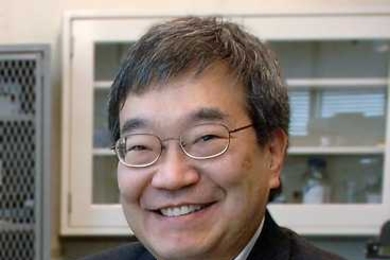
David Staelin, longtime professor in EECS and RLE, dies at 73
Researcher led a career distinguished by abundant accomplishments, widespread impact in his 55 years at MIT.
Researcher led a career distinguished by abundant accomplishments, widespread impact in his 55 years at MIT.
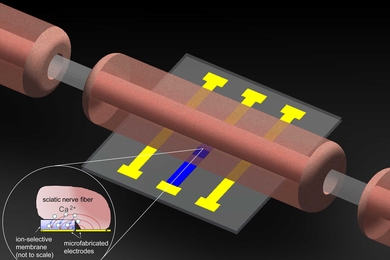
Researchers improve the efficiency of devices that stimulate damaged nerves, reducing potential side effects.
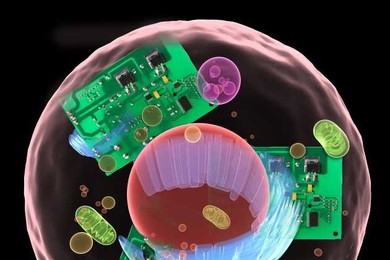
Analog — rather than digital — circuits could enable models of biological systems that are more efficient, more accurate and easier to build.
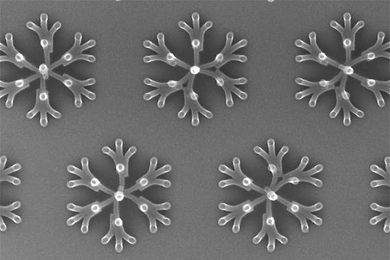
By turning a common problem in chip manufacture into an advantage, MIT researchers produce structures only 30 atoms wide.
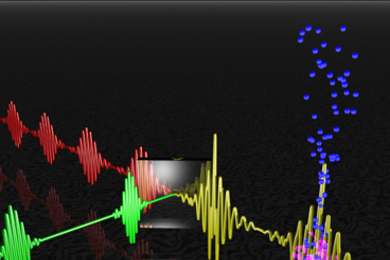
Lasers that emit pulses lasting a quintillionth of a second could characterize the behavior of individual electrons during chemical reactions.
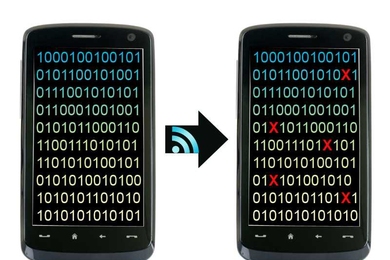
Error-correcting codes discovered at MIT can still guarantee reliable communication, even in cellphones with failure-prone low-power chips.
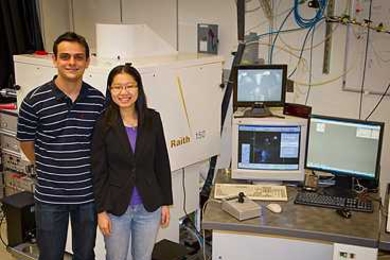
MIT researchers show how to make e-beam lithography, commonly used to prototype computer chips, more practical as a mass-production technique.

Two from CEE and one from EECS to participate in symposium for young engineering innovators.
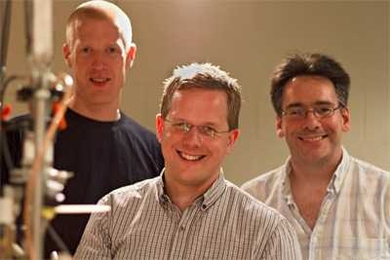
The power of quantum computers depends on keeping them in a fragile quantum-mechanical state — which researchers have found a new way to extend.

New technique could enable creation of a variety of fiber-based electronic and photonic devices.
Spotlight on Women in Nuclear Science and Engineering
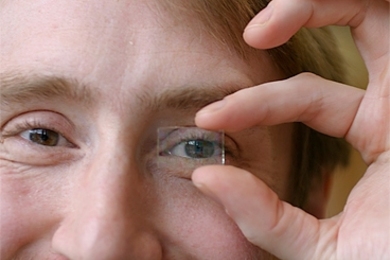
New technology from MIT could enable a building’s windows to generate power, without blocking the view.

A technique called network coding could protect users’ privacy and providers’ content while making communications networks more efficient.