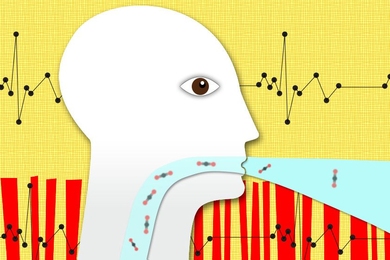
Diagnostic exhalations
By analyzing carbon dioxide in the breath, an algorithm could help determine how to treat patients.
By analyzing carbon dioxide in the breath, an algorithm could help determine how to treat patients.


Calculating encryption schemes’ theoretical security guarantees eases comparison, improvement.
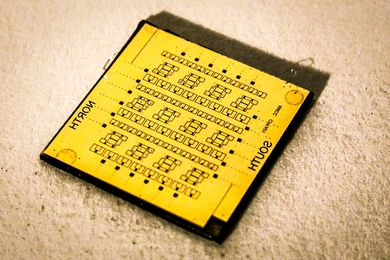
New circuit design could unlock the power of experimental superconducting computer chips.
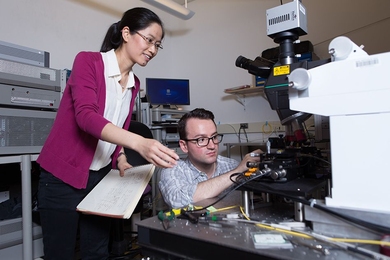
RLE’s Translational Fellows Program starts up a new dimension of support for postdocs.
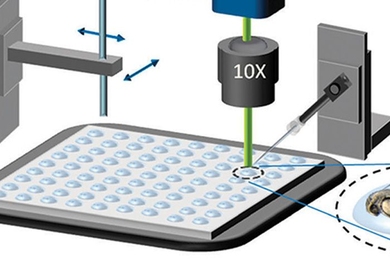
Engineers devise technology for rapidly testing drug-delivery vehicles in zebrafish.

Detailed quantitative study of learning online shows success, even among those with least preparation.
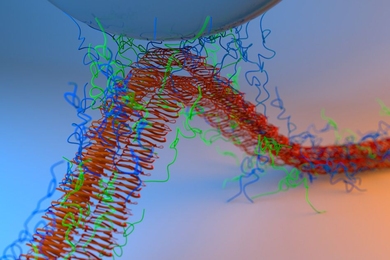
New adhesives based on mussel proteins could be useful for naval or medical applications.
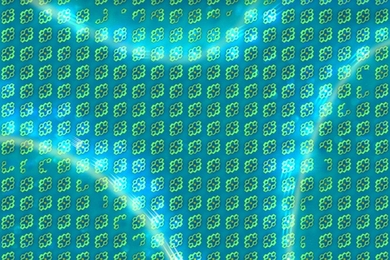
Theorists find a new way to improve efficiency of solar cells by overcoming exciton “traps.”
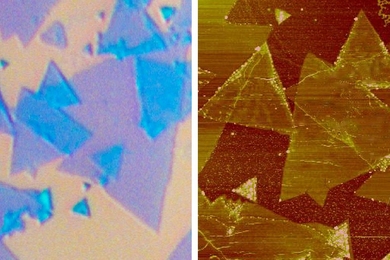
A promising light source for optoelectronic chips can be tuned to different frequencies.
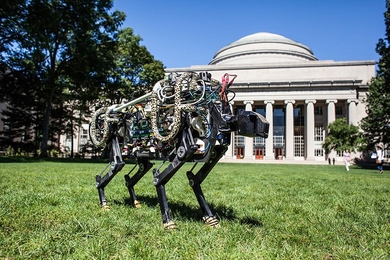
New algorithm enables MIT cheetah robot to run and jump, untethered, across grass.
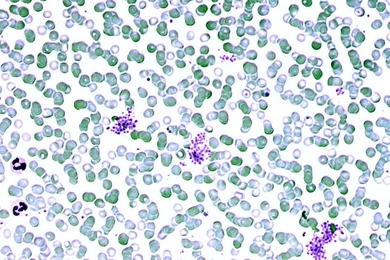
Using magnetic fields, technique can detect parasite’s waste products in infected blood cells.


Innovative researcher and educator was a champion of attacking science problems with “ferocious vigor.”