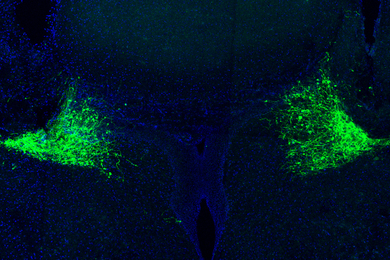
How the brain responds to surprising events
Unexpected outcomes trigger release of noradrenaline, which helps the brain focus its attention and learn from the event.
Unexpected outcomes trigger release of noradrenaline, which helps the brain focus its attention and learn from the event.

Brown and three other scientists recognized for advancing statistical, theoretical analyses of neuroscience data.
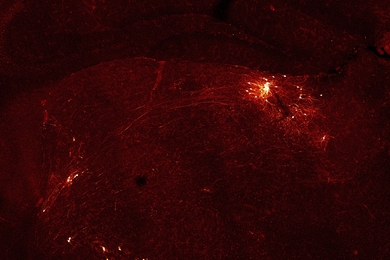
With a comprehensive map of the wiring, researchers can now discern what information flows into the circuit to enable a key brain function.
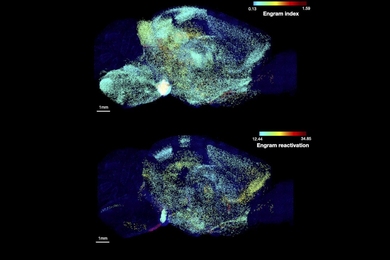
Innovative brain-wide mapping study shows that an “engram,” the ensemble of neurons encoding a memory, is widely distributed and includes regions not previously realized.
Competitive seed grants launch yearlong investigations of novel hypotheses about potential causes, biomarkers, treatments of Alzheimer’s and ALS.

Seven staff members are recognized for their dedication to the School of Science and to MIT.
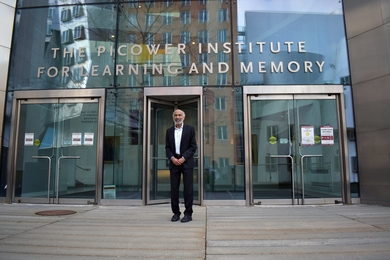
AIMBE's highest honor recognizes MIT professor's contributions to neural signal processing, anesthesiology advances.
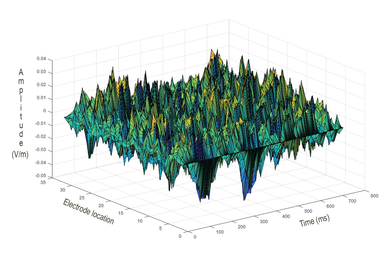
Electric fields may represent information held in working memory, allowing the brain to overcome “representational drift,” or the inconsistent participation of individual neurons.

Professor describes a new research center he is working to develop where researchers will seek to improve patient care by integrating neuroscience and anesthesiology.
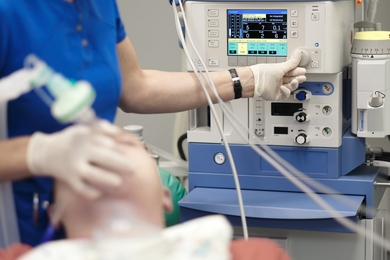
A new deep-learning algorithm trained to optimize doses of propofol to maintain unconsciousness during general anesthesia could augment patient monitoring.
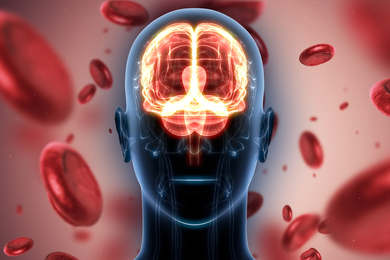
Single-cell gene expression analyses of human cerebrovascular cells can help reveal new drug targets for Huntington’s disease.

The act of holding information in mind is accompanied by coordination of rotating brain waves in the prefrontal cortex, a phenomenon that may convey specific advantages, a new study suggests.

Eight postdocs and research scientists within the School of Science honored for contributions to the Institute.
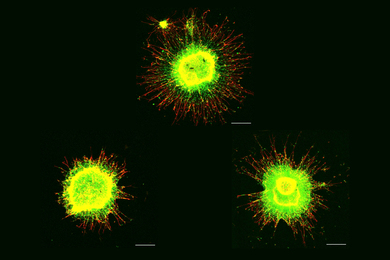
Extra chromosome alters chromosomal conformation and DNA accessibility in neural progenitor cells; study establishes senescence as a potentially targetable mechanism for future treatment.
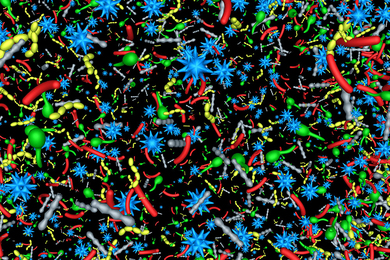
Infection during pregnancy with elevated levels of the cytokine IL-17a may yield microbiome alterations that prime offspring for aberrant immune responses, mouse study suggests.