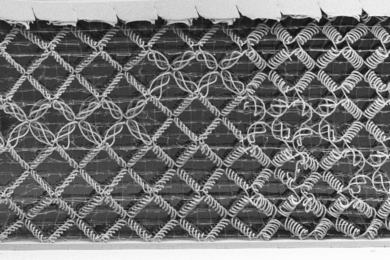
3D-printed metamaterials that stretch and fail by design
New framework supports design and fabrication of compliant materials such as printable textiles and functional foams, letting users predict deformation and material failure.
New framework supports design and fabrication of compliant materials such as printable textiles and functional foams, letting users predict deformation and material failure.

For the first time, the new scope allowed physicists to observe terahertz “jiggles” in a superconducting fluid.

MIT engineers designed capsules with biodegradable radio frequency antennas that can reveal when the pill has been swallowed.

By stacking multiple active components based on new materials on the back end of a computer chip, this new approach reduces the amount of energy wasted during computation.

In the 2025 Dresselhaus Lecture, the materials scientist describes her work 3D printing soft materials ranging from robots to human tissues.
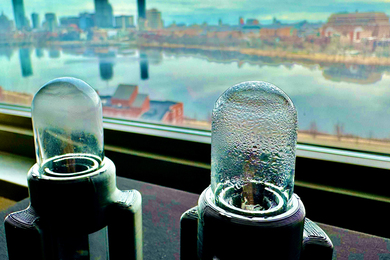
The system can be paired with any atmospheric water harvesting material to shake out drinking water in minutes instead of hours.

MIT.nano cleanroom complex named after Robert Noyce PhD ’53 at the 2025 Nano Summit.
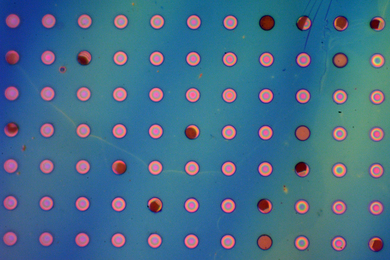
Because it’s nearly impermeable to gases, the polymer coating developed by MIT engineers could be used to protect solar panels, machinery, infrastructure, and more.

MIT researchers created microscopic wireless electronic devices that travel through blood and implant in target brain regions, where they provide electrical stimulation.

The DIGIT imaging tool could enable the design of quantum devices and shed light on atomic-scale processes in cells and tissues.

Twelve START.nano companies competed for the grand prize of nanoBucks to be used at MIT.nano’s facilities.

Incorporating machine learning, MIT engineers developed a way to 3D print alloys that are much stronger than conventionally manufactured versions.

Panel discussions focused on innovation in many forms of energy, then a tour of campus featured student research.

The new “CRESt” platform could help find solutions to real-world energy problems that have plagued the materials science and engineering community for decades.

A new device concept opens the door to compact, high-performance transistors with built-in memory.