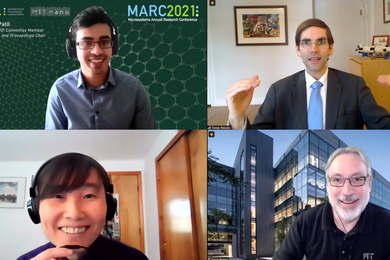
Microsystems Annual Research Conference goes virtual, preserves human touch
Student committee delivers interactive conference on microsystems and nanoscience.
Student committee delivers interactive conference on microsystems and nanoscience.

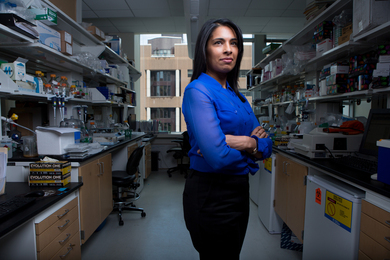
MIT faculty collaborate with members of the Boston-area biotech community to commercialize women’s discoveries and promote female entrepreneurship.

The award recognizes Weinberg’s pioneering achievements in the field of cancer biology.
Biological sensors developed by MIT spinout Glympse Bio could help clinicians make decisions for individual patients.
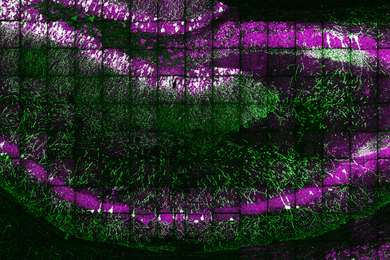
Expanding tissue samples before sequencing allows researchers to pinpoint locations of RNA molecules.
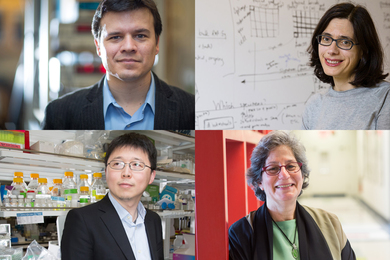
Pablo Jarillo-Herrero, Aviv Regev, Susan Solomon, and Feng Zhang are the recipients of distinguished awards for major contributions to science.
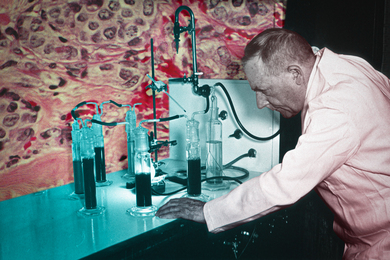
MIT study sheds light on the longstanding question of why cancer cells get their energy from fermentation.

Curiosity-driven basic science in the 1970s laid the groundwork for today’s leading vaccines against the novel coronavirus.
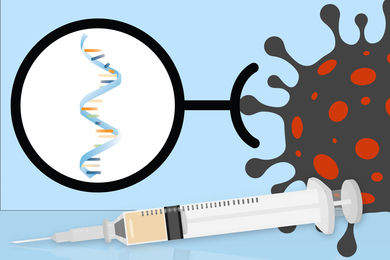
Many years of research have enabled scientists to quickly synthesize RNA vaccines and deliver them inside cells.
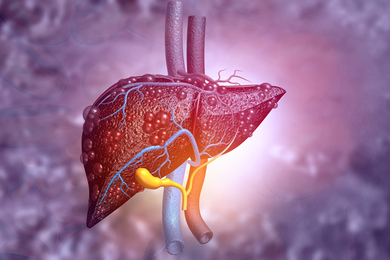
Diagnosing liver damage earlier could help to prevent liver failure in many patients.
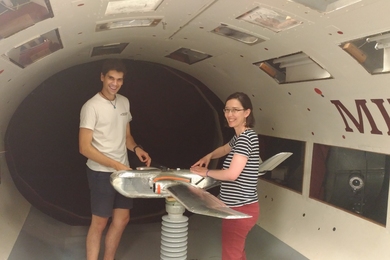
MISTI Global Seed Funds are open for proposals after Covid pivot.
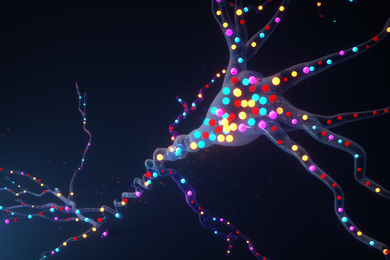
Fluorescent imaging technique simultaneously captures different signal types from multiple locations in a live cell.
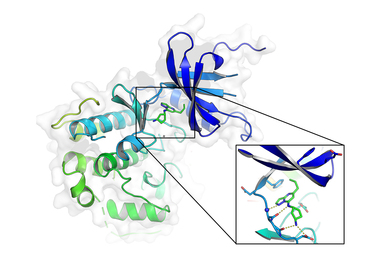
MIT researchers identify a molecule that could target advanced prostate cancer as well as a variety of other cancers.

Professor and mentor for more than 20 years at MIT redefined scientists’ understanding of the biology of cell division and proliferation.
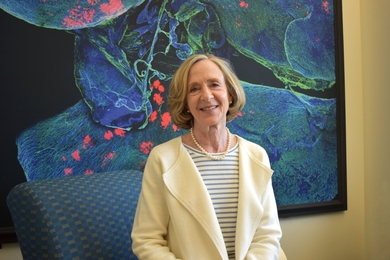
Author Susan Hockfield, MIT president emerita and professor of neuroscience, receives 2020 Science Communication Award.