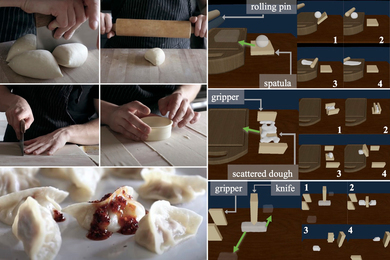
Solving the challenges of robotic pizza-making
A new technique could enable a robot to manipulate squishy objects like pizza dough or soft materials like clothing.
A new technique could enable a robot to manipulate squishy objects like pizza dough or soft materials like clothing.

A new technique for removing bias in datasets can enable machine-learning models to make loan approval predictions that are both fair and accurate.

MIT AI Hardware Program launches with five inaugural companies to advance AI technologies for the next decade.

“Privid” could help officials gather secure public health data or enable transportation departments to monitor the density and flow of pedestrians, without learning personal information about people.
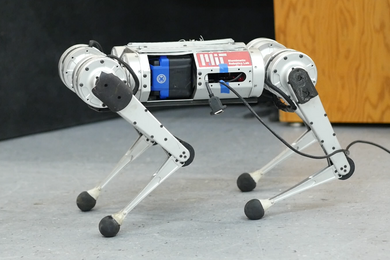
CSAIL scientists came up with a learning pipeline for the four-legged robot that learns to run entirely by trial and error in simulation.

A machine-learning model for image classification that’s trained using synthetic data can rival one trained on the real thing, a study shows.

Faculty leaders discuss the opportunities and obstacles in developing, scaling, and implementing their work rapidly.

Theories from cognitive science and psychology could help humans learn to collaborate with robots faster and more effectively, scientists find.

A new technique boosts models’ ability to reduce bias, even if the dataset used to train the model is unbalanced.

The honorees include four MIT graduate students in electrical engineering and computer science, economics, and media arts and sciences.
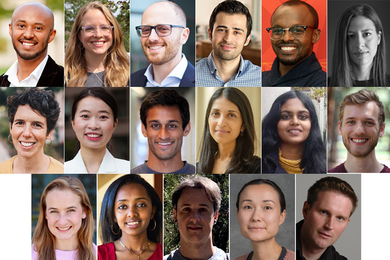
Seventeen new professors join the MIT community, with research areas ranging from robotics and machine learning to health care and agriculture.

A new methodology simulates counterfactual, time-varying, and dynamic treatment strategies, allowing doctors to choose the best course of action.
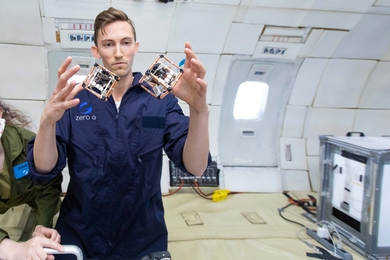
Self-reconfiguring ElectroVoxels use embedded electromagnets to test applications for space exploration.

Researchers demonstrate a method that safeguards a computer program’s secret information while enabling faster computation.
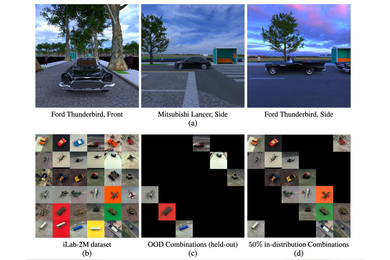
A model’s ability to generalize is influenced by both the diversity of the data and the way the model is trained, researchers report.