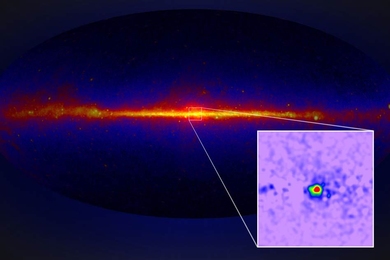
Is there dark matter at the center of the Milky Way?
A new analysis puts dark matter back in the game as a possible source of energy excess at the galactic center.
A new analysis puts dark matter back in the game as a possible source of energy excess at the galactic center.
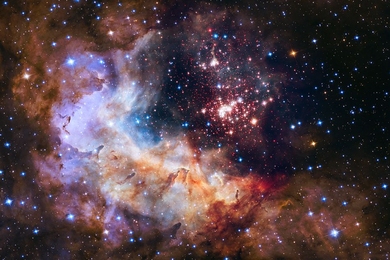
With help from next-generation particle accelerators, the approach may nail down the rate of oxygen production in the universe.

Tracy Slatyer hunts through astrophysical data for clues to the invisible universe.
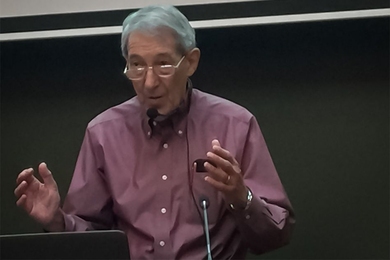
MIT professor emeritus will share $3 million prize with Sergio Ferrara and Peter van Nieuwenhuizen for discovery of supergravity.

Technique can spot anomalous particle smashups that may point to phenomena beyond the Standard Model.
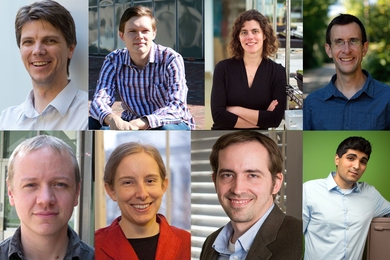
Eight faculty members are granted tenure in five science departments.
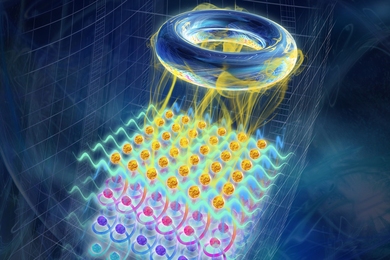
MIT’s Senthil Todadri and Xiao-Gang Wen will study highly entangled quantum matter in a collaboration supported by the Simons Foundation.
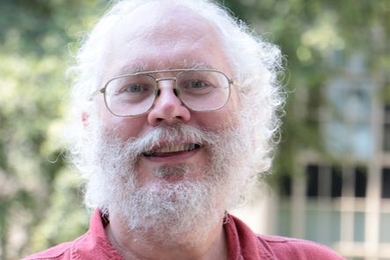
Shor awarded the $150,000 prize, named after a fifth-century B.C. Chinese scientist, for his groundbreaking theoretical work in the field of quantum computation.
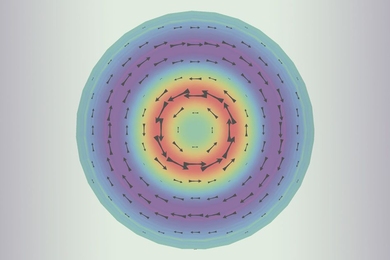
The particle’s core withstands pressures higher than those inside a neutron star, according to a new study.
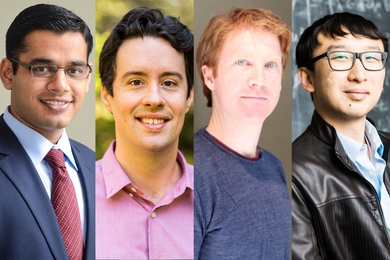
Nikhil Agarwal, Daniel Harlow, Andrew Lawrie, and Yufei Zhao receive early-career fellowships.
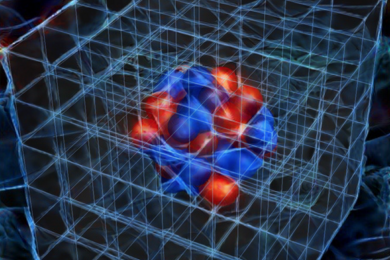
Laboratory for Nuclear Science project selected to explore machine learning for lattice quantum chromodynamics.
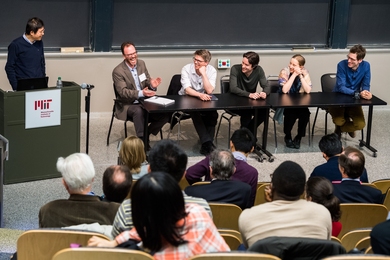
Symposium explores how novel ideas and experiments are advancing many areas of theoretical physics in newly interconnected ways.
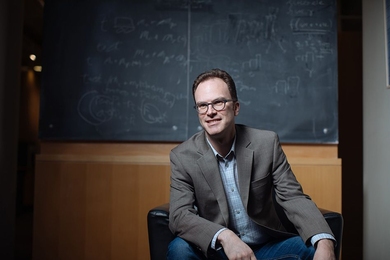
Theorist explores particle physics at the boundary of “messy and elegant.”
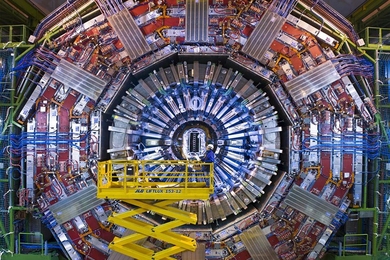
CERN Open Data Portal results reveal predictable patterns from colliding high-energy protons.
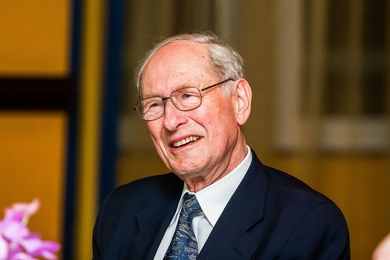
Former Laboratory for Nuclear Science and Center for Theoretical Physics director made important contributions to the study of nuclear structure and reactions.