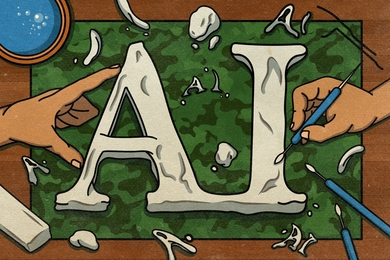
How novice coders can develop AI programs for military applications
A USAF cadet and a Lincoln Laboratory researcher found AI chatbots can help nontechnical service members produce viable software applications for their unique problems.
A USAF cadet and a Lincoln Laboratory researcher found AI chatbots can help nontechnical service members produce viable software applications for their unique problems.
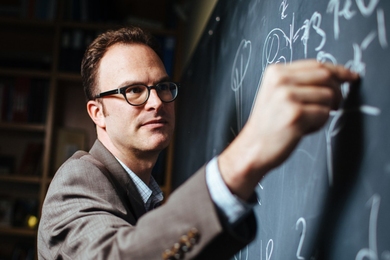
The professor of physics and inaugural director of the NSF AI Institute for Artificial Intelligence and Fundamental Interactions will lead LNS and continue his research in particle physics.
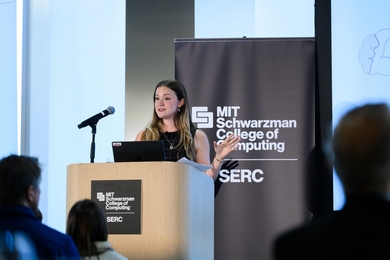
PhD student Rachel Sava, winner of the Envisioning the Future of Computing Prize, explores transformative improvements and dystopian risks of neural technology.
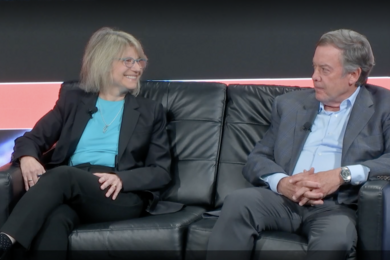
During a "Washington Post Live" panel discussion with ASU President Michael Crow, President Sally Kornbluth explored how universities are preparing the next generation of scientists to lead in America’s rapidly changing technological landscape.

Computer scientist Phillip Isola cuts through the hype to explain how AI agents work and what the future might hold for this rapidly advancing technology.
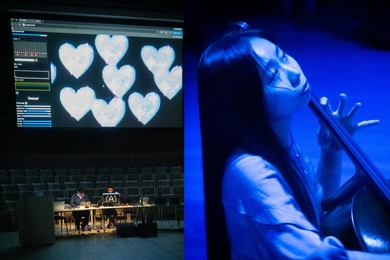
Associate Professor Anna Huang delivers the keynote address, “In Search of Human-AI Resonance,” to a capacity crowd.
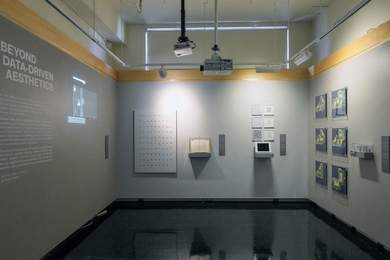
In a new Keller Gallery exhibition, Alexandros Haridis SM ’17, PhD ’22 traces centuries of ideas about aesthetic judgment and explores how design can make complex computational systems visible.
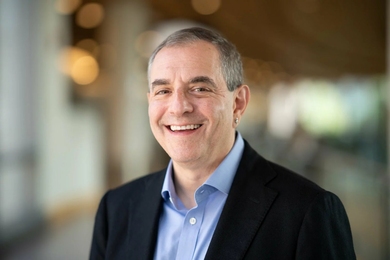
A faculty member since 1999, Autor is a leading researcher in artificial intelligence and the work of the future.
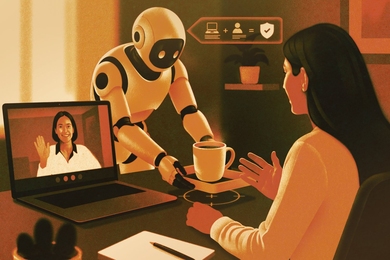
To help robots do chores in places like homes and factories, a new approach from MIT uses one language model to clarify users’ instructions, then another to ignore irrelevant info.
“Scientific American” showcases the history and future of America’s scientific engine, highlighting promising young scientists and icons at MIT and beyond.

A new system, known as Murakkab, optimizes the design and deployment of multistep workflows that power AI applications.
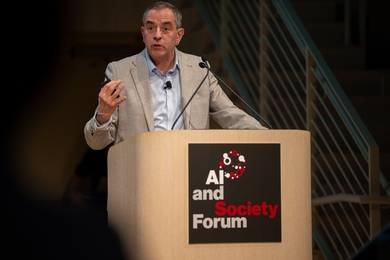
During the AI and Society Forum, leading MIT researchers examined critical questions about AI’s influence on employment and democracy.
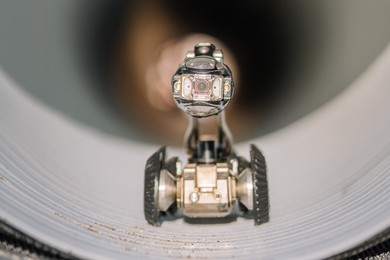
Researchers combined an efficient algorithm with dedicated hardware to rapidly generate 3D maps for navigation using minimal memory and power.
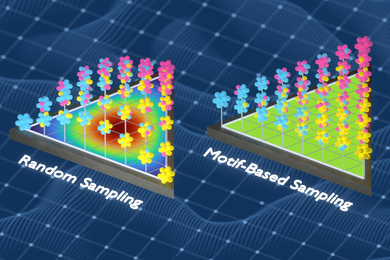
MIT researchers’ approach captures subtle atomic patterns, improving predictions of material properties.
Leaders, faculty across MIT discuss fostering innovation and talent in Greater Boston in special series of articles published alongside the outlet's annual list of 'Tech Power Players'