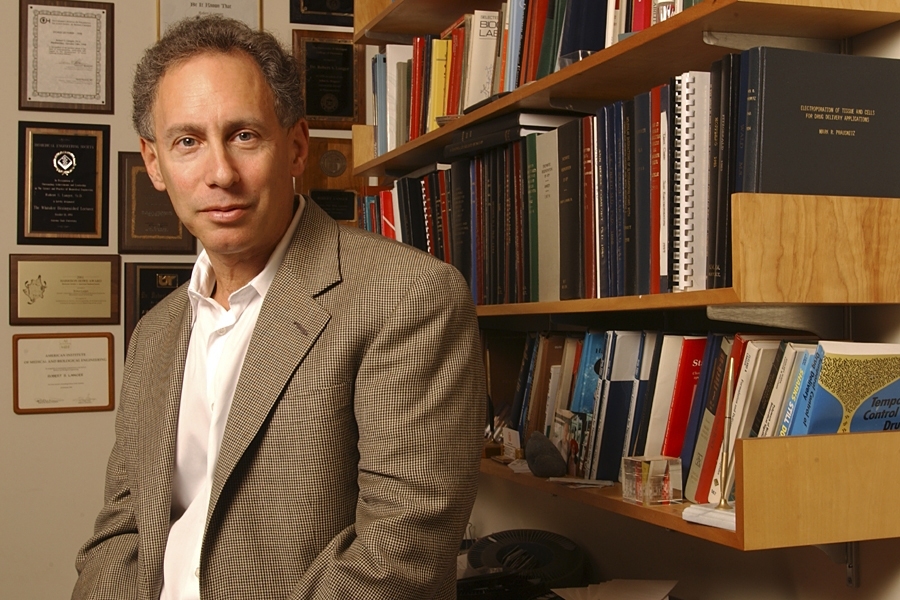
David H. Koch Institute Professor Robert S. Langer has been selected by the American Chemical Society (ACS) to receive the 2012 Priestley Medal, the society’s most prestigious prize, for his “distinguished services to chemistry.”
Langer was honored for his “cutting-edge research that helped create the controlled-release drug industry and the field of tissue engineering,” according to Chemical & Engineering News (C&EN), the journal of the ACS.
“I’m honored — and a bit shocked — to receive the Priestley Medal,” Langer told C&EN. “It’s a thrill to be included among the prestigious winners of this award, not just for me, but for my lab, my fields of research, and for the chemical engineering community.”
The Priestley Medal is generally given to scientists with a traditional chemistry background; this is the first time in 65 years that a chemical engineer has won the medal. Langer’s distinguished career as a pioneer in the fields of chemical, biomedical and tissue engineering, as well as his significant contributions to the development of biomedical devices, was referenced as a defining factor in his selection as recipient of this top award.
For more information, visit http://pubs.acs.org/cen/news/89/i24/8924notw1.html.
Langer was honored for his “cutting-edge research that helped create the controlled-release drug industry and the field of tissue engineering,” according to Chemical & Engineering News (C&EN), the journal of the ACS.
“I’m honored — and a bit shocked — to receive the Priestley Medal,” Langer told C&EN. “It’s a thrill to be included among the prestigious winners of this award, not just for me, but for my lab, my fields of research, and for the chemical engineering community.”
The Priestley Medal is generally given to scientists with a traditional chemistry background; this is the first time in 65 years that a chemical engineer has won the medal. Langer’s distinguished career as a pioneer in the fields of chemical, biomedical and tissue engineering, as well as his significant contributions to the development of biomedical devices, was referenced as a defining factor in his selection as recipient of this top award.
For more information, visit http://pubs.acs.org/cen/news/89/i24/8924notw1.html.