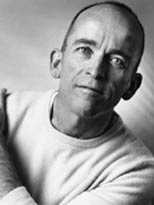
The List Visual Arts Center will present a poetry reading by Mark Doty on Wednesday, March 21, at 6:30 p.m. in the Stata Center, Room 32-144.
The author of seven books of poems, among them "School of the Arts," "Source," "Sweet Machine," "Atlantis" and "My Alexandria," Doty has also published three volumes of nonfiction prose--"Still Life with Oysters and Lemon," "Heaven's Coast" and "Firebird."
Doty has contributed an essay to the catalogue accompanying the current List Center exhibition, "Sensorium: Embodied Experience, Technology and Contemporary Art," on view through April 8. This reading is hosted by the List Center.
Doty's poems have appeared in many magazines, including the Atlantic Monthly, the London Review of Books, Ploughshares, Poetry and the New Yorker. Widely anthologized, his poems appear in "The Norton Anthology of Contemporary American Poetry" and many other collections.
Doty has received the National Book Critics Circle Award, the Los Angeles Times Book Prize, a Whiting Writers Award, two Lambda Literary Awards and the PEN/Martha Albrand Award for First Nonfiction. He is the only American poet to have received the T.S. Eliot Prize in the United Kingdom, and he has received fellowships from the Guggenheim, Ingram Merrill and Lila Wallace/Readers Digest Foundations and the National Endowment for the Arts.
Doty lives in New York City and in Houston, Texas, where he is the John and Rebecca Moores Professor in the graduate program at the University of Houston.
For more information, call x3-4680 or visit web.mit.edu/lvac.
A version of this article appeared in MIT Tech Talk on March 21, 2007 (download PDF).