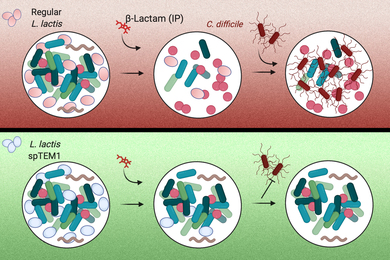
Engineered bacteria could help protect “good” gut microbes from antibiotics
Microbes that safely break down antibiotics could prevent opportunistic infections and reduce antibiotic resistance.
Microbes that safely break down antibiotics could prevent opportunistic infections and reduce antibiotic resistance.

Researchers create a mathematical framework to examine the genome and detect signatures of natural selection, deciphering the evolutionary past and future of non-coding DNA.
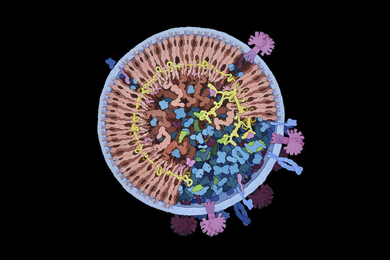
Udayan Umapathi SM ’17 and Will Langford SM ’14, PhD ’19 are co-founders of a Media Lab spinoff building a full-stack platform to enable automation for genomics and genetic engineering.

MiniPCR bio has sold thousands of its inexpensive polymerase chain reaction machines to researchers and schools around the world.
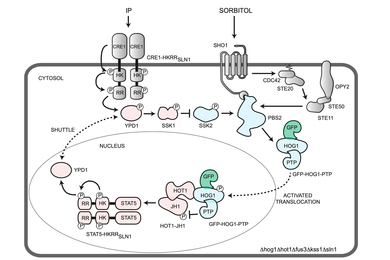
MIT engineers design the first synthetic circuit that consists entirely of fast, reversible protein-protein interactions.

New research group aims to bridge the gap between nanotechnology and synthetic biology.

A 3D printing system that controls the behavior of live bacteria could someday enable medical devices with therapeutic agents built in.

Managing her own synthetic biology project helped graduate student Jesse Tordoff overcome imposter syndrome and hit her stride.
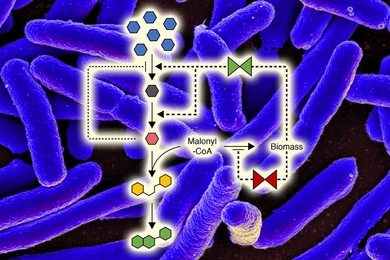
Chemical engineers program bacteria to switch between different metabolic pathways, boosting their yield of desirable products.
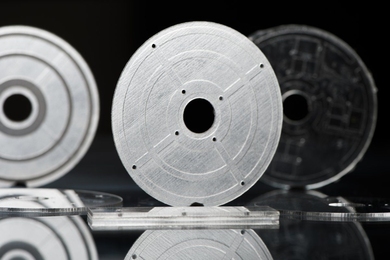
Do-it-yourself bio and maker communities can help NASA meet needs of long-distance missions.

Steven Keating SM'12, PhD '16 inspired millions with his research-driven approach to battling cancer and his advocacy for open patient health data.
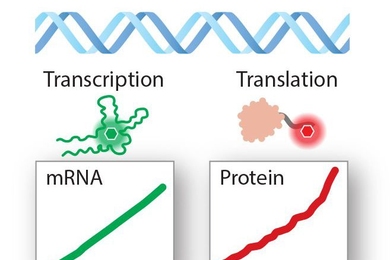
Fluorescent tagging system can expedite the process of designing genes and personalizing medicine.
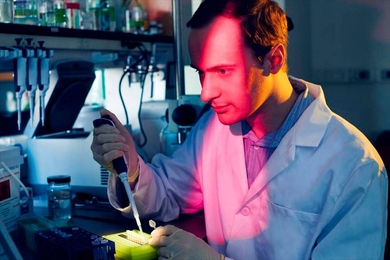
Cryptography techniques to screen synthetic DNA could help prevent the creation of dangerous pathogens, argues Professor Kevin Esvelt.
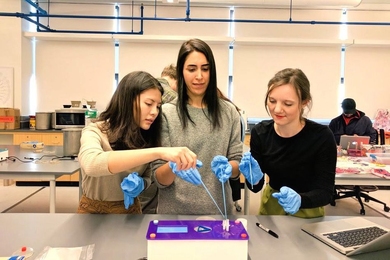
Alumna’s mini-lab kits include all necessary tools and materials for anyone to start engineering microbes.
With aid of computer algorithm, researchers develop peptides more powerful than those found in nature.