
Moving perovskite advancements from the lab to the manufacturing floor
U.S. Department of Energy selects MIT to establish collaborative research center for optimizing the development of tandem solar modules.
U.S. Department of Energy selects MIT to establish collaborative research center for optimizing the development of tandem solar modules.
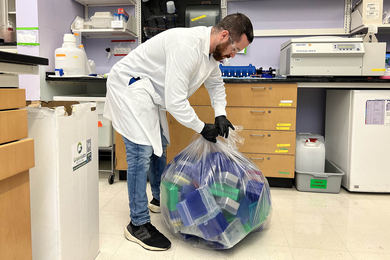
With sustainability in mind, MIT’s EHS Lab Plastics Recycling Program gathers clean plastics from 212 MIT labs, recycling some 280 pounds per week.

MIT engineers identified an unusually absorbent material that could be used for passive cooling or water harvesting in warm climates.

With an eye toward the war in Ukraine and other international issues, the student-run conference brought together energy leaders from around the world.
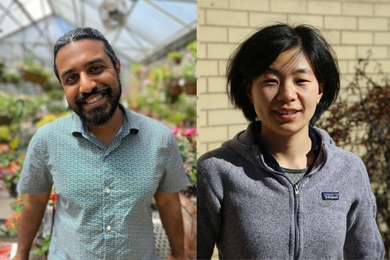
Gokul Sampath and Jie Yun have been named 2023-24 J-WAFS Fellows.

Applying a small voltage to the walls of algae growing tanks can prevent cloudy buildup and allow more photosynthesis to happen.
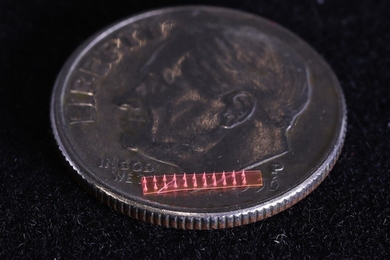
Developed at SMART, the device can deliver controlled amounts of agrochemicals to specific plant tissues for research and could one day be used to improve crop quality and disease management.
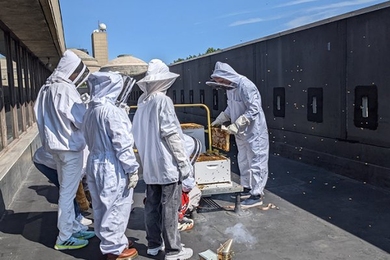
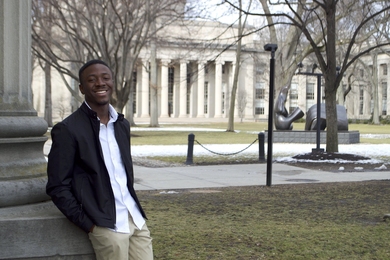
Environmental engineering major Runako Gentles seeks to lead projects that increase harmony between society and the environment.
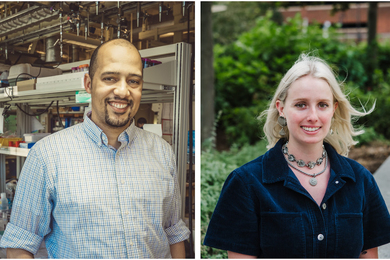
A modeling framework developed at MIT can help speed the development of flow batteries for large-scale, long-duration electricity storage on the future grid.
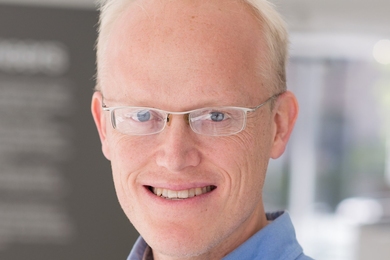
Principal Research Scientist Audun Botterud tackles a range of cross-cutting problems — from energy market interactions to designing batteries — to get closer to a decarbonized power grid.

These highly stable metal-organic frameworks could be useful for applications such as capturing greenhouse gases.

Roofscapes, a startup founded by three MIT students, is planning to build green spaces on pitched roofs in Paris, to decrease temperatures while improving quality of life.

MIT CSHub Deputy Director Hessam AzariJafari is conducting vital research to investigate the impacts of concrete's carbonation across its life cycle.
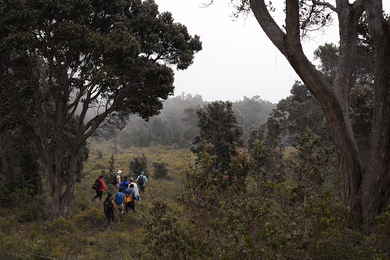
MIT students research effects of climate change on forests and sulfur dioxide emissions as a model for planet-wide events.