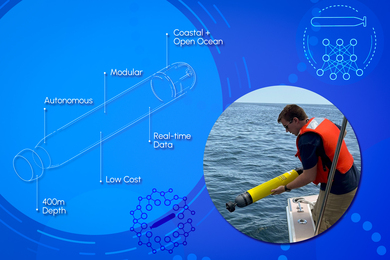
Mapping the ocean with autonomous sensors
Founded by Ravi Pappu SM ’95, PhD ’01, Apeiron Labs is deploying low-cost ocean sensors to improve storm forecasts, detect endangered species, and more.
Founded by Ravi Pappu SM ’95, PhD ’01, Apeiron Labs is deploying low-cost ocean sensors to improve storm forecasts, detect endangered species, and more.
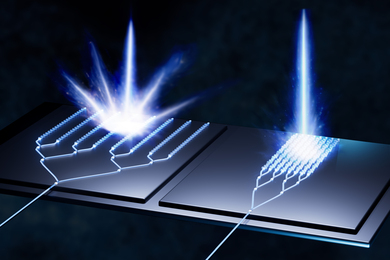
With a novel design, MIT researchers overcame a stubborn problem that has limited the effectiveness of chip-based systems for lidar.
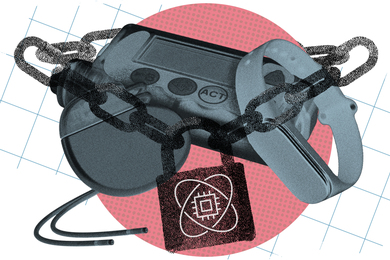
Ultra-efficient chip design enables extremely strong cryptography algorithms to run on energy-constrained edge devices.
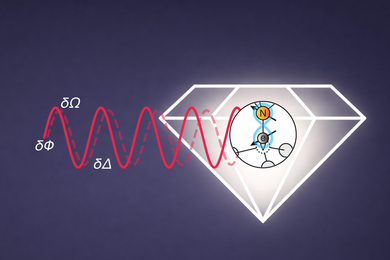
The devices represent a key step toward practical quantum sensing, with applications in biomedical sensing, materials characterization, and more.
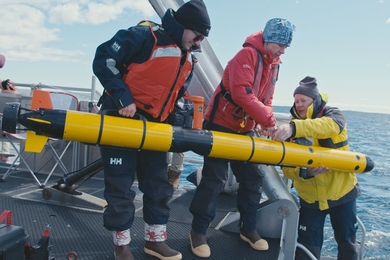
Researchers are developing hardware and algorithms to improve collaboration between divers and autonomous underwater vehicles engaged in maritime missions.

MIT students see the Earth's curvature in reborn AeroAstro intro course.

A new study pieces together existing data sources in order to develop a detailed, dynamic picture of auto emissions.

The electrical engineering and nanotechnology leader will guide the US Army-sponsored research center as it advances next-generation materials, electronics, and photonics for national security.
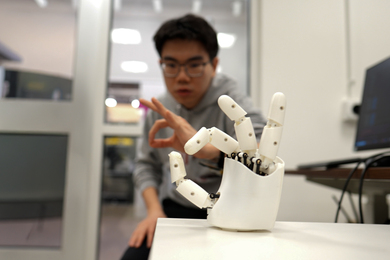
By moving their hands and fingers, users can direct a robot to play piano or shoot a basketball, or they can manipulate objects in a virtual environment.

Observations suggest a major melting event at the Ross Ice Shelf was connected to atmospheric turbulence.
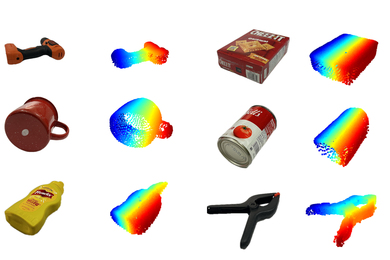
With this new technique, a robot could more accurately detect hidden objects or understand an indoor scene using reflected Wi-Fi signals.
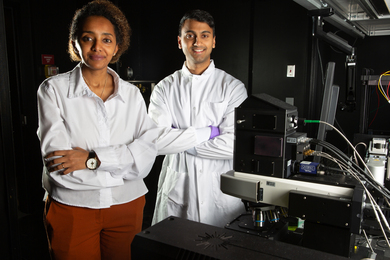
The technology could enable fast, point-of-care diagnoses for pneumonia and other lung conditions.
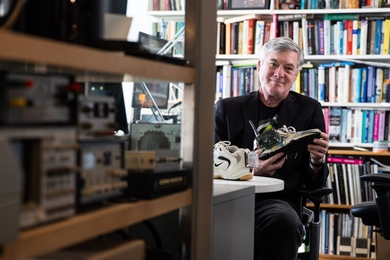
From early motion-sensing platforms to environmental monitoring, the professor and head of the Program in Media Arts and Sciences has turned decades of cross-disciplinary research into real-world impact.

Patterns of gaze and attention can reveal how some people unconsciously figure out how to master a task, new research shows.
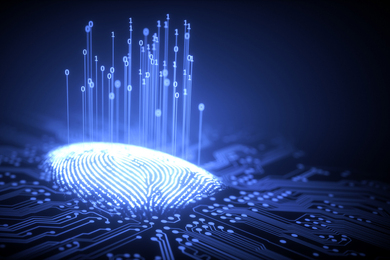
By enabling two chips to authenticate each other using a shared fingerprint, this technique can improve privacy and energy efficiency.