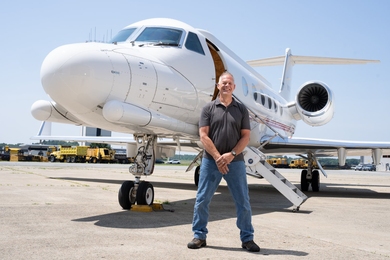
Craig Rowe soars to new heights
The aircraft mechanic is the lead crew chief of Lincoln Laboratory’s Gulfstream IV and recently oversaw the plane’s major modification.
The aircraft mechanic is the lead crew chief of Lincoln Laboratory’s Gulfstream IV and recently oversaw the plane’s major modification.
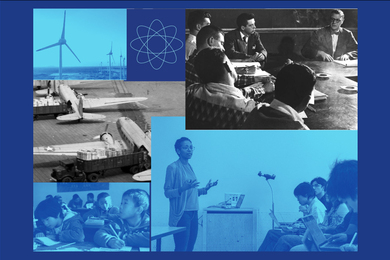
For 75 years, the Center for International Studies has brought together social scientists, engineers, and practitioners to understand global change, shape public debate, and address generational challenges.
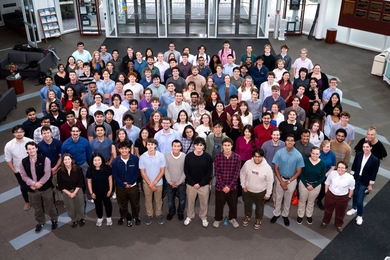
Anna Raymaker and Vivek Jagadeesh tackled cybersecurity threats to ships and inside operating systems, respectively.

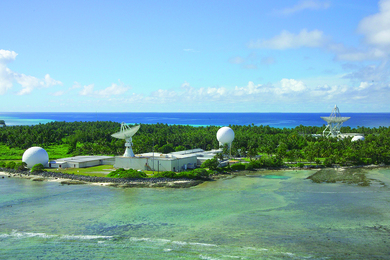
The work is part of a multiyear effort to develop a distributed sensor network for relaying data collected from this critical region.

The modified aircraft will support an ongoing US Air Force program to assess and enhance the survivability of air and space vehicles.
Members of the laboratory community reflect on technology impacts that shaped the United States and the world over the past 75 years.
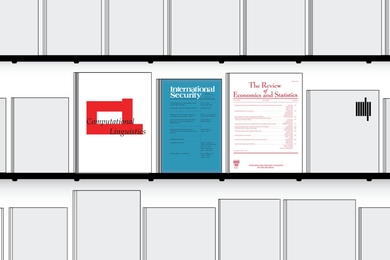
Computational Linguistics, International Security, and The Review of Economics and Statistics lead their disciplines with 2026 Clarivate impact factors.
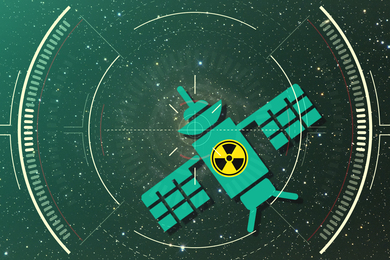
The 1967 Outer Space Treaty bans nuclear weapons in space, but there’s currently no way to verify that satellites aren’t carrying them.

A USAF cadet and a Lincoln Laboratory researcher found AI chatbots can help nontechnical service members produce viable software applications for their unique problems.
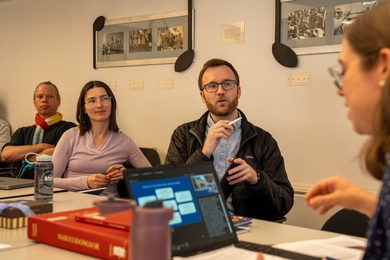
The SHASS Faculty Fellows Program, administered by the MIT Human Insight Collaborative, is fostering new research projects and creating space for supportive and interdisciplinary discussion.
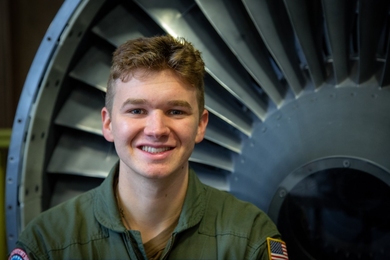
MIT senior, master's candidate, and airman Brian Robinson lives and works at the intersection of aviation, politics, and technology.
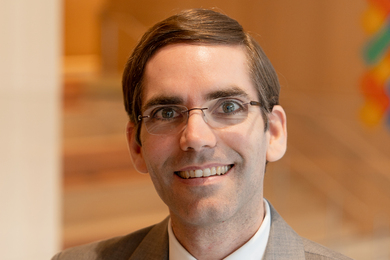
The electrical engineering and nanotechnology leader will guide the US Army-sponsored research center as it advances next-generation materials, electronics, and photonics for national security.
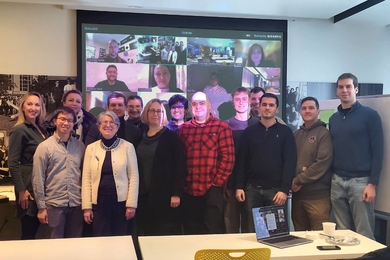
Build for Ukraine 2.0 united students, researchers, and Ukrainian collaborators to prototype solutions shaped by wartime conditions.
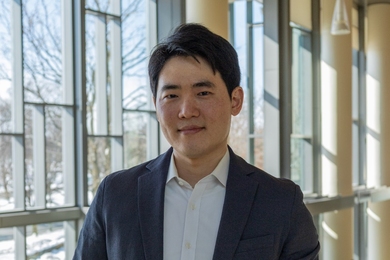
Sojun Park, a postdoc at the Center for International Studies, has learned much from his research on intellectual property as well as his interactions with students and mentors at MIT.
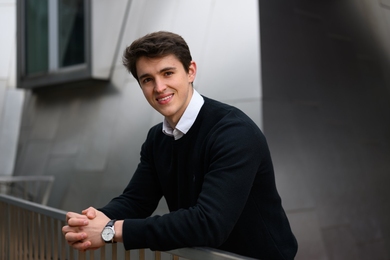
Strahinja Janjusevic brings an international perspective and US Naval Academy education to his graduate research in the MIT Technology and Policy Program.