
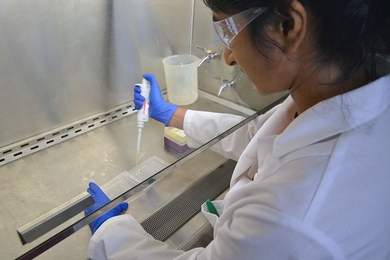
MIT researchers prove fast microbial evolutionary bursts exist
Study reveals closely related microbes can diversify rapidly via horizontal gene transfer.

3Q: Kerry Emanuel on a “Parexit” and the serious risks of climate change
In open letter, 375 National Academy of Sciences members warn against opting out of Paris Agreement.
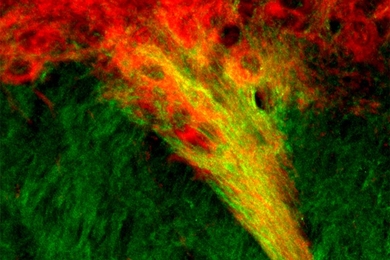
Newly discovered neural connections may be linked to emotional decision-making
Researchers suspect cells in this brain circuit could also be targets of Parkinson’s disease.
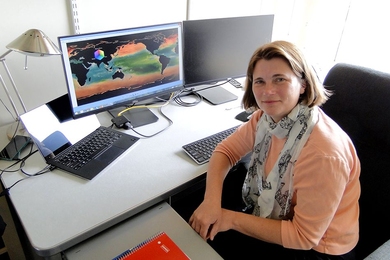
Computing the ocean’s true colors
Stephanie Dutkiewicz’ phytoplankton models project the future of the ocean as food source and carbon sink.
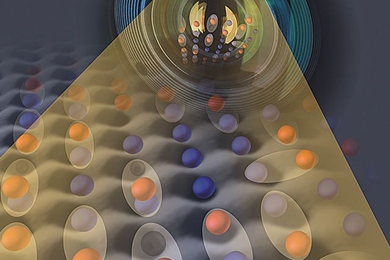
For first time, researchers see individual atoms keep away from each other or bunch up as pairs
Observations of atomic interactions could help pave way to room-temperature superconductors.
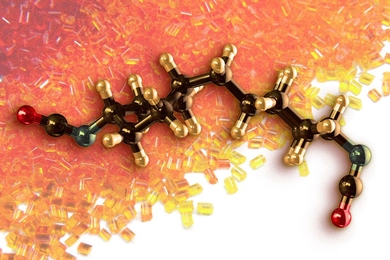
New theory overcomes a longstanding polymer problem
Technique for calculating elasticity could aid design of new materials.
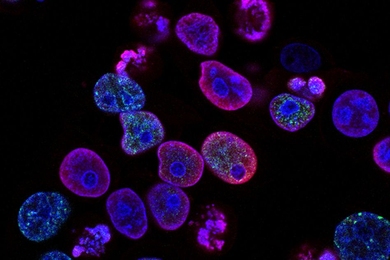
High-capacity nanoparticle
Particles that carry three or more drugs hold potential for targeted cancer therapy.
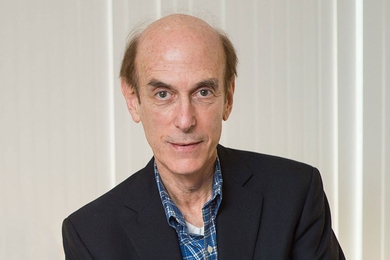
Stephen Lippard wins 2016 Welch Award
MIT professor of chemistry is honored for advancements in chemical research.

Kerson Huang, professor emeritus of physics, dies at 88
Theoretical physicist was also known for his translations of Chinese texts.

How the brain builds panoramic memory
Neuroscientists identify brain regions key to linking different views of our surroundings.
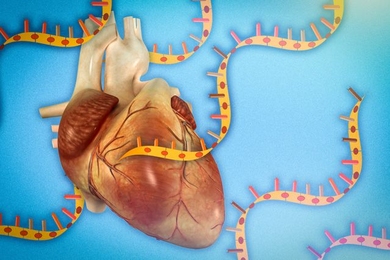
Linking RNA structure and function
Biologists have discovered how an enigmatic type of RNA helps to control cell fate.
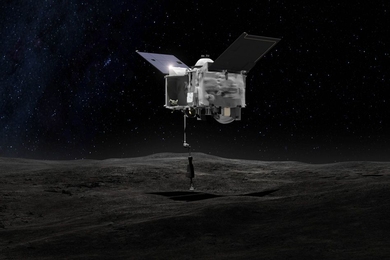
MIT’s REXIS is bound for asteroid Bennu
Instrument will help OSIRIS-REx mission identify locations for collecting an asteroid sample.
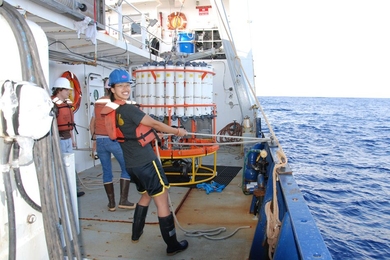
Study finds increased ocean acidification due to human activities
More anthropogenic carbon in the northeast Pacific means weaker shells for many marine species.
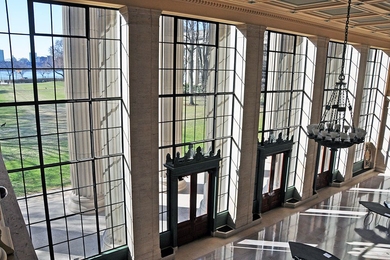
QS ranks MIT the world’s top university for 2016-17
Ranked No. 1 for the fifth straight year, the Institute also places first in 12 of 42 disciplines.