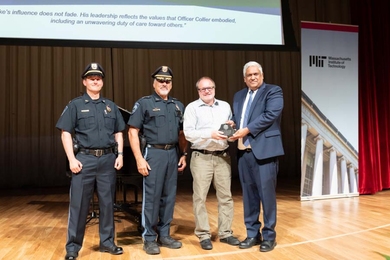
MIT honors employees with 2026 Excellence Awards, Collier Medal, and Staff Award for Distinction in Service
The MIT community celebrated the talent, dedication, and impact of its staff.
The MIT community celebrated the talent, dedication, and impact of its staff.
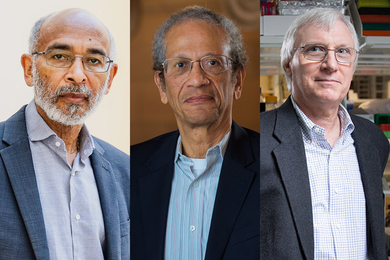
Longtime professors and experts in the fields of anesthesiology, aerospace engineering, and biological engineering, respectively, receive MIT’s highest faculty honor.

As sea levels rise and saltwater seeps into freshwater, stressed aquatic populations may retain overall growth even as diversity declines, MIT scientists find.
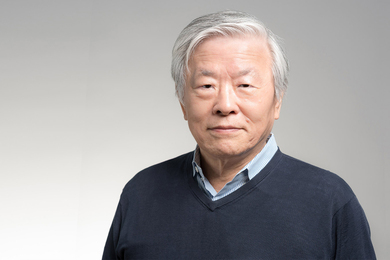
Tonegawa made landmark discoveries about how the immune system generates antibody diversity and how the brain forms memories.
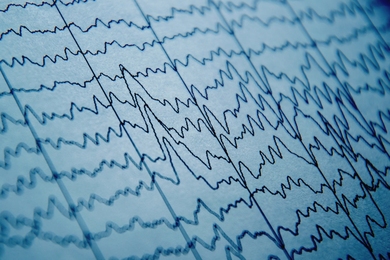
A new study adds evidence that electric fields in the brain help to organize and shape underlying neural activity via “ephaptic coupling.”

MIT researchers have found that a ketogenic high-fat, low-carbohydrate diet fuels the growth of intestinal tumors.
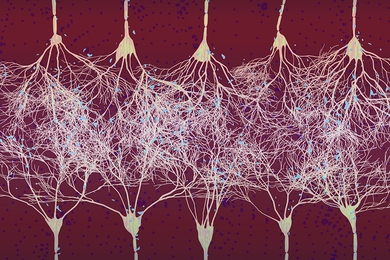
Scientists find that learning to identify a new object subtly reshapes visual processing in the brain.
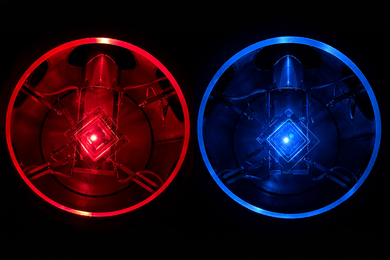
Researchers found a simple solution for extending the lifespans of LEDs made from glowing microscopic particles called quantum dots.
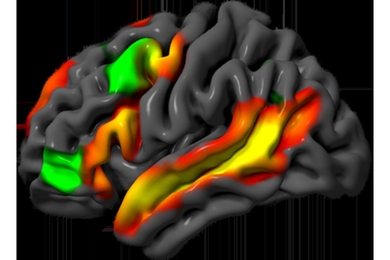
Neuroscientists find logical reasoning does not involve language-processing parts of the brain.

Assistant Professor Eluned Smith describes how new LHC data confirm a previously observed tension with the Standard Model, plus what else will be needed to determine whether new physics is at play.
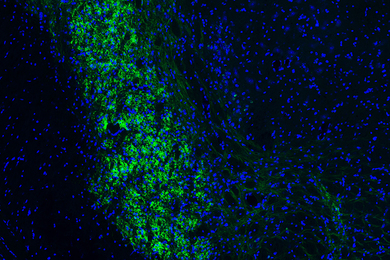
A simple brain circuit measures objects’ distance from the body using touch signals from a rodent’s whiskers, MIT scientists find.
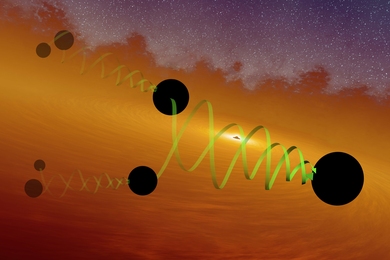
Physicists have found signs of colliding black holes that are themselves products of previous black hole smash-ups.
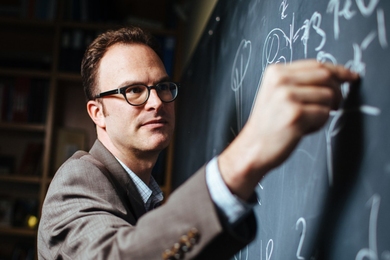
The professor of physics and inaugural director of the NSF AI Institute for Artificial Intelligence and Fundamental Interactions will lead LNS and continue his research in particle physics.
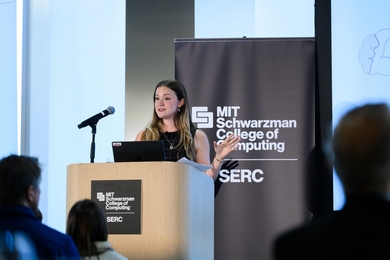
PhD student Rachel Sava, winner of the Envisioning the Future of Computing Prize, explores transformative improvements and dystopian risks of neural technology.
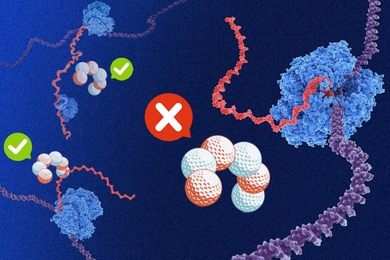
In certain species of bacteria, the answer lies in shielding RNA transcripts from a quality-control factor called Rho. Understanding the requirements for expressible sequences is critical for expression engineering of therapeutic agents.