
MIT spinout maps the body’s metabolites to uncover the hidden drivers of disease
ReviveMed uses AI to gather large-scale data on metabolites — molecules like lipids, cholesterol, and sugar — to match patients with therapeutics.
ReviveMed uses AI to gather large-scale data on metabolites — molecules like lipids, cholesterol, and sugar — to match patients with therapeutics.
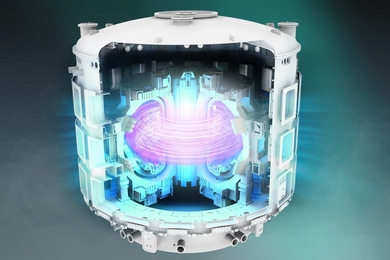
Fusion’s future depends on decoding plasma’s mysteries. Simulations can help keep research on track and reveal more efficient ways to generate fusion energy.
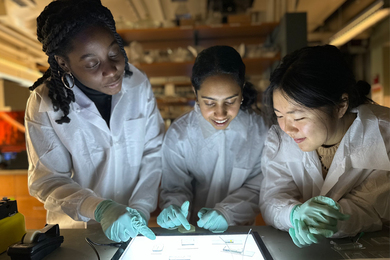
Exploring and applying concepts from different disciplines provides broad knowledge and hands-on practice for real-world application.
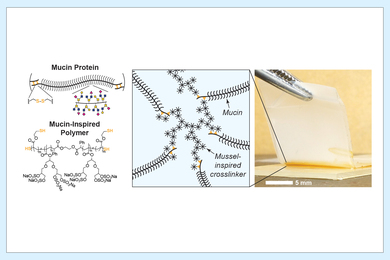
They combined a blend of slimy and sticky proteins to produce a fast-acting, bacteria-blocking, waterproof adhesive for use in biomedical applications.
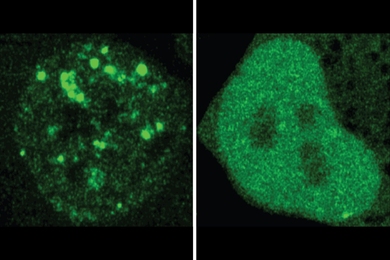
Whitehead Institute and CSAIL researchers created a machine-learning model to predict and generate protein localization, with implications for understanding and remedying disease.
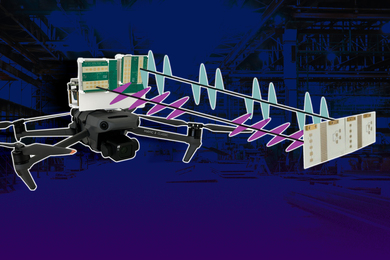
A new low-power system using radio frequency waves takes a major step toward autonomous, indoor drone navigation.
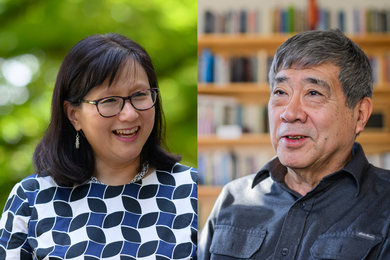
Professors Maria Yang and Kenneth Oye are honored as “Committed to Caring” for their mentorship of graduate students.
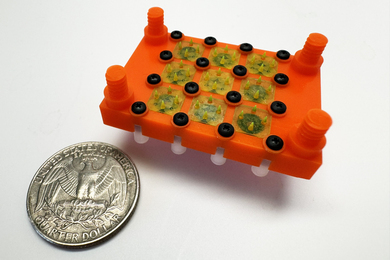
Ideal for propelling tiny satellites, the lightweight devices could be produced on board a spacecraft and cost much less than traditional thrusters.

Alumnus is the first major donor to support the building since Stephen A. Schwarzman’s foundational gift.
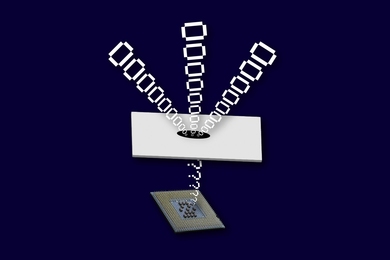
New “Oreo” method from MIT CSAIL researchers removes footprints that reveal where code is stored before a hacker can see them.

Accenture Fellow Shreyaa Raghavan applies machine learning and optimization methods to explore ways to reduce transportation sector emissions.

A deep neural network called CHAIS may soon replace invasive procedures like catheterization as the new gold standard for monitoring heart health.

How the late Woodie Flowers helped create a new foundation for “the MIT way” of teaching.

New faculty member Kaiming He discusses AI’s role in lowering barriers between scientific fields and fostering collaboration across scientific disciplines.
MIT researchers developed a new approach for assessing predictions with a spatial dimension, like forecasting weather or mapping air pollution.