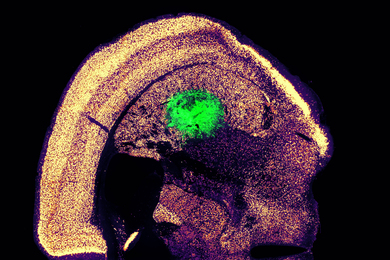
MIT engineers turn skin cells directly into neurons for cell therapy
A new, highly efficient process for performing this conversion could make it easier to develop therapies for spinal cord injuries or diseases like ALS.
A new, highly efficient process for performing this conversion could make it easier to develop therapies for spinal cord injuries or diseases like ALS.

U.S. Air Force engineer and PhD student Randall Pietersen is using AI and next-generation imaging technology to detect pavement damage and unexploded munitions.

The Institute also ranks second in seven subject areas.

Charge Robotics, founded by MIT alumni, has created a system that automatically assembles and installs completed sections of large solar farms.
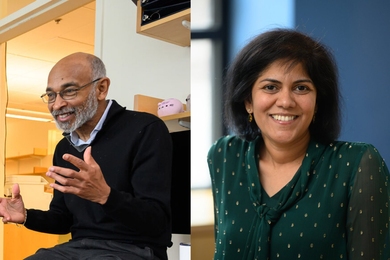
Professors Emery Brown and Hamsa Balakrishnan are honored as “Committed to Caring” for their guidance of graduate students.

Increasing greenhouse gas emissions will reduce the atmosphere’s ability to burn up old space junk, MIT scientists report.

The findings provide new drug targets for stopping the infection’s spread.
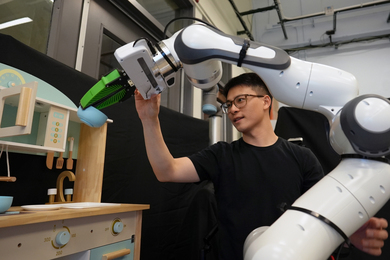
New research could allow a person to correct a robot’s actions in real-time, using the kind of feedback they’d give another human.
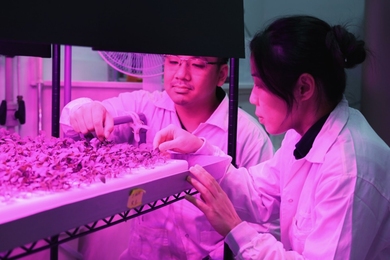
The innovation enables nondestructive iron tracking within plant tissues, helping to optimize plant nutrient management, reduce fertilizer waste, and improve crop health.

Felice Frankel discusses the implications of generative AI when communicating science visually.
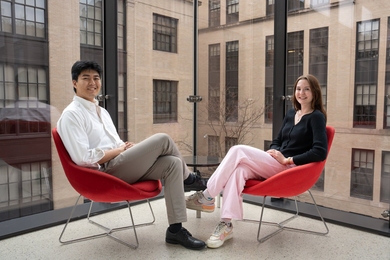
MIT undergraduates broaden their perspectives and prospects through political science.
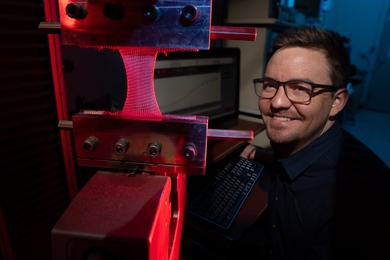
Lincoln Laboratory and MIT researchers are creating new types of bioabsorbable fabrics that mimic the unique way soft tissues stretch while nurturing growing cells.
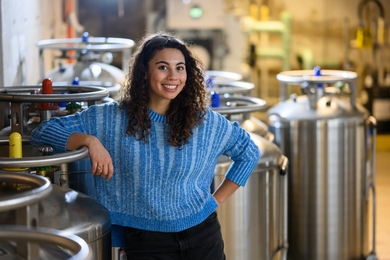
Zoe Fisher, a doctoral student in NSE, is researching how defects can alter the fundamental properties of ceramics upon radiation.

A first history of the document security technology, co-authored by MIT Libraries’ Jana Dambrogio, provides new tools for interdisciplinary research.
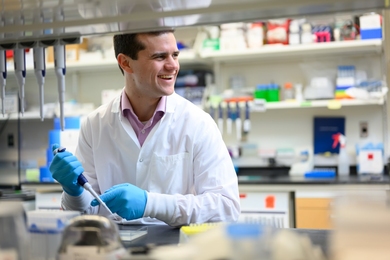
Graduate student and MathWorks Fellow Louis DeRidder is developing a device to make chemotherapy dosing more accurate for individual patients.