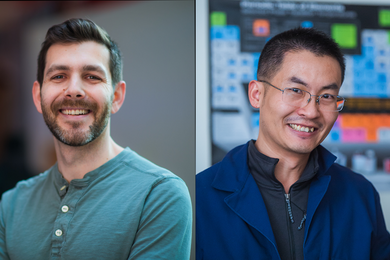
Jacob Andreas and Mingda Li honored with Junior Bose Award for Excellence in Teaching
Award is given each year by the School of Engineering to an outstanding educator up for promotion to associate professor without tenure.
Award is given each year by the School of Engineering to an outstanding educator up for promotion to associate professor without tenure.
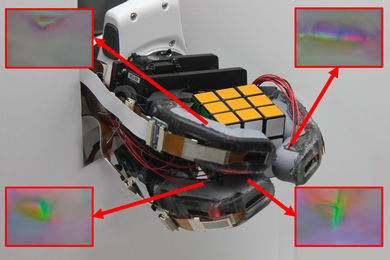
The three-fingered robotic gripper can “feel” with great sensitivity along the full length of each finger – not just at the tips.
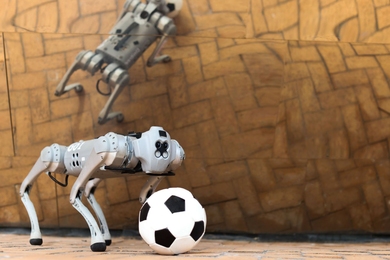
“DribbleBot” can maneuver a soccer ball on landscapes such as sand, gravel, mud, and snow, using reinforcement learning to adapt to varying ball dynamics.

MIT CSHub Deputy Director Hessam AzariJafari is conducting vital research to investigate the impacts of concrete's carbonation across its life cycle.
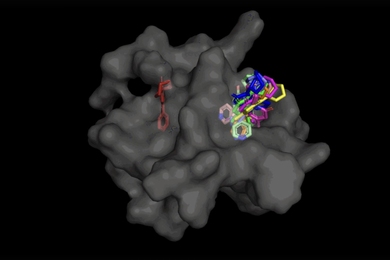
MIT researchers built DiffDock, a model that may one day be able to find new drugs faster than traditional methods and reduce the potential for adverse side effects.
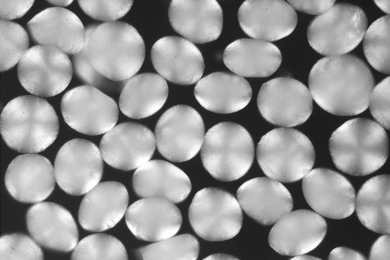
Researchers develop new, patient-friendly hydrogel platform for administering lifesaving biologics.
With the right building blocks, machine-learning models can more accurately perform tasks like fraud detection or spam filtering.

Using these RNA-delivery particles, researchers hope to develop new treatments for cystic fibrosis and other lung diseases.
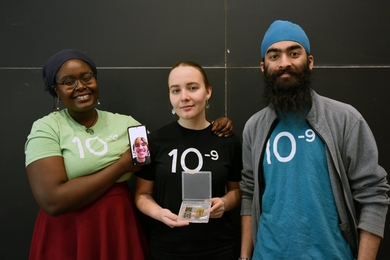
A hands-on class teaches undergraduates the fundamentals of quantum mechanics and nanoscale science from inside MIT.nano’s cleanroom.
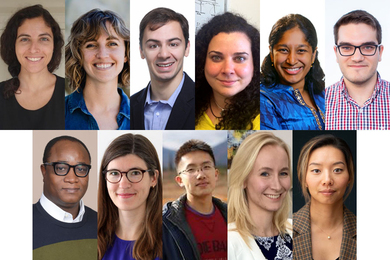
Eleven new faculty members join six of the school's academic departments and institutes.
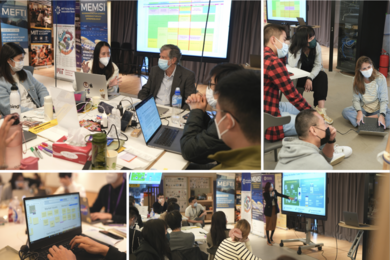
Students develop entrepreneurial mindsets and cultural competency in a startup boot camp.
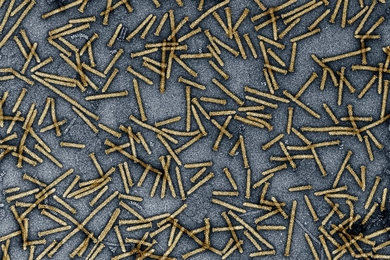
With further development, the programmable system could be used in a range of applications including gene and cancer therapies.
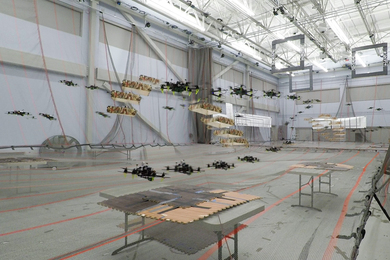
Researchers create a trajectory-planning system that enables drones working together in the same airspace to always choose a safe path forward.
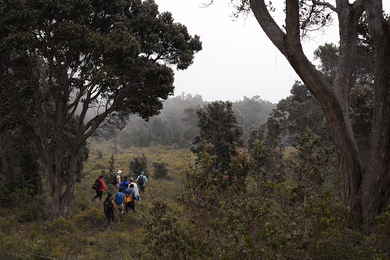
MIT students research effects of climate change on forests and sulfur dioxide emissions as a model for planet-wide events.
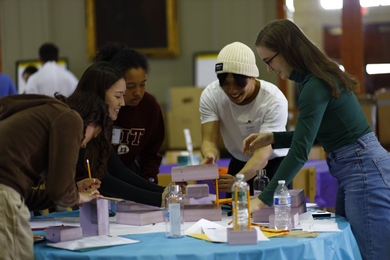
UPOP annual workshop lets sophomores take a deep dive into teamwork, creative problem-solving, and networking in preparation for their future careers.