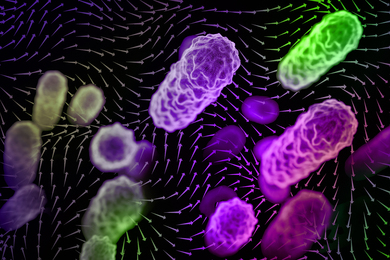
The importance of indoor airflow patterns in spreading airborne disease
Researchers explore how a key factor can mitigate or promote tuberculosis transmission.
Researchers explore how a key factor can mitigate or promote tuberculosis transmission.

New MIT research could lead to better materials for a fossil-fuel-free process for making the chemical that's essential to fertilizer and other products.
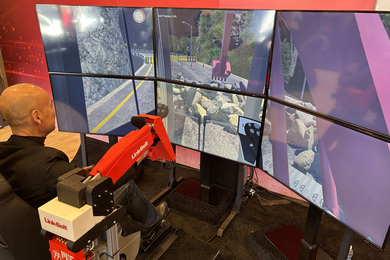
The new, more intuitive system could speed up the training process for excavator operators.
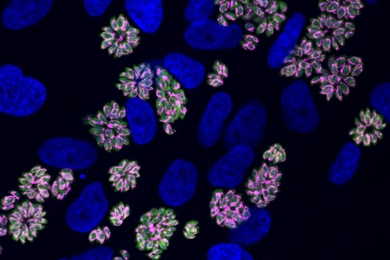
A new study by Whitehead Institute researchers identifies how the widespread parasite Toxoplasma gondii survives in crowded environments in infected cells, which helps it persist in long-lasting brain cysts.

A new, scalable technique could enable powerful radars and sensors based on quantum technology that works at room temperature.
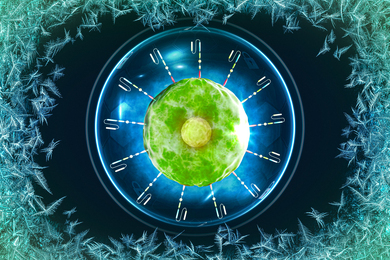
MIT researchers’ approach, which uses naturally occurring sugars as antifreeze, could make it easier for hospitals to deploy this type of cancer treatment.

A new method for surgically removing training examples from a model reveals that as datasets grow, the link between what a model learns and what it produces dissolves.
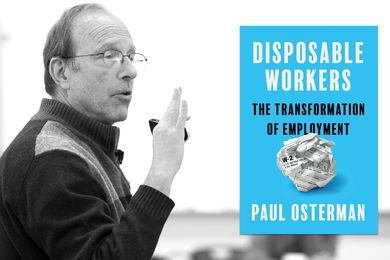
In a new book, Paul Osterman details his research finding more than one-third of the country’s workers are “disposable,” with little security or chance of job advancement.
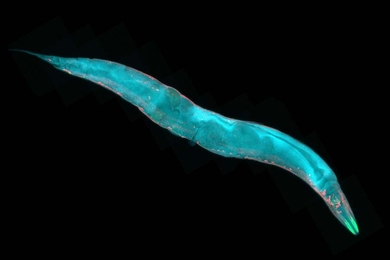
A study of worms finds a protein that helps shape the structure of the genome is critical for establishing the identity of some neurons.
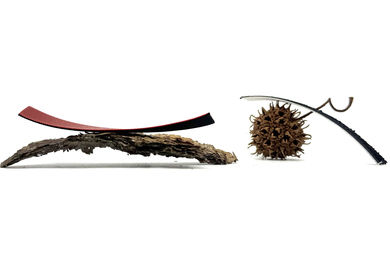
The new framework could streamline the design process of robotic grippers or aerospace components that exhibit complex behaviors found in nature.
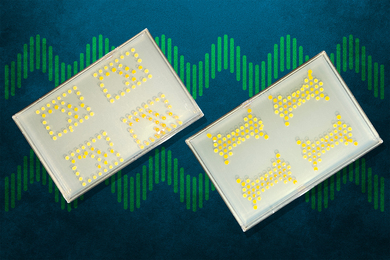
By wiring together colonies of these bacteria, the researchers built circuits that can perform complicated calculations.
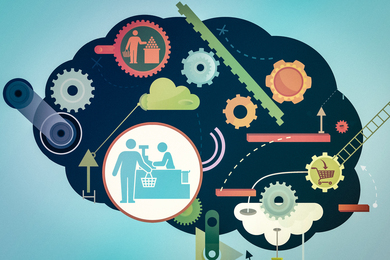
Neuroscientists have discovered circuits in the prefrontal cortex that can be repurposed to store different types of information.
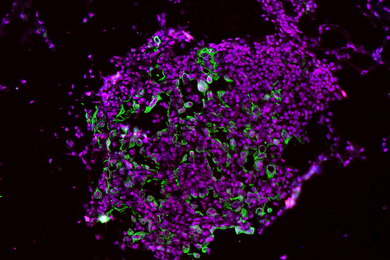
A new study by MIT researchers shows that inhibiting caspase-1 can reduce the risk of tumor growth.

MIT researchers discovered a cellular dance that may offer clues to the development of cancer, asthma, and other diseases.
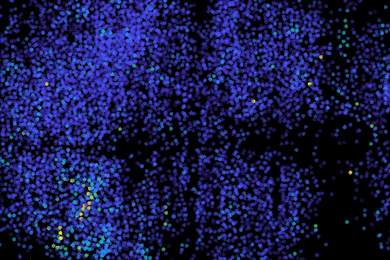
The new technique could help scientists learn how the entire brain works to generate decisions and emotions.