
How mass migration remade postwar Europe
Volha Charnysh’s new book examines refugees and state-building in Germany and Poland after World War II, as new residents spurred economic and civic growth.
Volha Charnysh’s new book examines refugees and state-building in Germany and Poland after World War II, as new residents spurred economic and civic growth.

The new balloon can be expanded before a meal to prevent overeating, then deflated when no longer needed.

This new device uses light to perform the key operations of a deep neural network on a chip, opening the door to high-speed processors that can learn in real-time.

Study shows how smart policies could address competing land-use needs.

Report aims to “ensure that open science practices are sustainable and that they contribute to the highest quality research.”

By examining antigen architectures, MIT researchers built a therapeutic cancer vaccine that may improve tumor response to immune checkpoint blockade treatments.
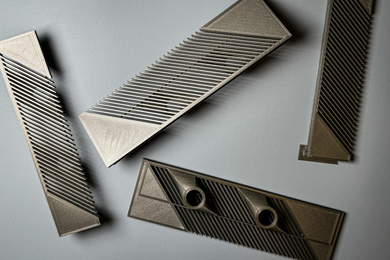
New research shows the filter-feeders strike a natural balance between permeability and selectivity that could inform design of water treatment systems.

The method could help communities visualize and prepare for approaching storms.

The technique could make AI systems better at complex tasks that involve variability.

The Tree-D Fusion system integrates generative AI and genus-conditioned algorithms to create precise simulation-ready models of 600,000 existing urban trees across North America.

New research shows that a grasp of grammar helps even very young children figure out when they must acquire new words.
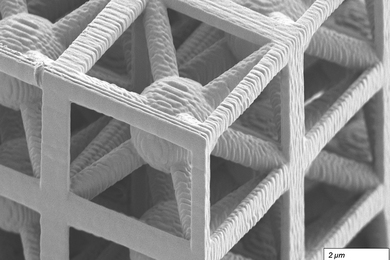
New framework advances experimental capabilities, including design and characterization, of microscale acoustic metamaterials.
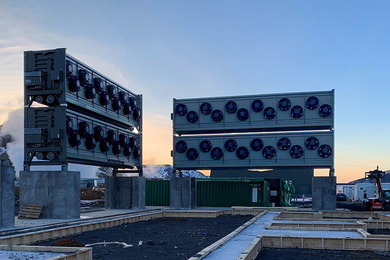
Study finds many climate-stabilization plans are based on questionable assumptions about the future cost and deployment of “direct air capture” and therefore may not bring about promised reductions.
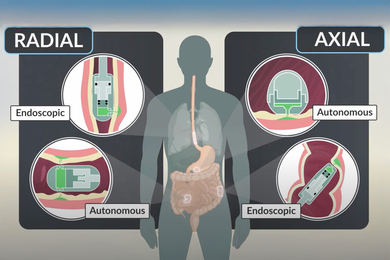
The needle-free device could be used to deliver insulin, antibodies, RNA, or other large molecules.

MIT CSAIL researchers used AI-generated images to train a robot dog in parkour, without real-world data. Their LucidSim system demonstrates generative AI's potential for creating robotics training data.