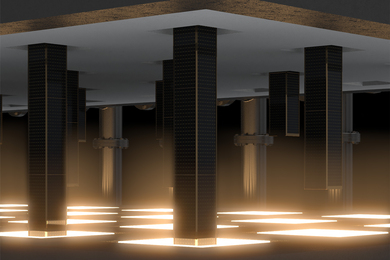
Turning extreme heat into large-scale energy storage
Fourth Power, founded by Professor Asegun Henry, is developing thermal batteries for efficiently storing excess electricity from utility grids and power producers.
Fourth Power, founded by Professor Asegun Henry, is developing thermal batteries for efficiently storing excess electricity from utility grids and power producers.

Academia-industry relationship is an early-stage accelerator, supporting professional progress and research.
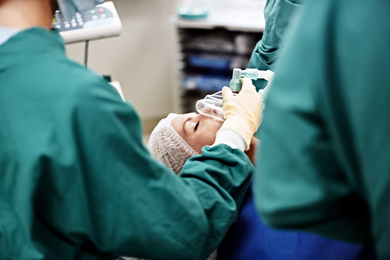
Discovering this common mechanism could lead to a universal anesthesia-delivery system to monitor patients more effectively.
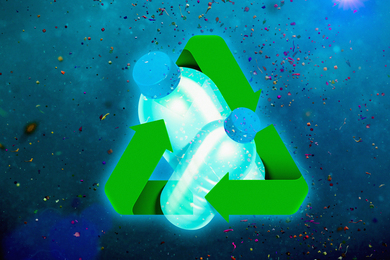
MIT researchers uncovered the roles of bacterial species from the environment as they consume biodegradable plastic.
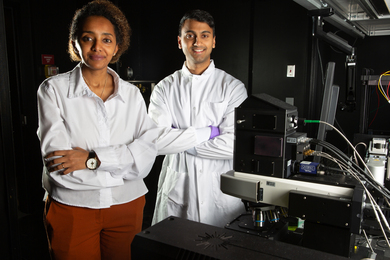
The technology could enable fast, point-of-care diagnoses for pneumonia and other lung conditions.
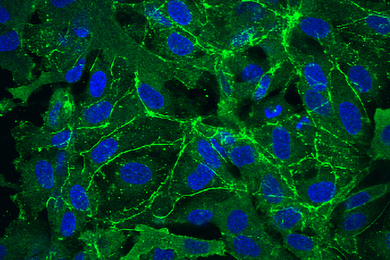
By showing the problem derives from genetic mutations that lead to overexpression of a microRNA, MIT researchers’ study points to potential treatment.
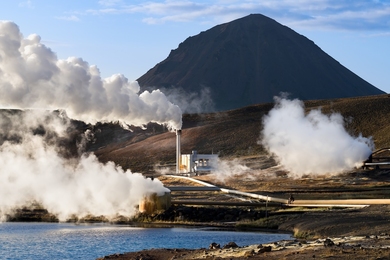
Geothermal innovators at MIT and elsewhere are seeking deeper and hotter rocks to generate electricity at scale.
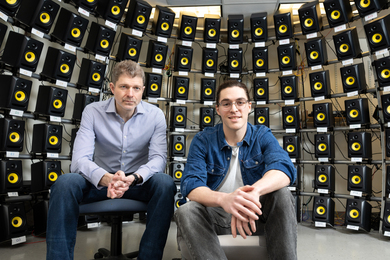
Using a computational model, neuroscientists showed how the brain can selectively focus attention on one voice among others in a noisy environment.
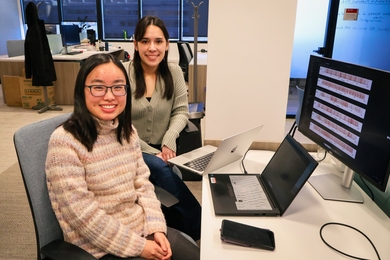
Researchers at MIT, Mass General Brigham, and Harvard Medical School developed a deep-learning model to forecast a patient’s heart failure prognosis up to a year in advance.
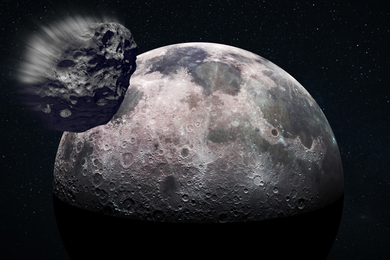
MIT astronomers are developing a new way to detect, monitor, and mitigate the threats posed by smaller asteroids to our critical space infrastructure.

Professor Jesse Thaler describes a vision for a two-way bridge between artificial intelligence and the mathematical and physical sciences — one that promises to advance both.
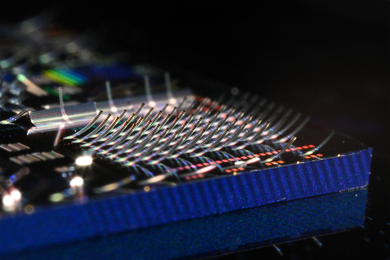
Light-emitting structures that curl off the chip surface could enable advanced displays, high-speed optical communications, and larger-scale quantum computers.
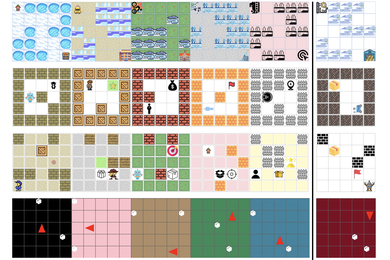
A new hybrid system could help robots navigate in changing environments or increase the efficiency of multirobot assembly teams.
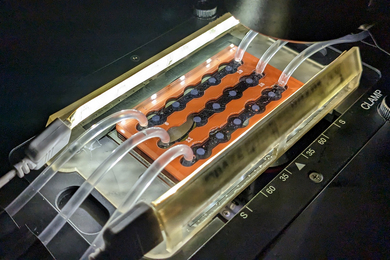
A new study finds hitchhiking bacteria dissolve essential ballast in ubiquitous “snow” particles, which could counteract the ocean’s ability to sequester carbon.
New work suggests the brain can deliver neuron-specific feedback during learning — resembling the error signals that drive machine learning.