
Researchers establish new basis for quantum sensing and communication
New theoretical approach for generating quantum states could lead to improved accuracy and reliability of information and decision systems.
New theoretical approach for generating quantum states could lead to improved accuracy and reliability of information and decision systems.
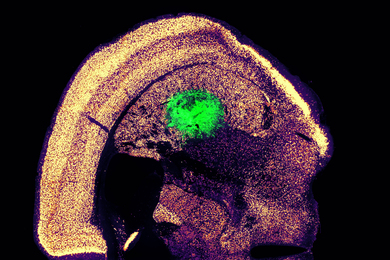
A new, highly efficient process for performing this conversion could make it easier to develop therapies for spinal cord injuries or diseases like ALS.

Experiments find debate training boosts careers by enhancing assertiveness and communications techniques.

McGovern Institute researchers develop a mathematical model to help define how modularity occurs in the brain — and across nature.

Increasing greenhouse gas emissions will reduce the atmosphere’s ability to burn up old space junk, MIT scientists report.
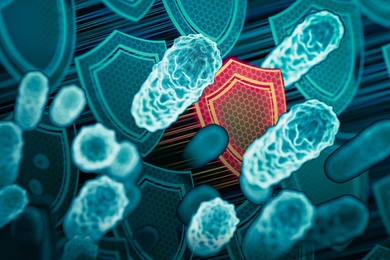
The findings provide new drug targets for stopping the infection’s spread.
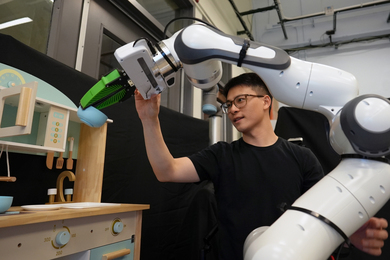
New research could allow a person to correct a robot’s actions in real-time, using the kind of feedback they’d give another human.
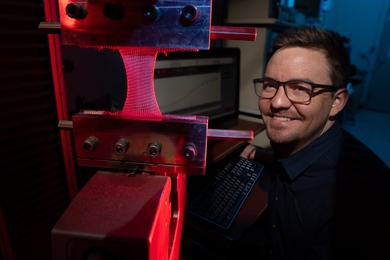
Lincoln Laboratory and MIT researchers are creating new types of bioabsorbable fabrics that mimic the unique way soft tissues stretch while nurturing growing cells.

New results show with high statistical confidence that ozone recovery is going strong.
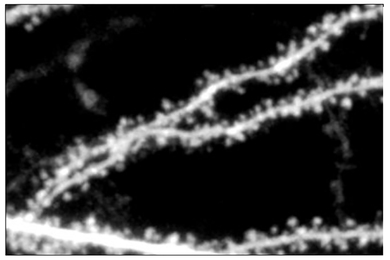
Enhancing activity of a specific component of neurons’ “NMDA” receptors normalized protein synthesis, neural activity, and seizure susceptibility in the hippocampus of fragile X lab mice.

A first history of the document security technology, co-authored by MIT Libraries’ Jana Dambrogio, provides new tools for interdisciplinary research.
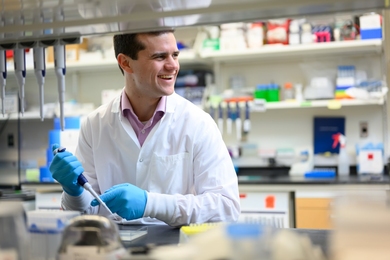
Graduate student and MathWorks Fellow Louis DeRidder is developing a device to make chemotherapy dosing more accurate for individual patients.
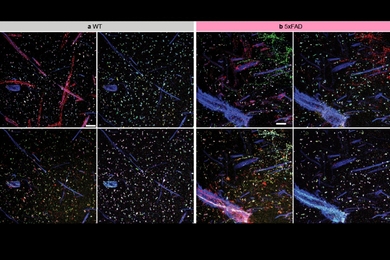
New methods light up lipid membranes and let researchers see sets of proteins inside cells with high resolution.

Agreement between MIT Microsystems Technology Laboratories and GlobalFoundries aims to deliver power efficiencies for data centers and ultra-low power consumption for intelligent devices at the edge.
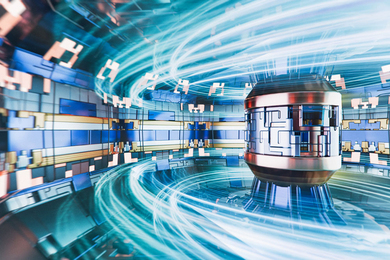
Tests suggest these powerful magnets will not suffer immediate loss of performance during irradiation.