
Study reveals climatic fingerprints of wildfires and volcanic eruptions
In research that could help elucidate humans’ role in global warming, scientists showed how three major natural events impacted global atmospheric temperatures.
In research that could help elucidate humans’ role in global warming, scientists showed how three major natural events impacted global atmospheric temperatures.
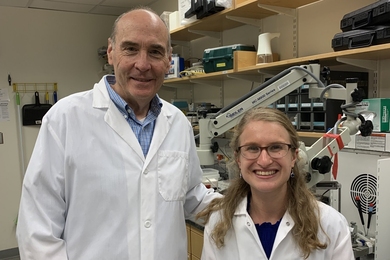
Researchers find mice modeling the autism spectrum disorder fragile X syndrome exhibit the same pattern of differences in low-frequency waves as humans — a new marker for treatment studies.

By enabling two chips to authenticate each other using a shared fingerprint, this technique can improve privacy and energy efficiency.
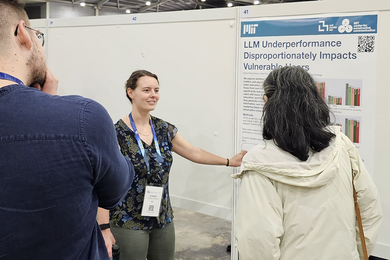
Research from the MIT Center for Constructive Communication finds leading AI models perform worse for users with lower English proficiency, less formal education, and non-US origins.
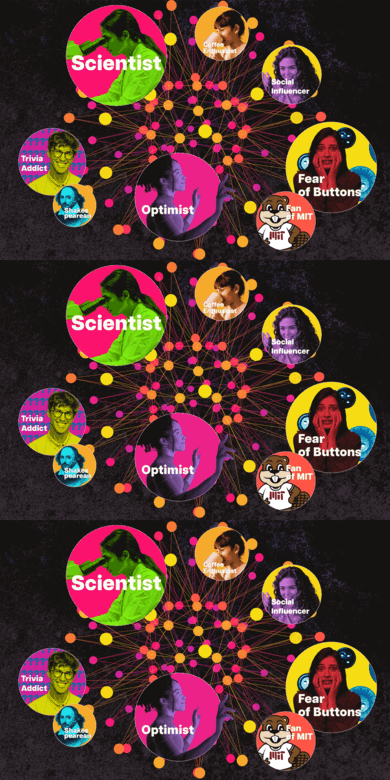
A new method developed at MIT could root out vulnerabilities and improve LLM safety and performance.
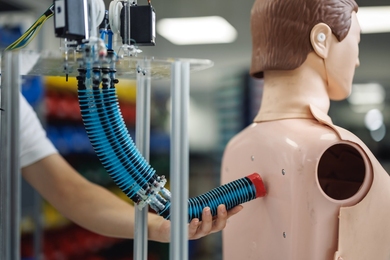
An AI control system co-developed by SMART researchers enables soft robotic arms to learn a broad set of motions once and adapt instantly to changing conditions without retraining.

By minimizing the need to drive around looking for a parking spot, this technique can save drivers up to 35 minutes — and give them a realistic estimate of total travel time.

The context of long-term conversations can cause an LLM to begin mirroring the user’s viewpoints, possibly reducing accuracy or creating a virtual echo-chamber.
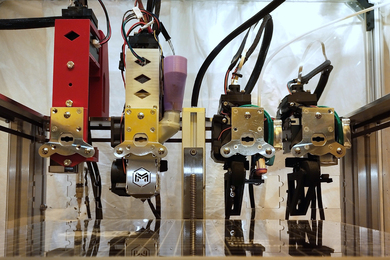
Overcoming challenges of 3D printing with multiple functional materials, MIT researchers fabricated an electric linear motor in hours.

These ricocheting ruptures may be more common than previously thought.
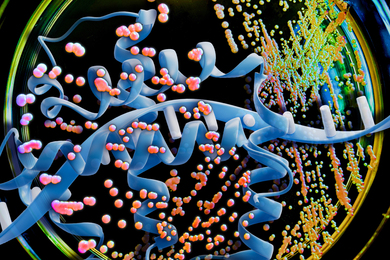
MIT researchers used a large language model to optimize the genetic sequences of proteins manufactured by yeast, making production more efficient.
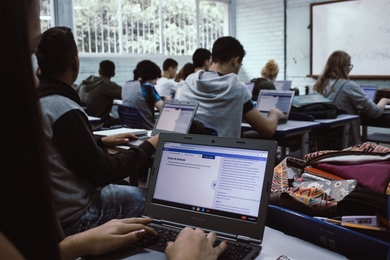
Project AI Evidence will connect governments, tech companies, and nonprofits with world-class economists at MIT and across J-PAL's global network to evaluate and improve AI solutions.
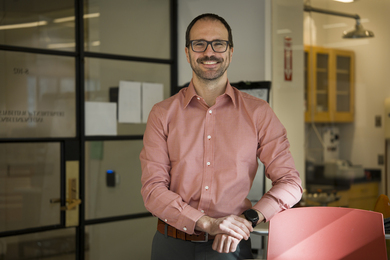
Associate Professor Rafael Gómez-Bombarelli has spent his career applying AI to improve scientific discovery. Now he believes we are at an inflection point.
Driven by overuse and misuse of antibiotics, drug-resistant infections are on the rise, while development of new antibacterial tools has slowed.
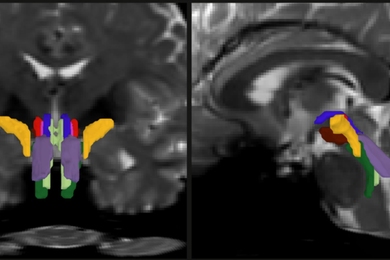
Opening a new window on the brainstem, a new tool reliably and finely resolves distinct nerve bundles in live diffusion MRI scans, revealing signs of injury or disease.