
A new sensor could enable earlier detection of bladder cancer
Using a catheter coated with carbon nanotubes, researchers can detect biomarkers produced by cancer cells in the bladder.
Using a catheter coated with carbon nanotubes, researchers can detect biomarkers produced by cancer cells in the bladder.

With $25 million investment from the Commonwealth of Massachusetts, MIT to build a new shared-use facility to serve as a statewide quantum toolbox.
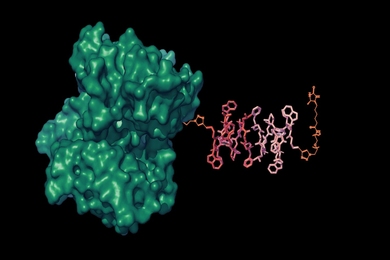
New MRI sensors developed at MIT sensitively detect target molecules in the brain and body.

Student-led expeditions use distributed instruments to observe auroral structures and probe space plasma in real-world conditions.
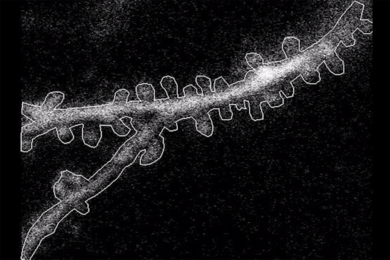
Brain cells take in many signals through thousands of circuit connections. A new study discerns the rules that turn inputs into a functional arrangement for neurons that process vision.

Countries with developing economies provide at least some public water, but safety may lag because it’s less visible, researchers say.

A new study of the postwar U.S. shows which kinds of workers historically filled new tech-enabled jobs.

Computational neuroscientist Sven Dorkenwald and cell biologist Whitney Henry, along with two MIT alumni, are recognized for their exceptional early-career research contributions.

The legendary radio astronomy telescope returns to its science and educational mission at MIT Haystack Observatory.
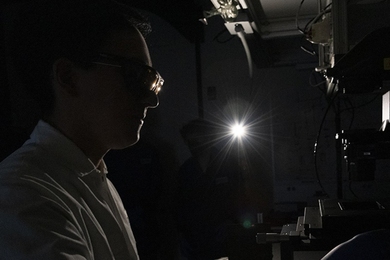
Researchers can now use custom-built microscopy and nanotechnology to tag and follow the activity of individual proteins in real-time.
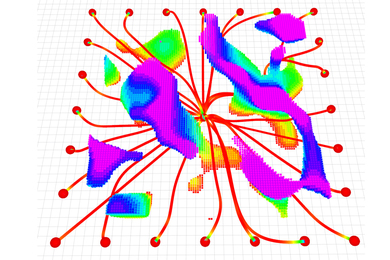
By rapidly generating a smooth path plan that cuts travel time and avoids obstacles, the open-source “MIGHTY” system could streamline disaster recovery and parcel delivery.

The brain’s language network is still evolving in adolescence. But by age 4, language processing is already handled by the left side of the brain, new research finds.

The discovery of dioxaborirane could expand the chemistry of boron-based reagents, providing new tools for oxidation reactions in synthesis and materials science.

A new method for precisely moving columns of individual atoms within a material could give rise to exotic quantum properties.

Using immune-remodeling mRNA molecules, researchers generated T cells that can slow tumor growth and, in some cases, eradicate tumors.