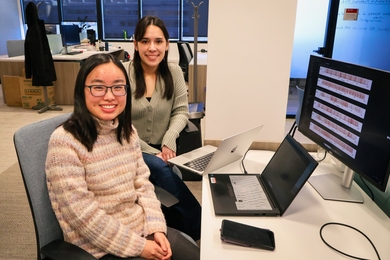
Can AI help predict which heart-failure patients will worsen within a year?
Researchers at MIT, Mass General Brigham, and Harvard Medical School developed a deep-learning model to forecast a patient’s heart failure prognosis up to a year in advance.
Researchers at MIT, Mass General Brigham, and Harvard Medical School developed a deep-learning model to forecast a patient’s heart failure prognosis up to a year in advance.
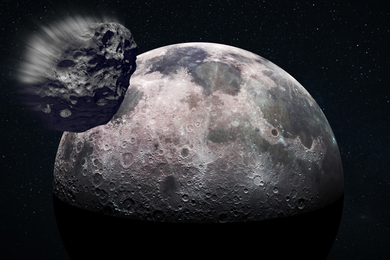
MIT astronomers are developing a new way to detect, monitor, and mitigate the threats posed by smaller asteroids to our critical space infrastructure.

Professor Jesse Thaler describes a vision for a two-way bridge between artificial intelligence and the mathematical and physical sciences — one that promises to advance both.
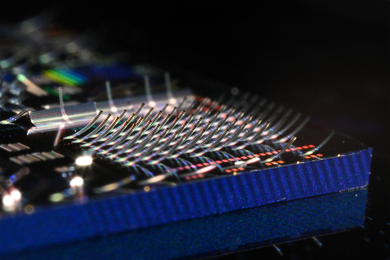
Light-emitting structures that curl off the chip surface could enable advanced displays, high-speed optical communications, and larger-scale quantum computers.
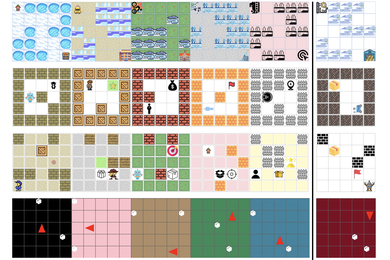
A new hybrid system could help robots navigate in changing environments or increase the efficiency of multirobot assembly teams.
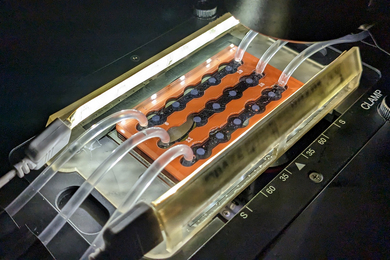
A new study finds hitchhiking bacteria dissolve essential ballast in ubiquitous “snow” particles, which could counteract the ocean’s ability to sequester carbon.

New work suggests the brain can deliver neuron-specific feedback during learning — resembling the error signals that drive machine learning.
A new approach could help users know whether to trust a model’s predictions in safety-critical applications like health care and autonomous driving.
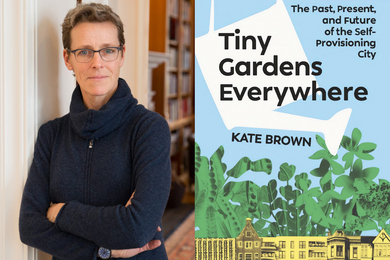
Kate Brown’s book, “Tiny Gardens Everywhere,” examines the hidden history of urban farming, its extensive use, and the politics of growing food.
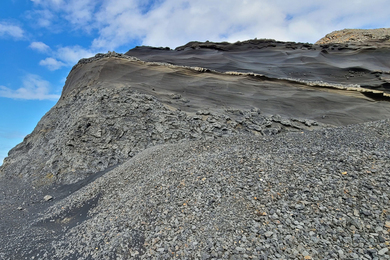
New research by MIT geophysicists could assist efforts to remove carbon from the atmosphere and store it underground.
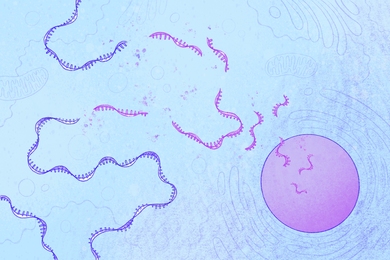
Research reveals how cells may activate a compensation system that can reduce the effects of harmful genetic mutations. This could inform gene therapy development.
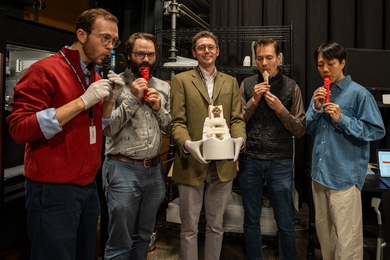
Through an interdisciplinary collaboration between MIT and the Museum of Fine Arts, Boston, researchers are creating playable physical and synthesized replicas.
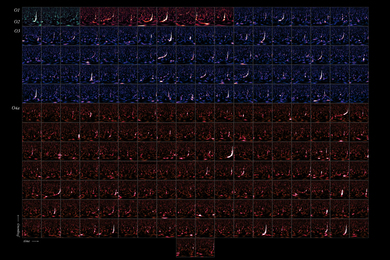
The latest crop of space-time wobbles includes a variety of heavy, fast-spinning, and lopsided colliding black holes.
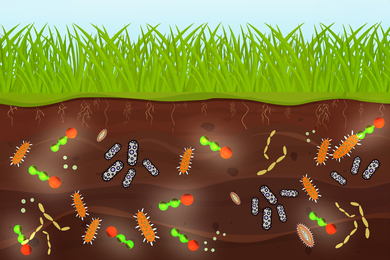
While some N2O is produced naturally at the plant root, agricultural practices can increase its levels, to the detriment of some microbes that support plant growth.
Patterns of gaze and attention can reveal how some people unconsciously figure out how to master a task, new research shows.