
How the surfaces of silicone breast implants affect the immune system
Implant surface topography can influence the development of scarring, inflammation, and other complications, researchers find.
Implant surface topography can influence the development of scarring, inflammation, and other complications, researchers find.
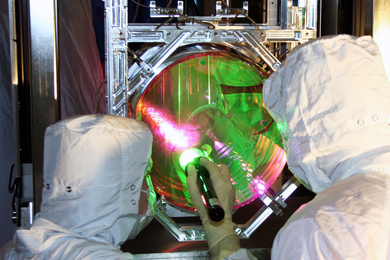
The results open possibilities for studying gravity’s effects on relatively large objects in quantum states.

MIT researchers demonstrate a way to sharply reduce errors in two-qubit gates, a significant advance toward fully realizing quantum computation.

Professor Laurie Boyer studies cardiac development, and how we might be able to mend broken hearts.

2021 Global Change Outlook from the MIT Joint Program on the Science and Policy of Global Change shows how more aggressive policies can sharply reduce climate risk.
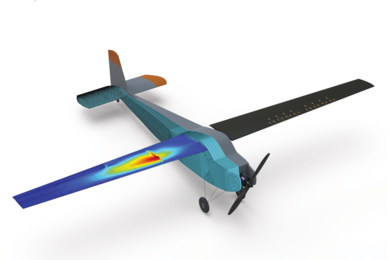
Model could help predictive virtual models become standard practice in engineering.
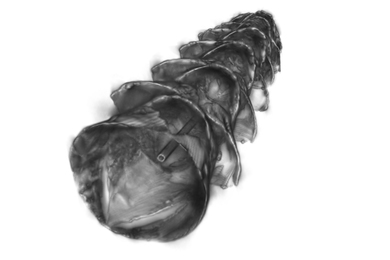
MIT engineers used kirigami-style etching to design a stent that can temporarily lodge in tubular organs to release drugs.
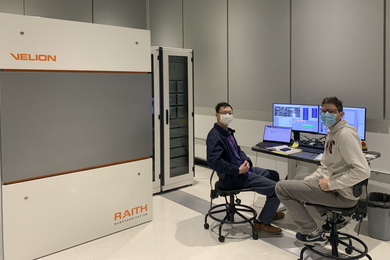
FIB-SEM is now available to researchers across the Institute for use in characterization, nanofabrication, and rapid prototyping.
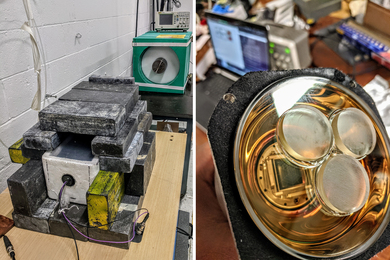
MIT team devises compact, affordable system for identifying elemental composition of nuclear and other materials.
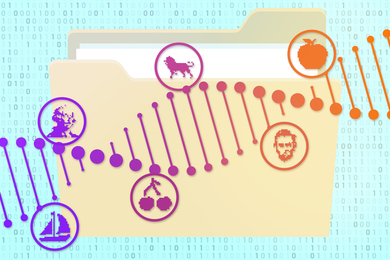
A technique for labeling and retrieving DNA data files from a large pool could help make DNA data storage feasible.

With thousands of satellites, each network could beam down tens of terabits per second, filling gaps left by land-based services.
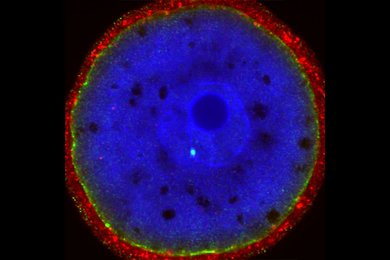
Novel method, developed by McGovern Institute researchers, may lead to safer, more efficient gene therapies.
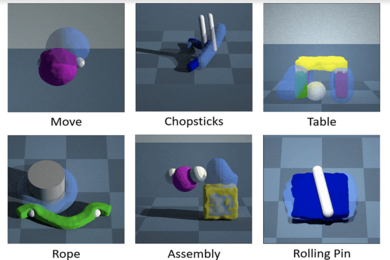
A virtual environment embedded with knowledge of the physical world speeds up problem-solving.

Observations quadruple the number of known radio bursts and reveal two types: one-offs and repeaters.

Assistant professor Connor Coley is developing tools that would be able to predict molecular behavior and learn from both successes and mistakes.