
Seeing the plasma edge of fusion experiments in new ways with artificial intelligence
MIT researchers are testing a simplified turbulence theory’s ability to model complex plasma phenomena using a novel machine-learning technique.
MIT researchers are testing a simplified turbulence theory’s ability to model complex plasma phenomena using a novel machine-learning technique.
The new observations record a key crossover from classical to quantum behavior.
Embedding bacteria in soft material tests researchers’ theories.
MIT PhD student Rachel Bielajew is taking on plasma turbulence, and helping make a better world — through science and community action.
New findings may help researchers hone predictions for where phytoplankton will migrate with climate change.

Using a new robotic platform, researchers can simultaneously track hundreds of microbial populations as they evolve new proteins or other molecules.
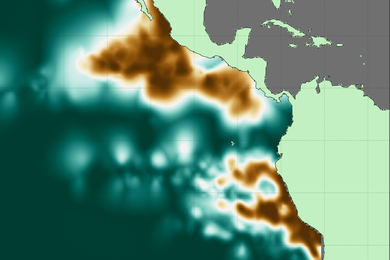
The 3D maps may help researchers track and predict the ocean’s response to climate change.
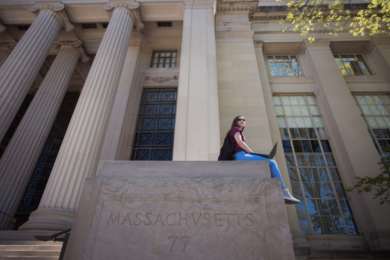
MIT community members made headlines around the world for their innovative approaches to addressing problems local and global.

MIT field experiment from India finds a one-time economic boost helps the very poor fare better for at least a decade.
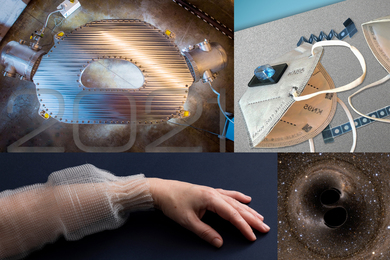
The year’s popular research stories include a promising new approach to cancer immunotherapy, the confirmation of a 50-year-old theorem, and a major fusion breakthrough.
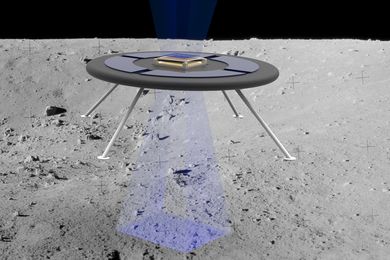
A levitating vehicle might someday explore the moon, asteroids, and other airless planetary surfaces.
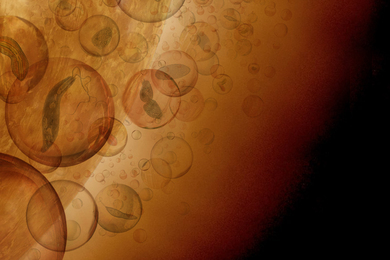
A new study shows it’s theoretically possible. The hypothesis could be tested soon with proposed Venus-bound missions.
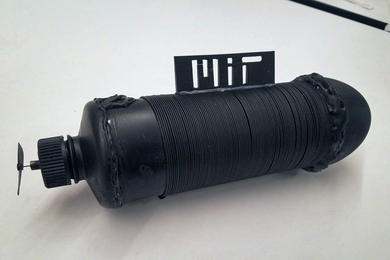
The rechargeable battery can be woven and washed, and could provide power for fiber-based electronic devices and sensors.
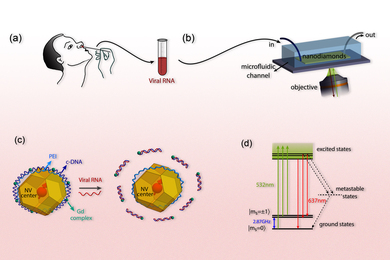
Mathematical simulations show the new approach may offer faster, cheaper, and more accurate detection, including identifying new variants.
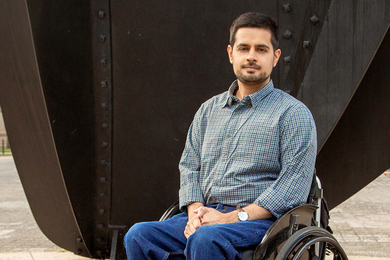
HASTS PhD student Rijul Kochhar tracks changing medical and microbial realities, and examines what they portend for society.