
Technique could improve the sensitivity of quantum sensing devices
The method lets researchers identify and control larger numbers of atomic-scale defects, to build a bigger system of qubits.
The method lets researchers identify and control larger numbers of atomic-scale defects, to build a bigger system of qubits.
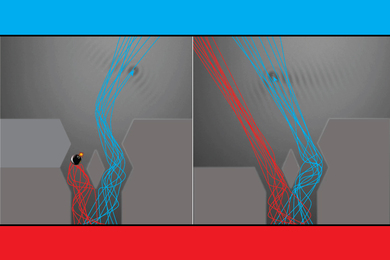
In a study that could help fill some holes in quantum theory, the team recreated a “quantum bomb tester” in a classical droplet test.
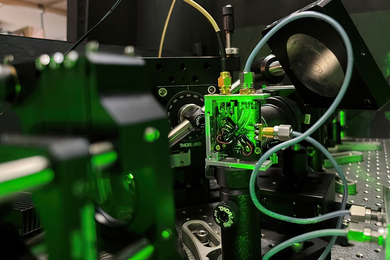
MIT researchers develop a protocol to extend the life of quantum coherence.
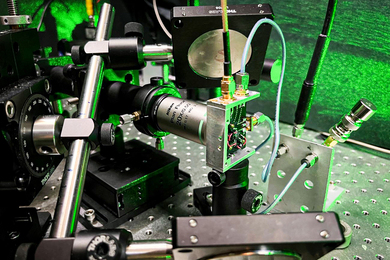
By fine-tuning the spin density in some materials, researchers may be able to develop new quantum sensors or quantum simulations.
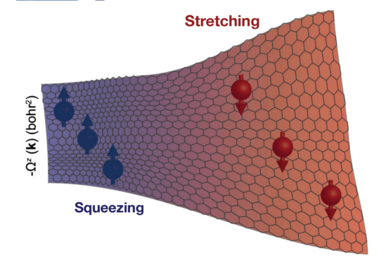
Researchers discover how to control the anomalous Hall effect and Berry curvature to create flexible quantum magnets for use in computers, robotics, and sensors.

Work could lead to heady applications in novel electronics and more.
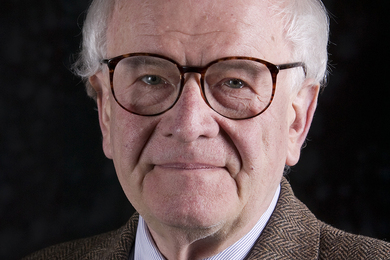
Over more than 50 years at MIT, he made fundamental contributions to quantum field theory and discovered topological and geometric phenomena.
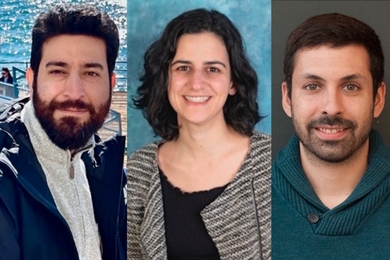
Recipients Luis Antonio Benítez, Carolina Cuesta-Lazaro, and Fernando Romero López receive support for their scientific research.
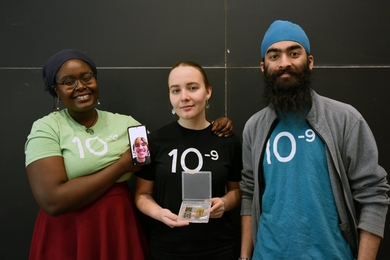
A hands-on class teaches undergraduates the fundamentals of quantum mechanics and nanoscale science from inside MIT.nano’s cleanroom.
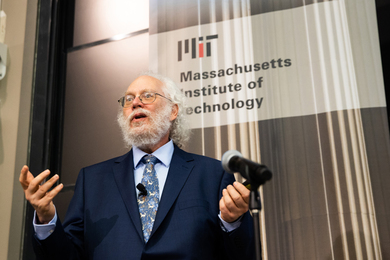
In MIT’s 2023 Killian Lecture, Peter Shor shares a brief history of quantum computing from a personal viewpoint.
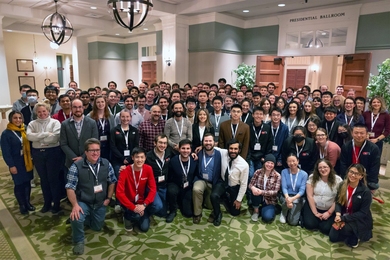
The second annual student-industry conference was held in-person for the first time.
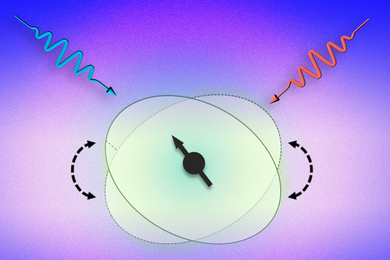
Using lasers, researchers can directly control a property of nuclei called spin, that can encode quantum information.
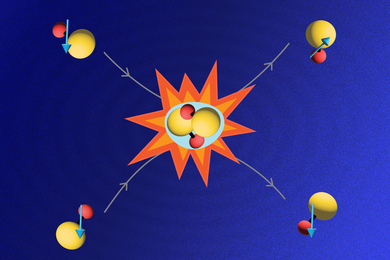
The findings could provide a new way to control chemical reactions.
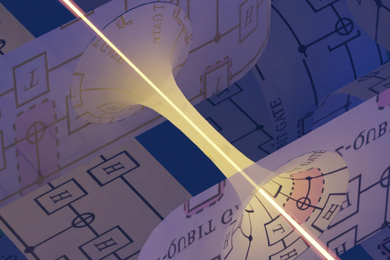
Researchers at the Center for Theoretical Physics lead work on testing quantum gravity on a quantum processor.
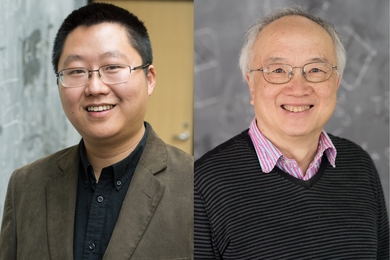
Inaugural award goes to MIT condensed matter theory professors of physics.