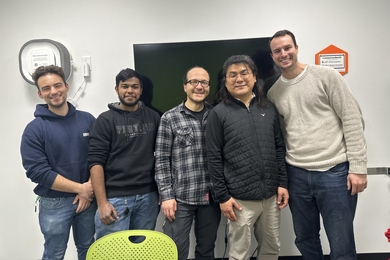
How J-WAFS Solutions grants bring research to market
Nona Technologies exemplifies how J-WAFS has helped launch real-world solutions for global water and food challenges.
Nona Technologies exemplifies how J-WAFS has helped launch real-world solutions for global water and food challenges.

Researchers showed they can inexpensively produce silk microneedles to deliver vitamins or agrochemicals to plants.

Researchers analyzed the full lifecycle of several fuel options and found this approach has a comparable environmental impact, overall, to burning low-sulfur fuels.

With the new system, farmers could significantly cut their use of pesticides and fertilizers, saving money and reducing runoff.
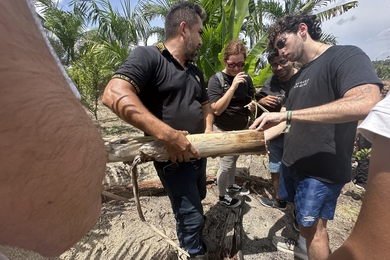
MIT students travel to the Amazon, working with locals to address the plastics sustainability crisis.

Increasing greenhouse gas emissions will reduce the atmosphere’s ability to burn up old space junk, MIT scientists report.

New results show with high statistical confidence that ozone recovery is going strong.
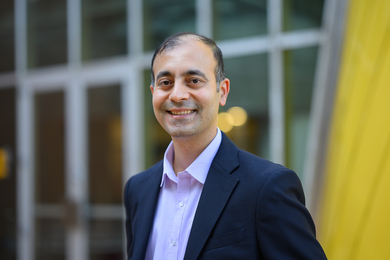
The mechanical engineering professor will lead MIT’s only program specifically focused on water and food for human need.
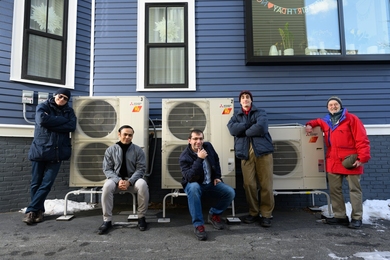
A new MIT study identifies steps that can lower not only emissions, but also costs, across the combined electric power and natural gas industries that now supply heating fuels.
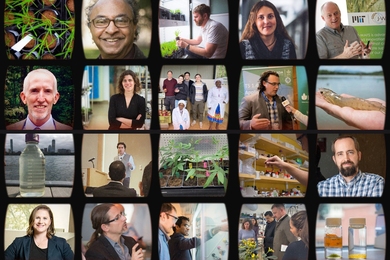
For the past decade, the Abdul Latif Jameel Water and Food Systems Lab has strengthened MIT faculty efforts in water and food research and innovation.

The nitrogen product developed by the company, which was co-founded by Professor Chris Voigt, is being used across millions of acres of American farmland.

The company builds water recycling, treatment, and purification solutions for some of the world’s largest brands.
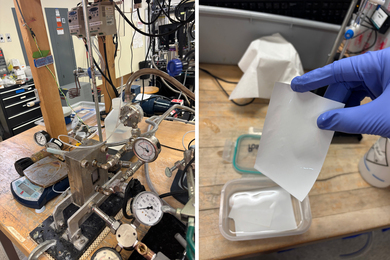
MIT engineers designed a nanofiltration process that could make aluminum production more efficient while reducing hazardous waste.
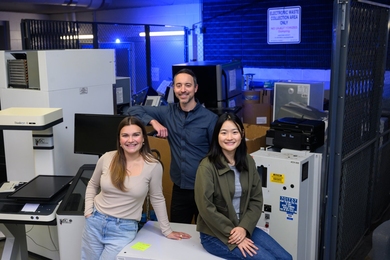
SERC Scholars from around the MIT community examine the electronic hardware waste life cycle and climate justice.
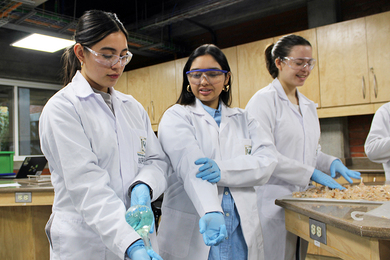
In parallel, MIT and Universidad del Valle de Guatemala students seek to advance local innovation by and for Guatemalan communities.