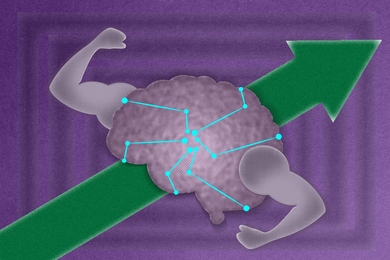
Guided learning lets “untrainable” neural networks realize their potential
CSAIL researchers find even “untrainable” neural nets can learn effectively when guided by another network’s built-in biases using their guidance method.
CSAIL researchers find even “untrainable” neural nets can learn effectively when guided by another network’s built-in biases using their guidance method.

MIT researchers found a way to predict how efficiently materials can transport protons in clean energy devices and other advanced technologies.

The “self-steering” DisCIPL system directs small models to work together on tasks with constraints, like itinerary planning and budgeting.

The technique can help scientists in economics, public health, and other fields understand whether to trust the results of their experiments.

MIT researchers identified three cognitive skills that we use to infer what someone really means.

With insect-like speed and agility, the tiny robot could someday aid in search-and-rescue missions.
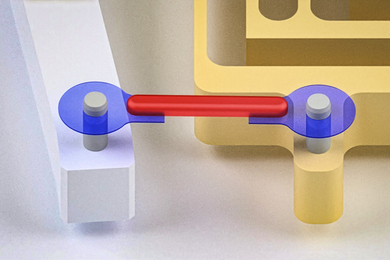
The new design from MIT engineers could pump up many biohybrid builds.

Large language models can learn to mistakenly link certain sentence patterns with specific topics — and may then repeat these patterns instead of reasoning.

Solar maximum occurred within the past year — good news for aurora watchers, as the most active period for displays at New England latitudes occurs in the three years following solar maximum.
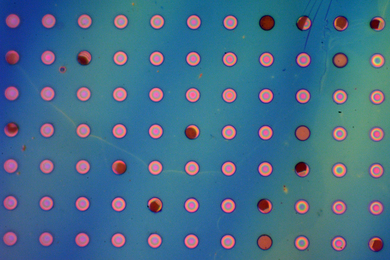
Because it’s nearly impermeable to gases, the polymer coating developed by MIT engineers could be used to protect solar panels, machinery, infrastructure, and more.
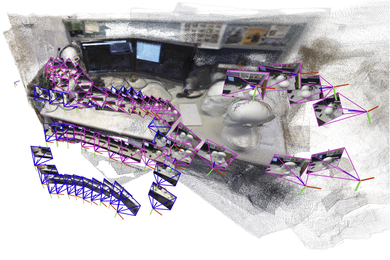
A new approach developed at MIT could help a search-and-rescue robot navigate an unpredictable environment by rapidly generating an accurate map of its surroundings.

MIT PhD student and CSAIL researcher Justin Kay describes his work combining AI and computer vision systems to monitor the ecosystems that support our planet.

Researchers find that design elements of data visualizations influence viewers’ assumptions about the source of the information and its trustworthiness.

In a new study, MIT researchers evaluated quantum materials’ potential for scalable commercial success — and identified promising candidates.
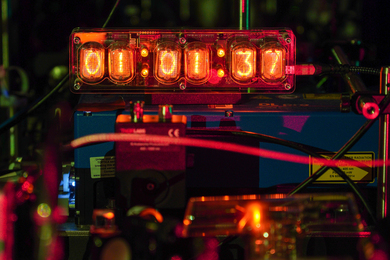
A new method turns down quantum noise that obscures the “ticking” of atoms, and could enable stable, transportable atomic clocks.