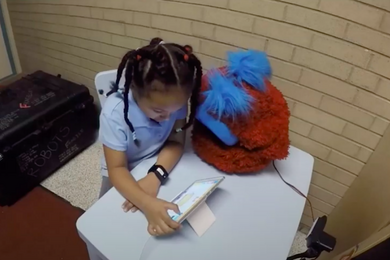
Learning with — and about — AI technology
At Open Learning Talks, Cynthia Breazeal and Eric Klopfer discuss artificial intelligence education.
At Open Learning Talks, Cynthia Breazeal and Eric Klopfer discuss artificial intelligence education.

MIT Task Force on the Work of the Future releases research brief "Artificial Intelligence and the Future of Work."
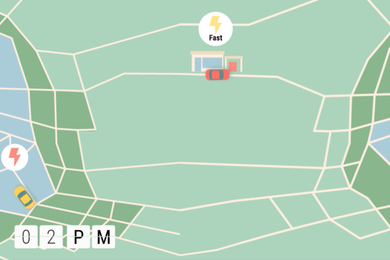
Study measures which kinds of infrastructure improvements could lead to wider adoption of clean vehicles.
A new system devises hardware architectures to hasten robots’ response time.
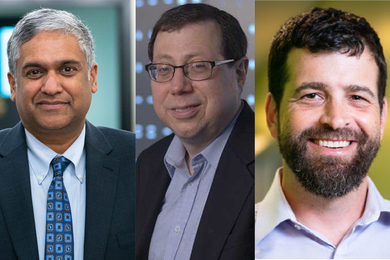
Association for Computing Machinery honors Anantha Chandrakasan, Alan Edelman, and Samuel Madden for work that underpins contemporary computing.
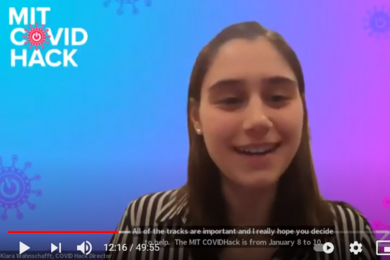
Weekend hackathon inspires hundreds of MIT students to find ways to improve the upcoming semester.
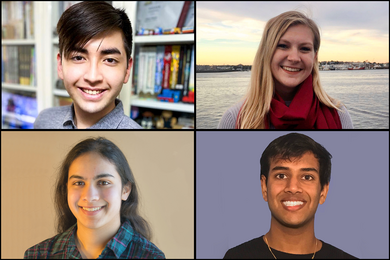
In two years, the MIT Quest for Intelligence has allowed hundreds of students to explore AI in its many applications.
Electrical engineer William Oliver develops technology to enable reliable quantum computing at scale.
Brain and cognitive sciences professor will lead the Institute’s interdisciplinary initiative to advance research in natural and artificial intelligence.

Using this computational system, researchers can identify viral protein sequences that could make better vaccine targets.
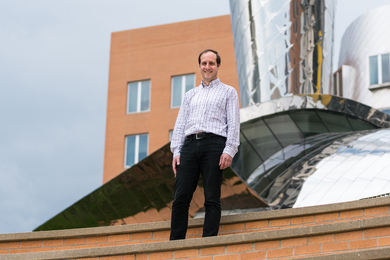
EECS faculty head of artificial intelligence and decision making honored for significant and extended contributions to the field of AI.
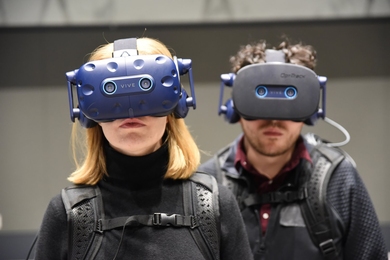
Facility within MIT.nano offers equipment and capabilities for visualizing data, creating immersive environments.
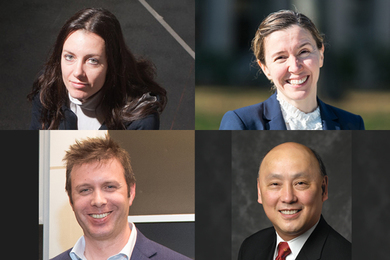
Three MIT professors and a principal staff member from Lincoln Laboratory are among the 2021 class of fellows.
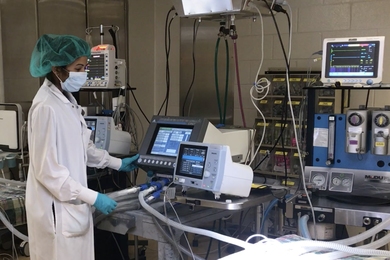
MIT mechanical engineers have developed technologies to help hospitals around the world provide life-saving oxygen to patients with Covid-19 and other respiratory illnesses.
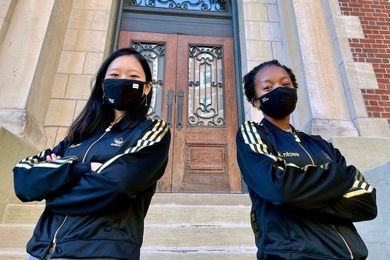
SWE members develop innovative and creative ways to maintain programming during the pandemic.