
Teaching AI models to say “I’m not sure”
A new training method improves the reliability of AI confidence estimates without sacrificing performance, addressing a root cause of hallucination in reasoning models.
A new training method improves the reliability of AI confidence estimates without sacrificing performance, addressing a root cause of hallucination in reasoning models.
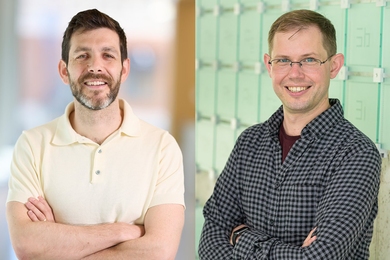
The associate professors of EECS and chemistry, respectively, are honored for exceptional contributions to teaching, research, and service at MIT.
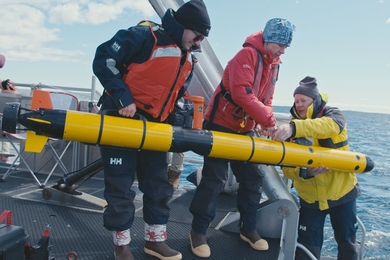
Researchers are developing hardware and algorithms to improve collaboration between divers and autonomous underwater vehicles engaged in maritime missions.

As the School of Humanities, Arts, and Social Sciences marks 75 years, Dean Agustín Rayo reflects on how AI is reshaping higher education and why SHASS disciplines continue to be central to MIT’s mission.

The influential first leader of the Computation Structures Group at MIT played a key role in the development of asynchronous computing.
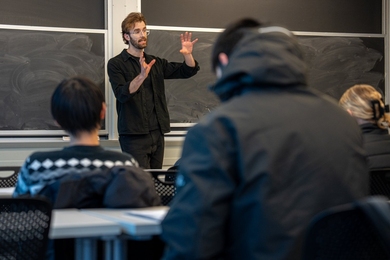
As the NC Ethics of Technology Postdoctoral Fellow, Michal Masny is advancing dialogue, teaching, and research into the social and ethical dimensions of new computing technologies.

Researchers use control theory to shed unnecessary complexity from AI models during training, cutting compute costs without sacrificing performance.

Researchers developed a system that intelligently balances workloads to improve the efficiency of flash storage hardware in a data center.

MIT researchers developed a testing framework that pinpoints situations where AI decision-support systems are not treating people and communities fairly.
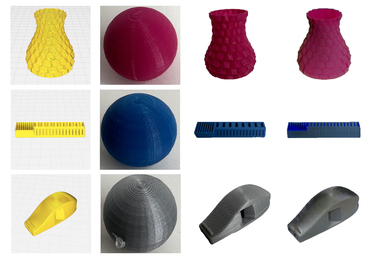
By quickly generating aesthetically accurate previews of fabricated objects, the VisiPrint system could make prototyping faster and less wasteful.
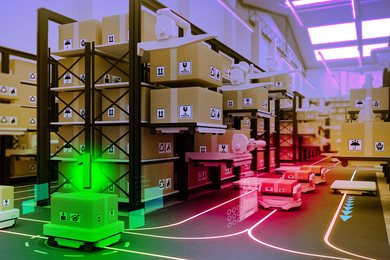
This new approach adapts to decide which robots should get the right of way at every moment, avoiding congestion and increasing throughput.
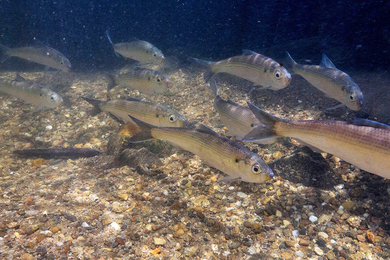
MIT Sea Grant works with the Woodwell Climate Research Center and other collaborators to demonstrate a deep learning-based system for fish monitoring.
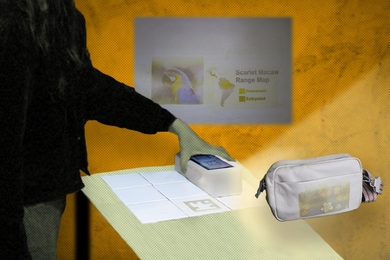
The portable “ChromoLCD” device combines LCD and LED lighting to customize high-quality designs onto things like shirts and whiteboards.
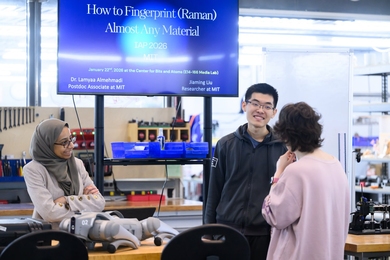
Participants learn how laser “fingerprinting” can help identify materials in fields ranging from law enforcement to art restoration.
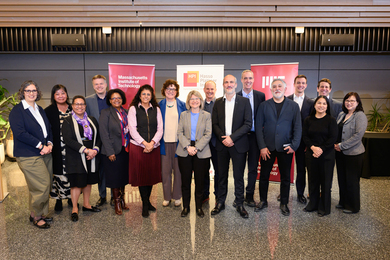
Jointly led by the MIT Morningside Academy for Design, MIT Schwarzman College of Computing, and the Hasso Plattner Institute in Potsdam, the hub will foster a dynamic community where computing, creativity, and human-centered innovation meet.