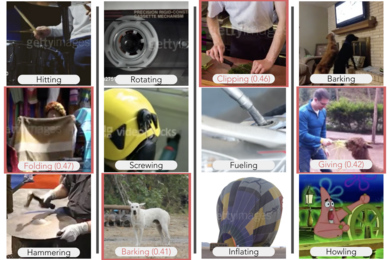
Toward a machine learning model that can reason about everyday actions
Researchers train a model to reach human-level performance at recognizing abstract concepts in video.
Researchers train a model to reach human-level performance at recognizing abstract concepts in video.
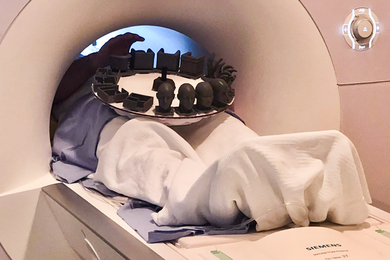
Study finds that the fusiform face area is active when blind people touch 3D models of faces.
Through innovation in software and hardware, researchers move to reduce the financial and environmental costs of modern artificial intelligence.

The design could advance the development of small, portable AI devices.
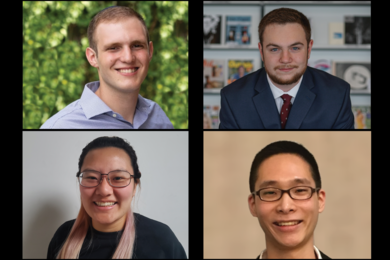
UROP students explore applications in robotics, health care, language understanding, and nuclear engineering.
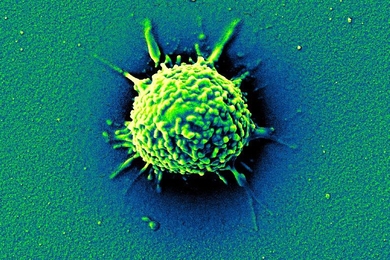
The MIT-IBM Watson AI Lab is funding 10 research projects aimed at addressing the health and economic consequences of the pandemic.
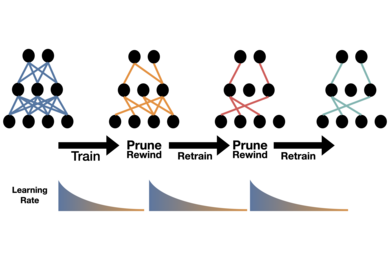
Researchers unveil a pruning algorithm to make artificial intelligence applications run faster.
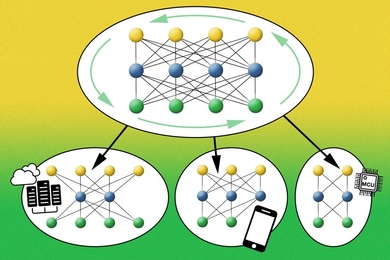
MIT system cuts the energy required for training and running neural networks.
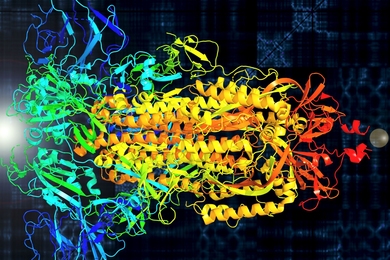
Translated into sound, SARS-CoV-2 tricks our ear in the same way the virus tricks our cells.
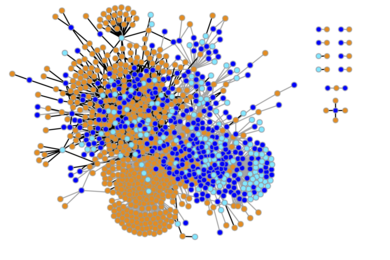
With help from artificial intelligence, researchers identify hidden power of vitamin A and ordinary chewing gum glaze.
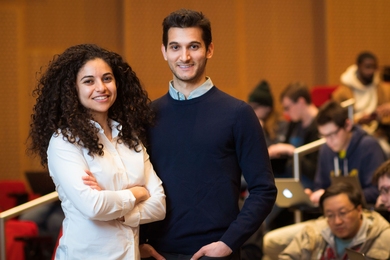
MIT duo uses music, videos, and real-world examples to teach students the foundations of artificial intelligence.
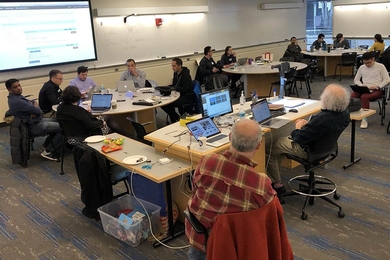
Three-day hackathon explores methods for making artificial intelligence faster and more sustainable.
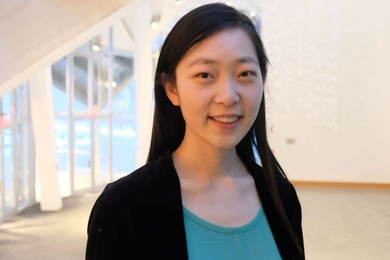
Doctoral candidate Natalie Lao wants to show that anyone can learn to use AI to make a better world.
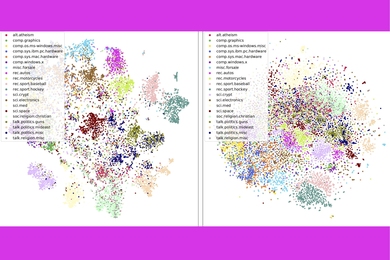
As natural language processing techniques improve, suggestions are getting speedier and more relevant.
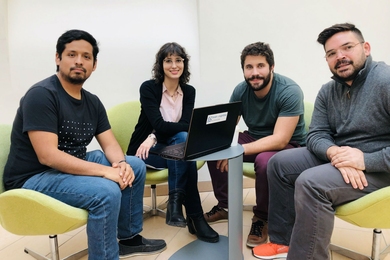
To help the region catch up, students organize summit to bring Latin policymakers and researchers to MIT.