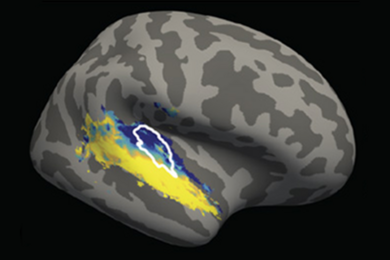
Hearing through the clatter
Study reveals brain regions that respond differently to the presence of background noise, suggesting the brain progressively hones in on and isolates sounds.
Study reveals brain regions that respond differently to the presence of background noise, suggesting the brain progressively hones in on and isolates sounds.

Focusing awareness on the present moment can enhance academic performance and lower stress levels.
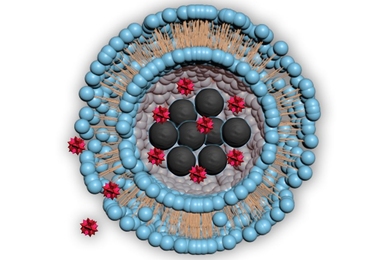
Magnetic particles allow drugs to be released at precise times and in specific areas.
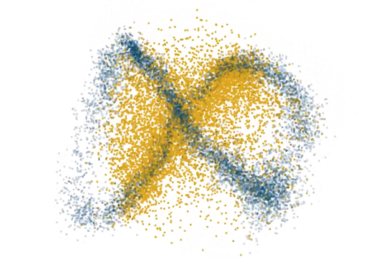
A powerful method has allowed McGovern researchers to discover how the brain represents the complex world in simple shapes.
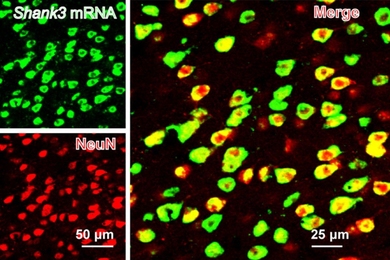
In a mouse model, restoring activity of a specific forebrain region reverses social traits associated with autism.

Departments of Biology, Brain and Cognitive Sciences, Chemistry, and Physics welcome new faculty members.

Neuroscientists find brain activity patterns that encode our beliefs and affect how we interpret the world around us.
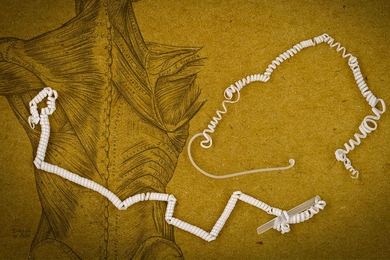
New MIT system of contracting fibers could be a boon for biomedical devices and robotics.
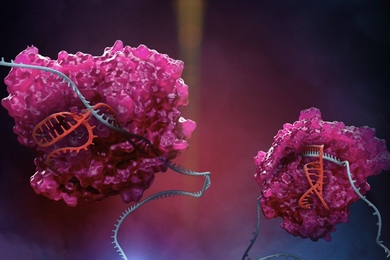
The new system, dubbed RESCUE, allows RNA edits to be made that were not previously possible.

MIT’s first-ever Science of Reading event brings together researchers and educators to discuss how to use research to improve literacy outcomes.
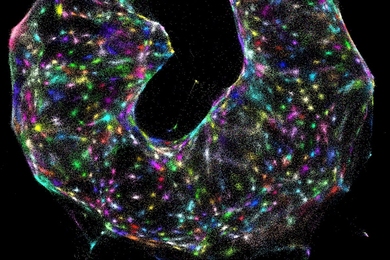
Researchers develop a new microscopy system for creating maps of cells, using chemical reactions to encode spatial information.
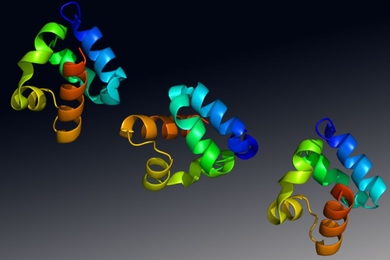
By introducing a gene variant associated with autism into monkeys, researchers hope to study treatment options for severe neurodevelopmental disorders.

Neuroscientists trace a brain circuit that filters unwanted sensory input.
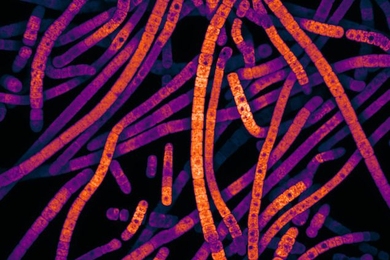
Researchers identify and develop new CRISPR-associated transposase system for targeted integration of DNA, adding key capabilities to gene-editing technology.
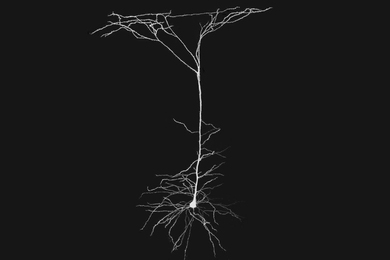
Tiny, branching extensions called dendrites may be more than just passive information-carriers, study finds.