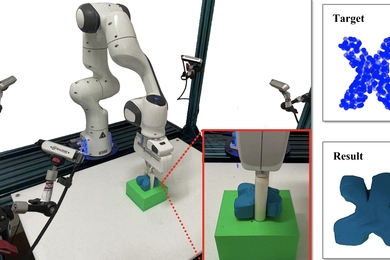
Robots play with play dough
A new system lets robots manipulate soft, deformable material into various shapes from visual inputs, which could one day enable better home assistants.
A new system lets robots manipulate soft, deformable material into various shapes from visual inputs, which could one day enable better home assistants.
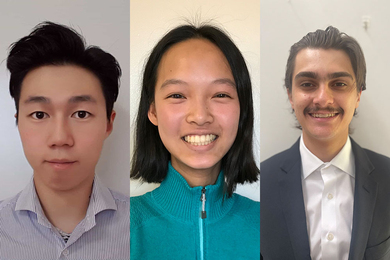
Recent MEng graduates reflect on their application-focused research as affiliates of the MIT-IBM Watson AI Lab.
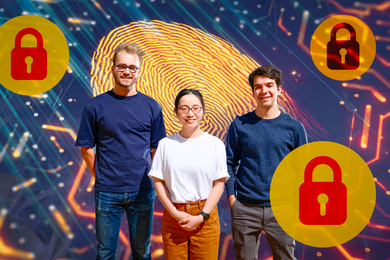
Studying a powerful type of cyberattack, researchers identified a flaw in how it’s been analyzed before, then developed new techniques that stop it in its tracks.
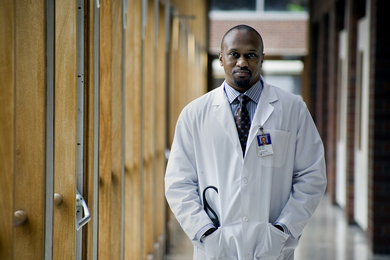
MIT professor will leverage his research into machine learning and computer science, as well as his role as a practicing cardiologist, toward educating clinician-scientists and engineers.

A machine-learning method imagines what a sentence visually looks like, to situate and ground its semantics in the real world, improving translation, like humans can.
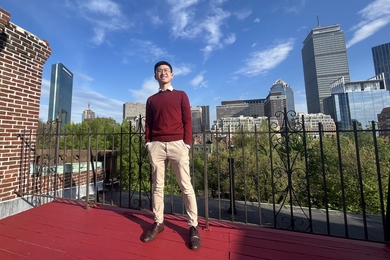
Chih-Wei Joshua Liu ’22 is an aspiring physician-physicist working to unlock the secrets of thermodynamics in biology and medicine.
Explanation methods that help users determine whether to trust machine-learning model predictions can be less accurate for disadvantaged subgroups, a new study finds.
A new training approach yields artificial intelligence that adapts to diverse play-styles in a cooperative game, in what could be a win for human-AI teaming.

Modeling study suggests that the muffled environment in utero primes the brain’s ability to interpret some types of sound.
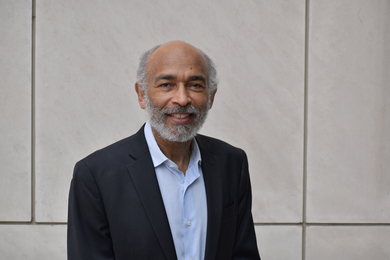
Brown and three other scientists recognized for advancing statistical, theoretical analyses of neuroscience data.
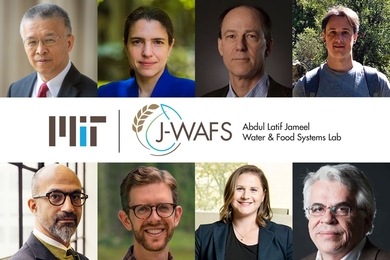
The grants total over $1 million in support of research that addresses issues in the water and food sectors.
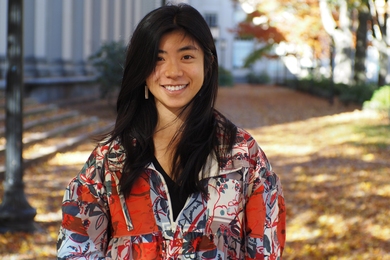
Graduate student Sarah Cen explores the interplay between humans and artificial intelligence systems, to help build accountability and trust.
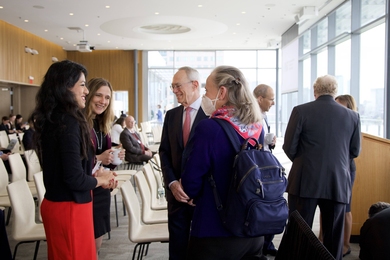
MIT and Mass General Brigham researchers and physicians connect in person to bring AI into mainstream health care.
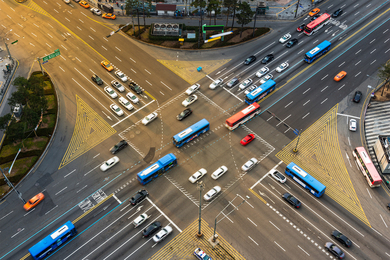
Researchers use artificial intelligence to help autonomous vehicles avoid idling at red lights.

Have a question about numerical differential equations? Odds are this CSAIL research affiliate has already addressed it.