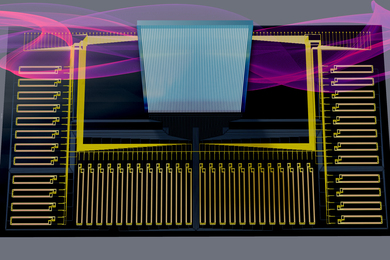
Deep learning with light
A new method uses optics to accelerate machine-learning computations on smart speakers and other low-power connected devices.
A new method uses optics to accelerate machine-learning computations on smart speakers and other low-power connected devices.
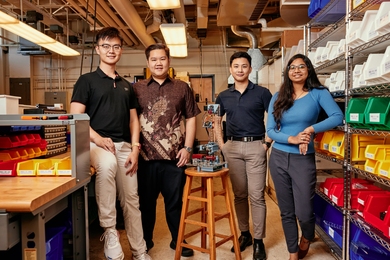
Graduate students create on-campus assembly factory for fiber extrusion devices.
A new technique enables AI models to continually learn from new data on intelligent edge devices like smartphones and sensors, reducing energy costs and privacy risks.
A machine-learning method finds patterns of health decline in ALS, informing future clinical trial designs and mechanism discovery. The technique also extends to Alzheimer’s and Parkinson’s.

The MIT-Pillar AI Collective will cultivate prospective entrepreneurs and drive innovation.

Aleksander Madry, Asu Ozdaglar, and Luis Videgaray, co-chairs of the AI Policy Forum, discuss key issues facing the AI policy landscape today.
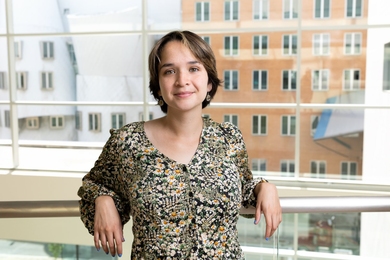
Neuroscience PhD student Fernanda De La Torre uses complex algorithms to investigate philosophical questions about perception and reality.

Researchers created a system that lets robots effectively use grasped tools with the correct amount of force.
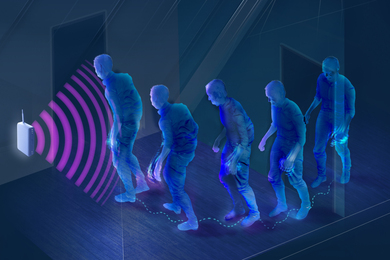
By continuously monitoring a patient’s gait speed, the system can assess the condition’s severity between visits to the doctor’s office.

Mayor’s youth employment program brought local high schoolers to MIT this summer.

An interdisciplinary team is developing a mobile health platform that uses AI to detect infection in Cesarean section wounds.

The MIT Schwarzman College of Computing welcomes four new faculty members engaged in research and teaching that address climate risks and other environmental issues.

Researchers develop a new method that uses multiple models to create more complex images with better understanding.

The grant will enable pilot-scale water treatment systems to be built and tested using sustainable hydrogel microparticles.

Researchers increase the accuracy and efficiency of a machine-learning method that safeguards user data.