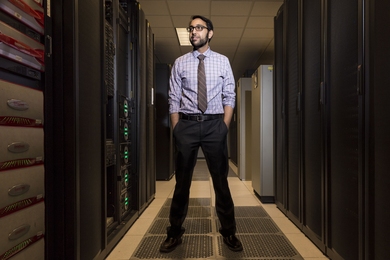
Supercomputers can spot cyber threats
Lincoln Laboratory researchers have developed a technique to compress hours of internet traffic into a bundle that can be analyzed for suspicious behavior.
Lincoln Laboratory researchers have developed a technique to compress hours of internet traffic into a bundle that can be analyzed for suspicious behavior.
Experts assess potential global destabilization caused by climate change impacts on water supplies, land use, and migration.

Members have made advances in molecular processes, rheology, computer networking, nanocrystalline metals, affective computing, and semiconductor tech.

Casey Evans, Stewart Isaacs, and Jessica Zhu are honored for outstanding academic performance, civic contributions, and research.

Brent Minchew has flown presidents and foreign dignitaries on Marine One. Today he studies how ice sheets evolve and respond to changing climate.

Undergraduate researchers discussed their projects at a well-attended poster session.
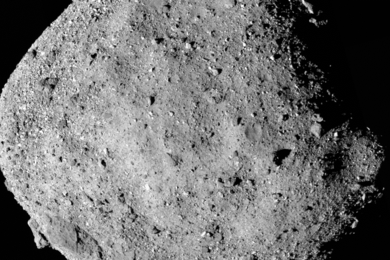
NASA’s OSIRIS-REx sample-return spacecraft, carrying MIT instrument, arrived at asteroid in December; now begins the science to select a sampling location.
William Oliver says a lack of available quantum scientists and engineers may be an inhibitor of the technology’s growth.

First measurement of its kind could provide stepping stone to practical quantum computing.
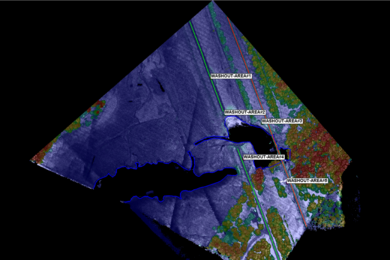
Lincoln Laboratory's lidar data, processed quickly with support from the organization MCNC, helped FEMA assess flooding and damages caused by Hurricane Florence.

Technologies ranging from a hurricane-evacuation decision platform to algorithms that compare DNA samples honored as some of the world's best inventions of 2018.
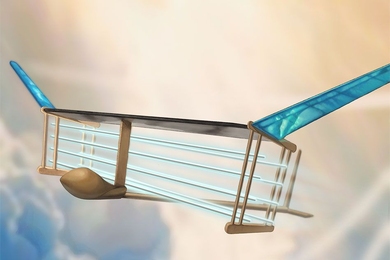
The silent, lightweight aircraft doesn’t depend on fossil fuels.

Long-time EECS professor and Lincoln Laboratory division head is best known for research on transistors, lasers, and masers.
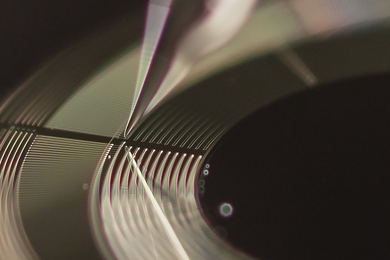
Microhydraulic actuators, thinner than one-third the width of human hair, are proving to be the most powerful and efficient motors at the microscale.
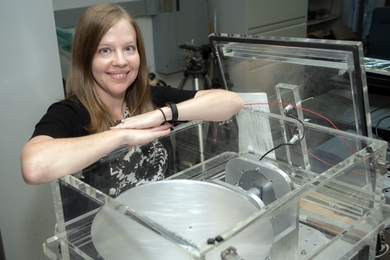
Study finds shoebox-sized CubeSats gather weather data comparably to data collected by larger satellites.