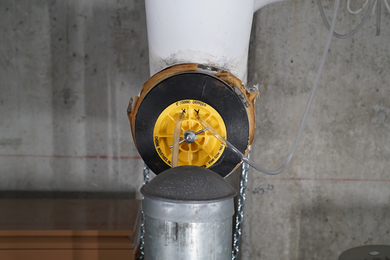
MIT begins testing wastewater to help detect Covid-19 on campus
The pilot project is designed to determine if wastewater testing can provide early signals about the spread of the virus.
The pilot project is designed to determine if wastewater testing can provide early signals about the spread of the virus.
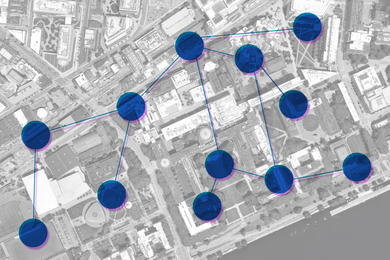
With years of experience under its belt, MIT Medical works with the campus community to limit the spread of Covid-19.
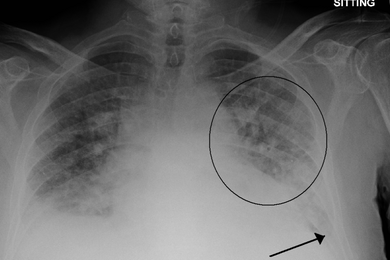
Many health issues are tied to excess fluid in the lungs. A new algorithm can detect the severity by looking at a single X-ray.

InfiniteMD virtually connects patients with leading medical specialists to give advice on treatment plans, diagnoses, and more.

MIT professor announced as award’s first recipient for work in cancer diagnosis and drug synthesis.
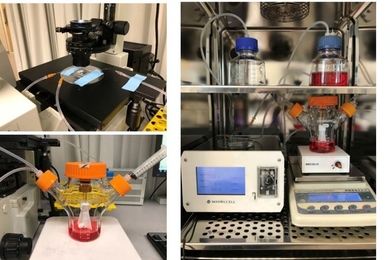
New technology cuts cell culture time by half and uses more targeted cell sorting and purification methods.
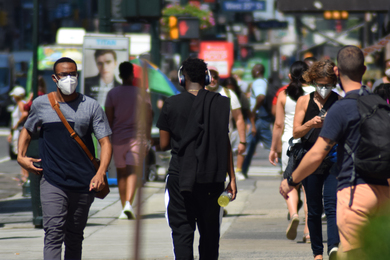
The Covid-19 Recovery and Resilience Initiative aims to catalyze evidence-based policy solutions to the challenges posed by the pandemic.
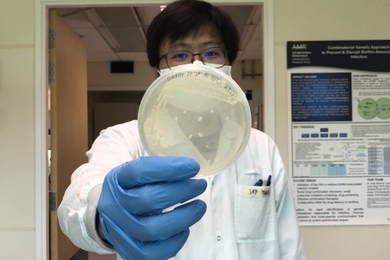
SMART researchers find exposing bacteria to hydrogen sulfide can increase antimicrobial sensitivity in bacteria that do not produce H2S.

The company Health at Scale uses machine learning to improve outcomes for individual patients.

The startup Kinsa uses its smart thermometers to detect and track the spread of contagious illness before patients go to the hospital.
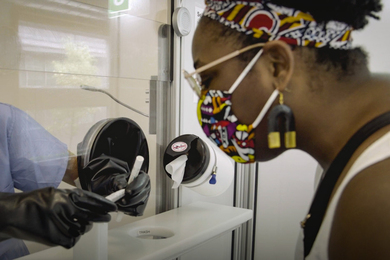
Designed and assembled by experts from across the Institute, the facility should enable testing of up to 1,500 people a day.
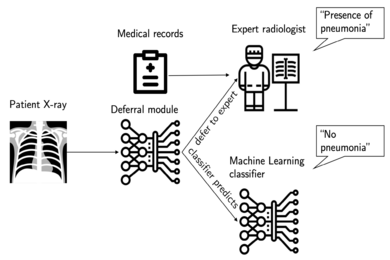
Machine learning system from MIT CSAIL can look at chest X-rays to diagnose pneumonia — and also knows when to defer to a radiologist.
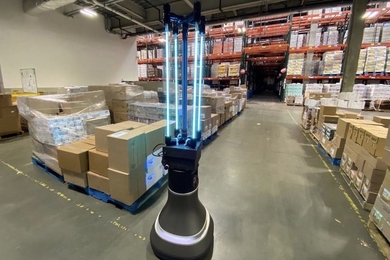
Using UV-C light, the system can disinfect a warehouse floor in half an hour — and could one day be employed in grocery stores, schools, and other spaces.
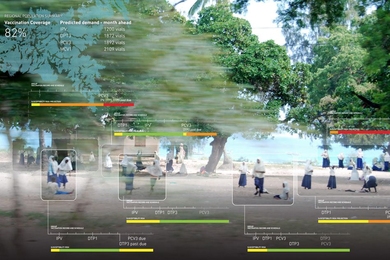
The startup macro-eyes uses artificial intelligence to improve vaccine delivery and patient scheduling.
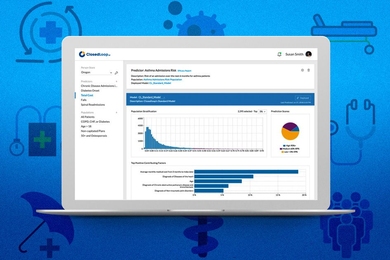
The startup ClosedLoop has created a platform of predictive models to help organizations improve patient care.