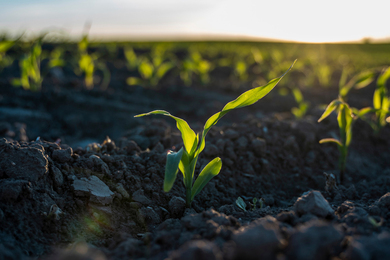
Making agriculture more resilient to climate change
Researchers across MIT are working on ways to boost food production and help crops survive drought.
Researchers across MIT are working on ways to boost food production and help crops survive drought.

The scientists’ wide-scale acoustic mapping technique could help track vulnerable keystone species.
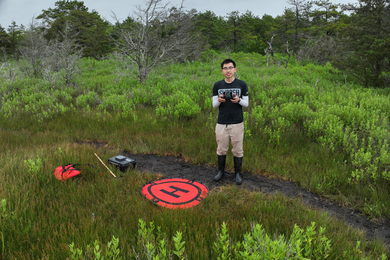
As climate change accelerates sea-level rise and intensifies storms, marsh-fronted seawalls can provide an economical coastal defense, MIT engineers report.
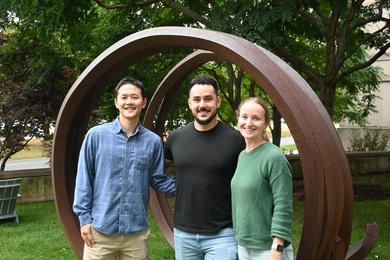
One of the largest MIT clubs sees itself as “the umbrella of all things related to energy and climate on campus.”

A new study of bubbles on electrode surfaces could help improve the efficiency of electrochemical processes that produce fuels, chemicals, and materials.
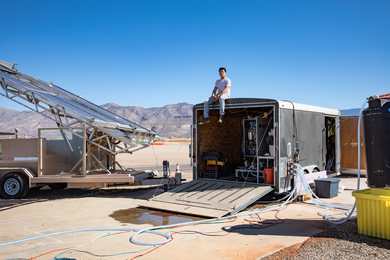
Because it doesn’t need expensive energy storage for times without sunshine, the technology could provide communities with drinking water at low costs.

MIT researchers identify facility-level factors that could worsen heat impacts for incarcerated people.
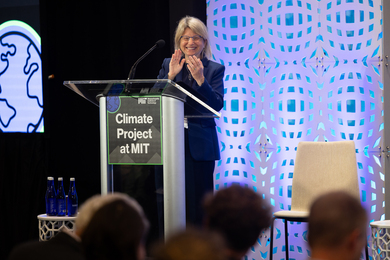
The major effort to accelerate practical climate change solutions launches as its mission directors meet the Institute community.

Professor Ronald Prinn reflects on how far sustainability has come as a discipline, and where it all began at MIT.

The MIT Electric Vehicle Team, Sustainable Engine Team, Solar Electric Vehicle Team, Motorsports Team, First Nations Launch Team, and Arcturus are each doing their part to improve the health of our planet.

Context Labs, led by Dan Harple SM ’13, uses AI-enabled data analytics and verification to help companies measure their true greenhouse emissions and document reductions.

Knowing where to look for this signal will help researchers identify specific sources of the potent greenhouse gas.

Together, the new Moghadam Building and refurbished Green Building form a vibrant new center to tackle pressing global concerns of sustainability and climate change.

The nodes are intended to become part of a widespread sea-ice monitoring network.

MIT historian Tristan Brown describes how China’s feng shui legacy can help with confronting today’s climate challenges.