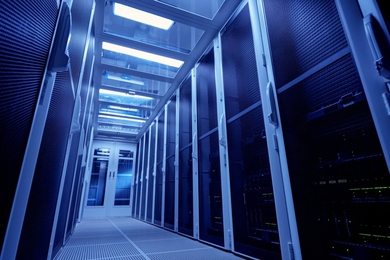
Artificial intelligence could help data centers run far more efficiently
MIT system “learns” how to optimally allocate workloads across thousands of servers to cut costs, save energy.
MIT system “learns” how to optimally allocate workloads across thousands of servers to cut costs, save energy.

“Risk-aware” traffic engineering could help service providers such as Microsoft, Amazon, and Google better utilize network infrastructure.
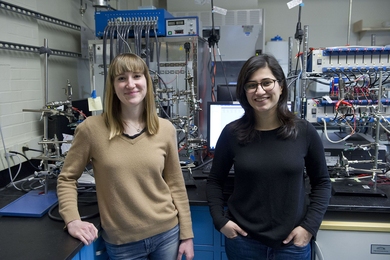
MIT researchers are developing a battery that could both capture carbon dioxide in power plant exhaust and convert it to a solid ready for safe disposal.
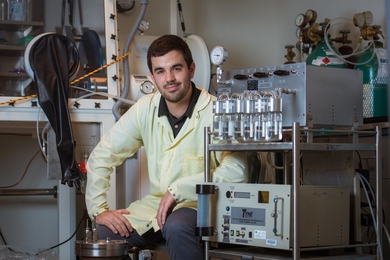
NSE graduate student Kieran Dolan tackles a critical technical challenge to fluoride-salt-cooled high-temperature nuclear reactors.
MIT researchers demonstrate a method to make a smaller, safer, and faster lithium-rich ceramic electrolyte.
Along with studying theory, "it's also important to me that the work we are doing will help to solve real-world problems,” says LIDS student Omer Tanovic.
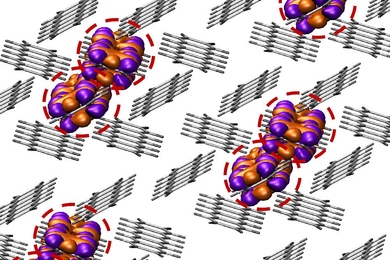
Method for collecting two electrons from each photon could break through theoretical solar-cell efficiency limit.
Professor of biology and chemistry is catalyzing new approaches in research and education to meet the climate challenge.
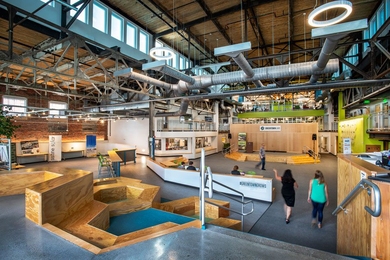
The incubator’s winding journey to success helped its startup community grow closer while addressing environmental challenges.
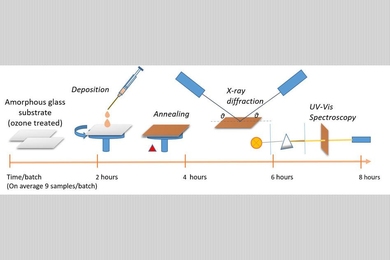
Streamlined system for creating and analyzing perovskite compounds may cut development time from 20 years to two.
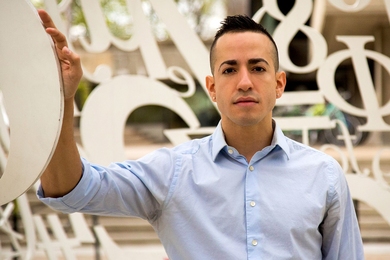
PhD student Steven Gonzalez studies cloud computing with the eye of an anthropologist.
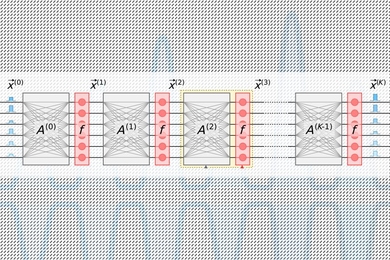
Simulations suggest photonic chip could run optical neural networks 10 million times more efficiently than its electrical counterparts.
The materials science and engineering professor is part of a multi-institution effort to investigate the possibility of cold fusion in a scientifically rigorous way.
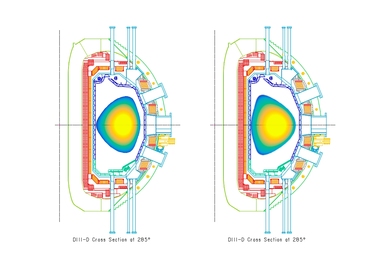
Research scientist Alessandro Marinoni shows that reversing traditional plasma shaping provides greater stability for fusion reactions.