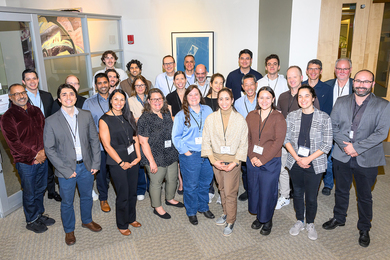
Introducing the Minerals Stewardship Consortium at MIT
The consortium convenes industry, academia, and policy leaders to navigate competing demands and reimagine materials supply.
The consortium convenes industry, academia, and policy leaders to navigate competing demands and reimagine materials supply.

Nuclear waste continues to be a bottleneck in the widespread use of nuclear energy, so doctoral student Dauren Sarsenbayev is developing models to address the problem.

MIT researchers found a way to predict how efficiently materials can transport protons in clean energy devices and other advanced technologies.

Tools for forecasting and modeling technological improvements and the impacts of policy decisions can result in more effective and impactful decision-making.

By stacking multiple active components based on new materials on the back end of a computer chip, this new approach reduces the amount of energy wasted during computation.

The project was designed and built with novel “bio-composite” materials developed by the student team.

A study by MIT researchers illuminates choices about reliability, cost, and emissions.
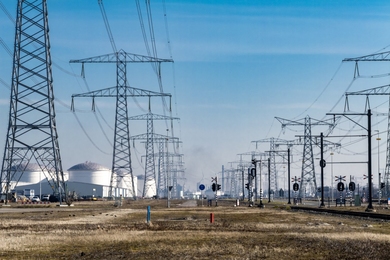
Macro, a modeling tool developed by the MIT Energy Initiative, enables energy-system planners to explore options for developing infrastructure to support decarbonized, reliable, and low-cost power grids.
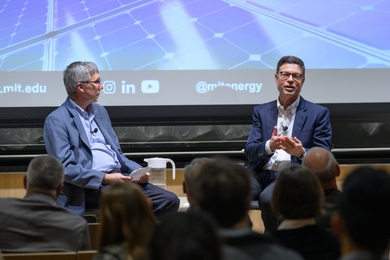
At MITEI’s Fall Colloquium, General Motors’ battery development expert emphasized how affordability, accessibility, and commercialization can position the US as a leader in battery tech.

Four MIT alumni say their startup, Amogy, has the technology to help decarbonize maritime shipping, power generation, manufacturing, and more.

AI supports the clean energy transition as it manages power grid operations, helps plan infrastructure investments, guides development of novel materials, and more.

Mantel, founded by MIT alumni, developed a system that captures CO2 from factories and power plants while delivering steam to customers.

Industry leaders agree collaboration is key to advancing critical technologies.
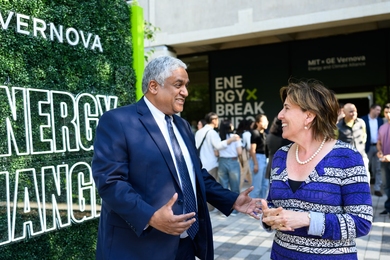
Five-year collaboration between MIT and GE Vernova aims to accelerate the energy transition and scale new innovations.
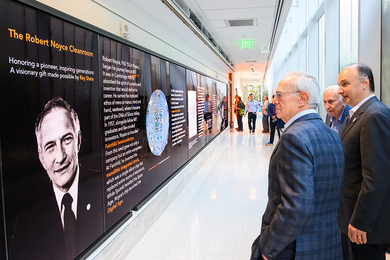
MIT.nano cleanroom complex named after Robert Noyce PhD ’53 at the 2025 Nano Summit.