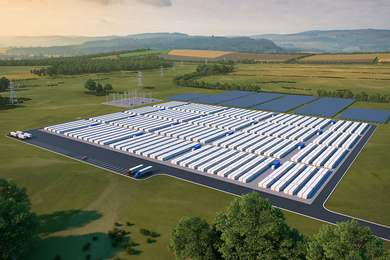
Power when the sun doesn’t shine
With batteries based on iron and air, Form Energy leverages MIT research to incorporate renewables into the grid.
With batteries based on iron and air, Form Energy leverages MIT research to incorporate renewables into the grid.

MIT chemists developed a battery cathode based on organic materials, which could reduce the EV industry’s reliance on scarce metals.
New insights into how proton-coupled electron transfers occur at an electrode could help researchers design more efficient fuel cells and electrolyzers.
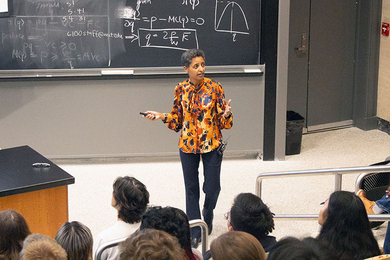
Fall 2023 Wulff Lecture speaker Sossina Haile ’86, PhD ’92 uses ammonia and a “superprotonic” material for efficient and eco-friendly energy generation.
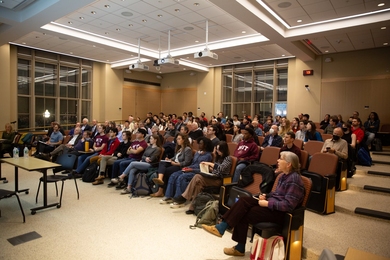
A recent forum was the first in a series planned at MIT this year, part of an initiative meant to encourage the open exchange of ideas.

At the 2023 Clean Energy Education and Empowerment symposium, participants emphasize working together to achieve net zero emissions by 2050.

The MIT Energy Initiative’s Annual Research Conference highlights strategies for implementing large-scale reductions in the world’s greenhouse gas emissions.
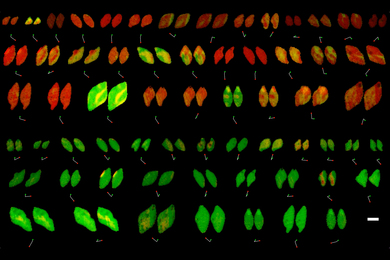
In a first, researchers have observed how lithium ions flow through a battery interface, which could help engineers optimize the material’s design.

Antora Energy, co-founded by David Bierman SM ’14, PhD ’17, is commercializing a thermal battery that lets manufacturers use renewable energy around the clock.
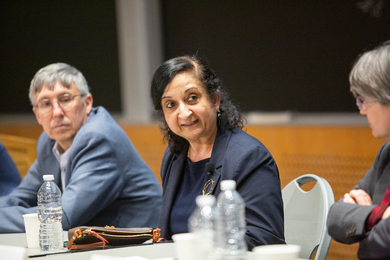
Critical needs for curbing greenhouse gases include non-fossil fuel aviation, buildings, electric grids, industrial processes, and the potential of fusion power.
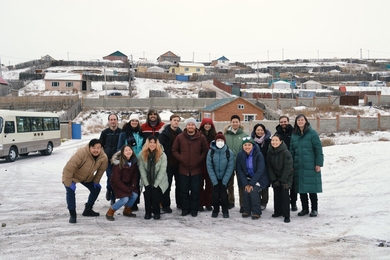
Through coursework, intercollegiate collaboration, and a site visit, MIT students fuse engineering and anthropology to propose innovative energy solutions.

The illustrious prize supports early-career scientists and engineers as they pursue interdisciplinary work.

With the support of each other and MIT faculty, students in the MCSC’s Climate and Sustainability Scholars Program are making their impact on real-world climate challenges.
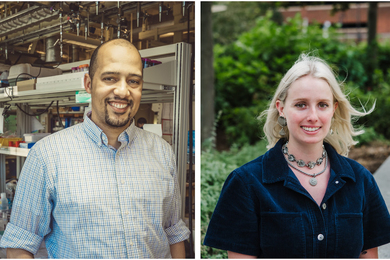
A modeling framework developed at MIT can help speed the development of flow batteries for large-scale, long-duration electricity storage on the future grid.
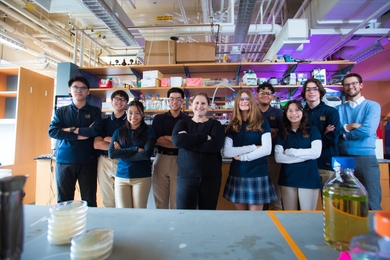
High school students spend time at MIT building a low-cost fuel cell.