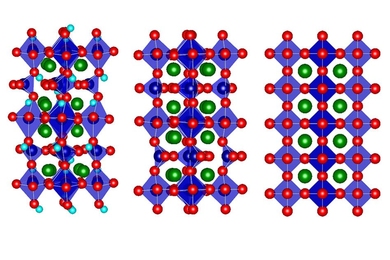
A material’s insulating properties can be tuned at will
Most materials have a fixed ability to conduct heat, but applying voltage to this thin film changes its thermal properties drastically.
Most materials have a fixed ability to conduct heat, but applying voltage to this thin film changes its thermal properties drastically.
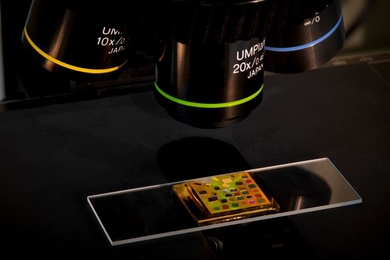
Simple chip powered by quantum dots allows standard microscopes to visualize difficult-to-image biological organisms.
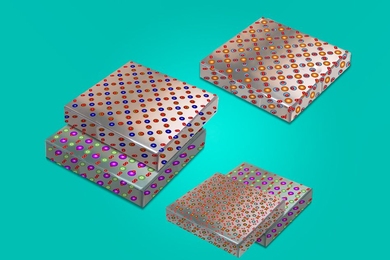
Next-generation devices made with new “peel and stack” method may include electronic chips worn on the skin.

An MIT team has devised a lithium metal anode that could improve the longevity and energy density of future batteries.

MIT researchers grow perfectly shaped germanium tunnels on silicon oxide with controllable length.

The new method could impact devices used in imaging, machine learning, and more.
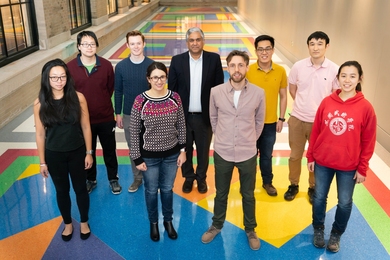
The 2019-20 School of Engineering MathWorks Fellows are using MATLAB and Simulink to advance discovery and innovation across disciplines.
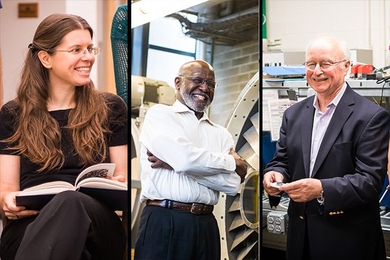
Anna Frebel, Wesley Harris, and Harry Tuller honored by graduate students as “Committed to Caring.”
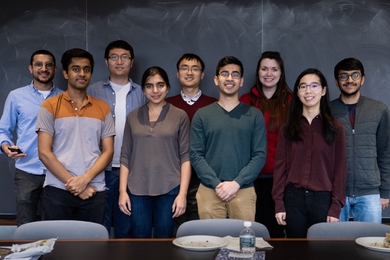
Student committee puts together research showcase while balancing coursework, qualifying exams, and extracurriculars.
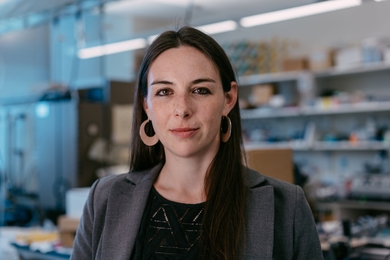
The MIT assistant professor is entranced by the beauty she finds pursuing chemistry.
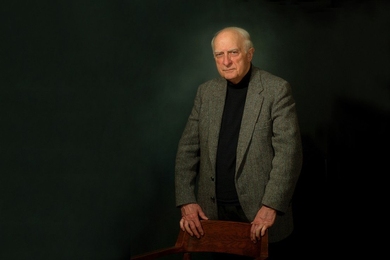
Longtime MIT professor was a world leader in inelastic deformation and fracture of engineering materials.
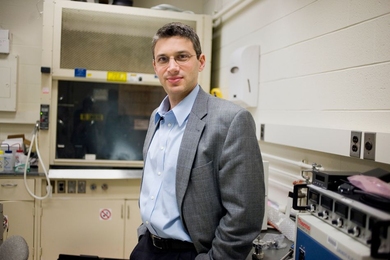
Materials engineering and energy expert to succeed Chris Schuh.
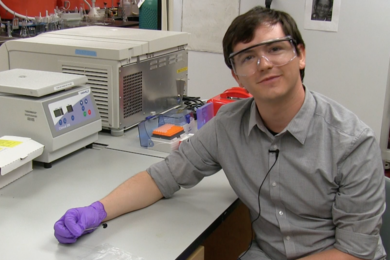
MIT graduate student Seth Cazzell shows controlling pH enables reversible hydrogel formation in wider range of metal concentrations.

Following a successful project creating bricks from pulp plant waste in northern India, Elsa Olivetti is looking for ways to repurpose slag produced by the metals industry.
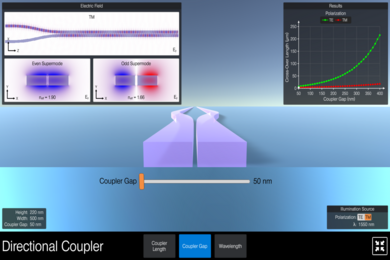
MIT wins $5 million grant to develop a virtual lab that will prepare students for jobs in industry and government.