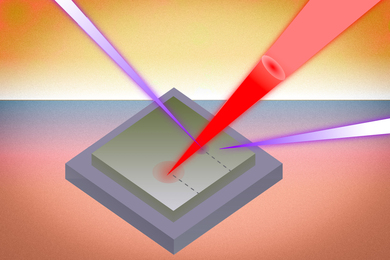
A new way to watch heat move through electronics
MIT researchers can now precisely measure how heat moves through multilayered materials like computer chips.
MIT researchers can now precisely measure how heat moves through multilayered materials like computer chips.
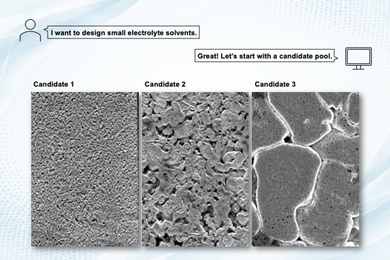
By focusing on electrolytes, MIT scientists are making sodium-metal batteries a more practical energy storage option.
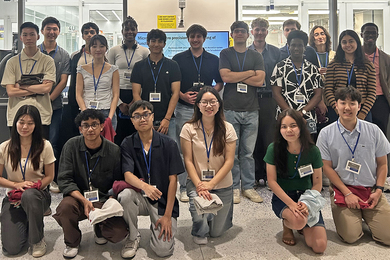
The 2026 NEMC Hub-sponsored externship gave students access to world-class research, advanced semiconductor manufacturing, and professionals driving innovation across the Northeast.
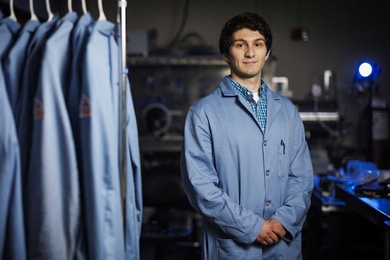
PhD student Hugh Smith works to develop sodium-ion batteries, whose components are more abundant and accessible than those of conventional lithium-ion technology.
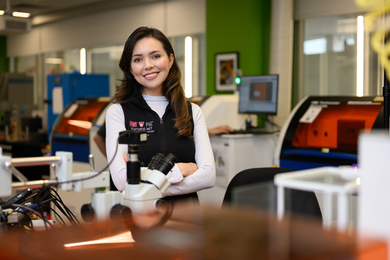
The PhD candidate builds soft bioelectronic technologies to decode signals between the brain and the rest of the body.

The tunable device controls mid-infrared light for more precise thermal imaging, chemical sensing, or pollution monitoring.
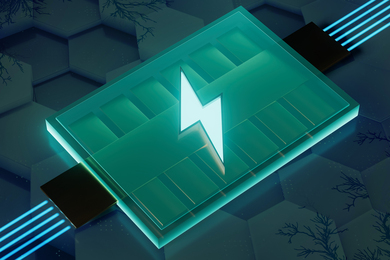
New research could help prevent the formation of tiny seeds of lithium metal within the electrolyte, enabling batteries that charge faster and last longer.

The FUTUR-IC research program integrates electronics and photonics in microchip systems.

MIT researchers’ approach captures subtle atomic patterns, improving predictions of material properties.

Ranking at the top for the 15th year in a row, the Institute also places first in 12 subject areas.

Low-cost personal cooling and emissions-free air conditioning among ideas studied with MIT’s Climate Project seed funding.

IAIFI enters its second phase with increased funding, broader ambitions, and a growing community at the frontier of AI and fundamental physics.
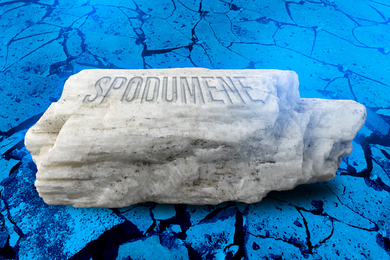
The low-temperature process could unlock cleaner lithium from America’s abundant hard rock while minimizing waste.

MIT senior Nik Sandu bridges scientific research with a strong commitment to teaching and community.

Ferrium C61 was designed with the aid of computers in a field pioneered at the Institute.