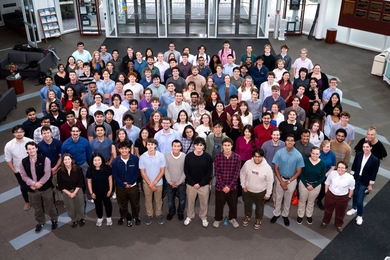
Lincoln Laboratory summer research interns take on national security challenges
Anna Raymaker and Vivek Jagadeesh tackled cybersecurity threats to ships and inside operating systems, respectively.
Anna Raymaker and Vivek Jagadeesh tackled cybersecurity threats to ships and inside operating systems, respectively.

MIT CSAIL researchers found a way to exploit a split-second gap in chip security — and used it to acquire a Linux system’s password file.
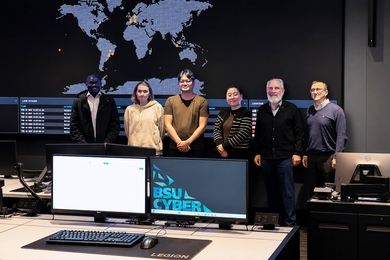
Students from the MIT Cybersecurity Clinic help local governments and other vulnerable organizations defend against digital threats.

A new kernel called Fractal gives researchers a cleaner view of what’s happening inside a processor, and has already surfaced previously unknown behavior in Apple’s M1.

A new method could bring more accurate and efficient AI models to high-stakes applications like health care and finance, even in under-resourced settings.

Ultra-efficient chip design enables extremely strong cryptography algorithms to run on energy-constrained edge devices.

Strahinja Janjusevic brings an international perspective and US Naval Academy education to his graduate research in the MIT Technology and Policy Program.

New research demonstrates how AI models can be tested to ensure they don’t cause harm by revealing anonymized patient health data.

The new certificate program will equip naval officers with skills needed to solve the military’s hardest problems.

The MIT Quantum Initiative is taking shape, leveraging quantum breakthroughs to drive the future of scientific and technological progress.

Optimized for generative AI, TX-GAIN is driving innovation in biodefense, materials discovery, cybersecurity, and other areas of research and development.

Now mandated by law, Lincoln Laboratory’s blackout drills are improving national security and ensuring mission readiness.

Lincoln Laboratory cybersecurity expert Hamed Okhravi calls for a unified approach to securing computer memory, as a matter of national security.

Chief information officer at Columbia University will join MIT in August.

The approach maintains an AI model’s accuracy while ensuring attackers can’t extract secret information.