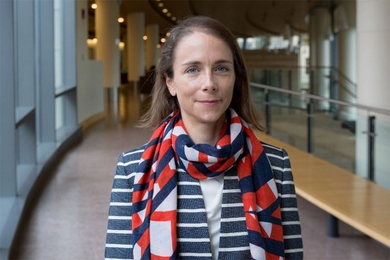
MIT team draws on supply chain expertise to help protect health workers from Covid-19
The group is working to increase availability of personal protective equipment during the pandemic.
The group is working to increase availability of personal protective equipment during the pandemic.

MIT professor and writer examines the large-scale reaction to our new public health crisis.
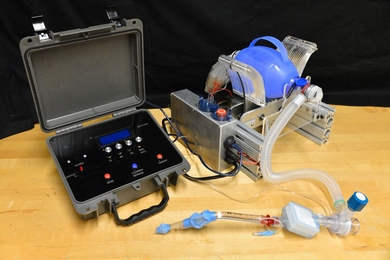
An ad hoc team of engineers and doctors has developed a low-cost, open-source alternative, now ready for rapid production.
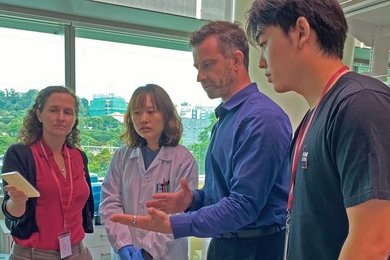
Chemical engineer aims to create a test that can work in 10 minutes and doesn’t require specialized instruments or laboratory infrastructure.

CovEducation matches college students with younger learners to facilitate online learning.

Drawing on two decades of experience, MIT offers classes and tools for educators, parents, and students in a suddenly virtual world.

Team designs antibody-like receptor proteins that can bind to cytokines, as possible strategy for treating coronavirus and other infections.
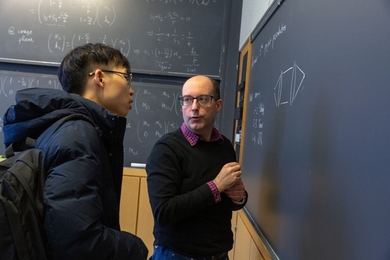
A machine learning algorithm combines data on the disease's spread with a neural network, to help predict when infections will slow down in each country.

Head of the MIT Election Data and Science Lab discusses the greatest risks, voting by mail, zombies, and asteroids.

Staffed by MIT Medical, the 75-bed facility will provide care for members of the MIT community and individuals from the broader Cambridge community.

“Data scientists and visualization designers need to take their civic role very seriously in a pandemic,” says the MIT assistant professor.

Materials scientist explores why some household cleaners could harm the protective coating on a smartphone screen.

New MITx MicroMasters credential-holders prepare to meet supply chain disruptions through their knowledge and newly acquired abilities.
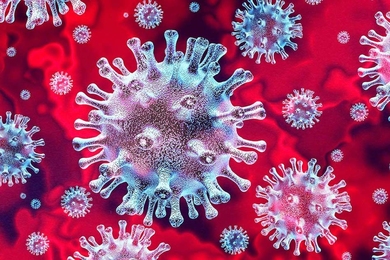
MIT Solve 2020 Challenge seeks tech-based solutions to health security challenges, including Covid-19 and future pandemics.
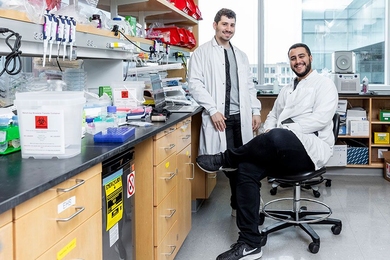
MIT scientists Omar Abudayyeh and Jonathan Gootenberg explain the current state of Covid-19 testing, and how a CRISPR tool may help solve the supply problem.