
A big leap toward tinier lines
Self-assembly technique could lead to long-awaited, simple method for making smaller microchip patterns.
Self-assembly technique could lead to long-awaited, simple method for making smaller microchip patterns.

System for disguising database queries could prevent customer profiling and price gouging.

New approach speeds up testing of traffic management solutions for data center networks.

A simple statistical trick could help make a ubiquitous model of decision processes more accurate.
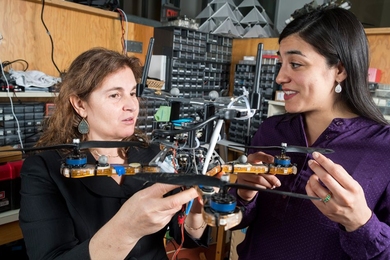
New technique could protect robot teams’ communication networks from malicious hackers.

MIT senior and Marshall Scholar will pursue research on algorithms to improve computer networks.
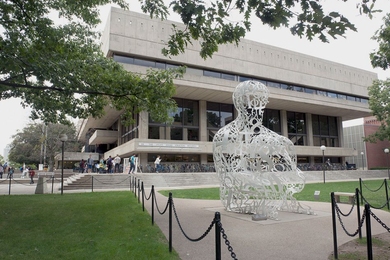
Graduate engineering and economics programs are No. 1 in the nation; MIT Sloan is No. 4.
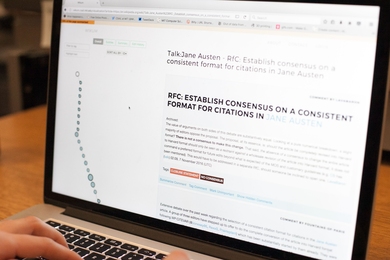
“Wikum” system from CSAIL researchers provides readers with detailed summaries of online discussions.
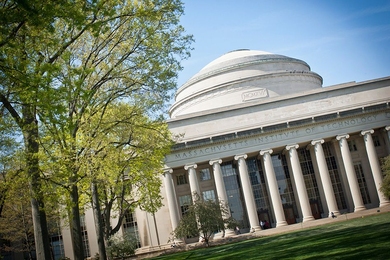
MIT ranked within the top 5 for 19 of 46 subject areas.
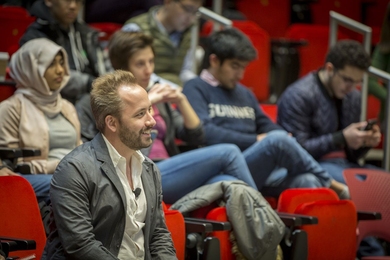
Drew Houston ’05 chatted with student innovators and shared his latest projects.
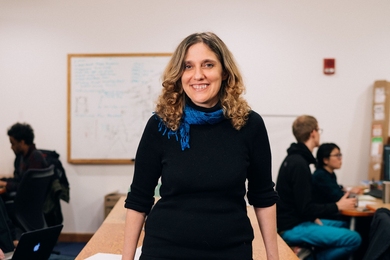
Computer scientist Regina Barzilay empowers cancer treatment with machine learning.

Low-power special-purpose chip could make speech recognition ubiquitous in electronics.

Incorporating strategies from skilled human planners improves automatic planners’ performance.

Akamai founders honored for applying algorithms to solve web congestion.
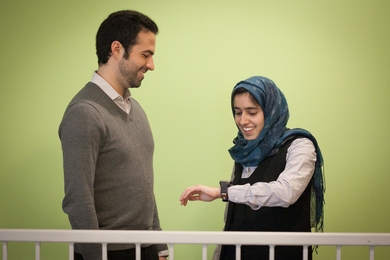
Coupled with audio and vital-sign data, deep-learning system could someday serve as a “social coach” for people with anxiety or Asperger’s.