NSF renews support for MIT-led AI and physics institute, expanding a new model for discovery
IAIFI enters its second phase with increased funding, broader ambitions, and a growing community at the frontier of AI and fundamental physics.
IAIFI enters its second phase with increased funding, broader ambitions, and a growing community at the frontier of AI and fundamental physics.

MIT researchers use the classic game as a test bed for AI agents, finding a small AI model can outperform the biggest ones at 1 percent of the cost.
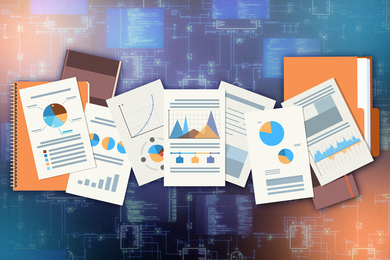
The new ChartNet training dataset could improve the accuracy of vision-language models that help analyze business trends or interpret scientific figures.
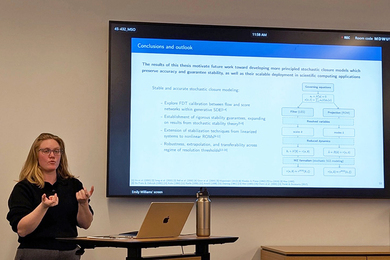
MIT doctoral candidate Emily Williams reflects on her time at the Center for Computational Science and Engineering as she becomes the program’s first graduate.
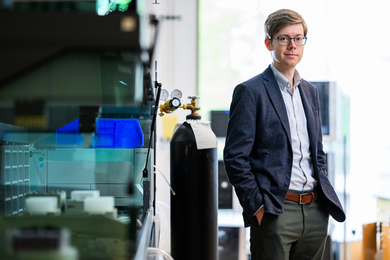
Connor Coley works at the interface of chemistry and machine learning, to discover and design new drug compounds.
MIT faculty member in electrical engineering and computer science to focus on innovation in engineering education and new pedagogical approaches.
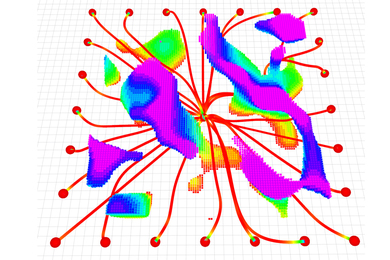
By rapidly generating a smooth path plan that cuts travel time and avoids obstacles, the open-source “MIGHTY” system could streamline disaster recovery and parcel delivery.
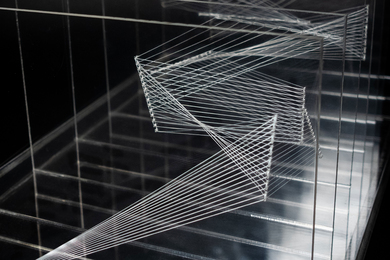
A new technique helps scientists measure a phenomenon that can cause quantum circuits to perform differently than expected, increasing the error in computations.

The “MetaEase” technique provides a heads-up to potential scenarios that could cause long wait-times or outages.
Assistant Professor Gabriele Farina mines the foundations of decision-making in complex multi-agent scenarios.
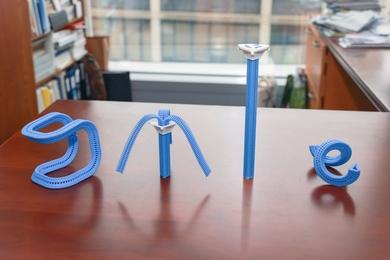
An old patent from MIT Professor Bill Freeman inspired the new “Y-zipper,” a three-sided fastener that snaps gear, robots, and art into shape at the push of a button.
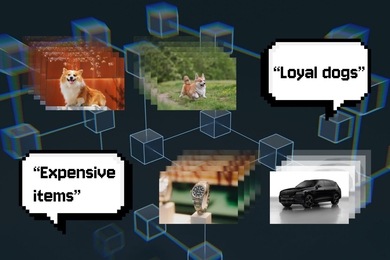
A new debiasing technique called WRING avoids creating or amplifying biases that can occur with existing debiasing approaches.
Building on a long-standing MIT–IBM collaboration, the new lab will chart the convergence of AI, algorithms, and quantum computing.

A new method could bring more accurate and efficient AI models to high-stakes applications like health care and finance, even in under-resourced settings.

A new study reveals cellular pathways that appear to underlie some differences in physical fitness.