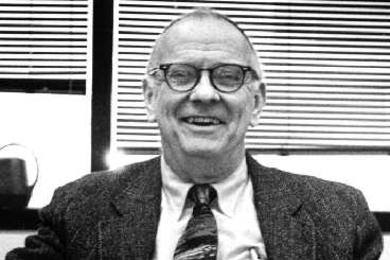
Remembering Art Smith
'Stabilizing force' was a counselor, advocate, friend and champion for students.
'Stabilizing force' was a counselor, advocate, friend and champion for students.

MIT has greatest number of recipients from a single institution.
Receive multi-year support to work on traditionally underfunded areas in health care.

In MIT's Human Dynamics Lab, Sandy Pentland PhD '82 uses cell phones and wearable sensors to research nonverbal signals, information flow, and the value of face-to-face conversation.
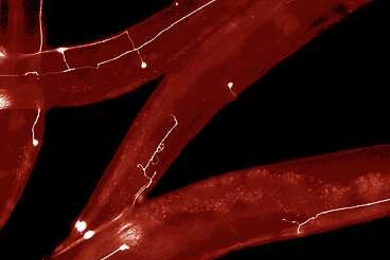
Microchip technology rapidly identifies compounds for regrowing nerves, in live animals.
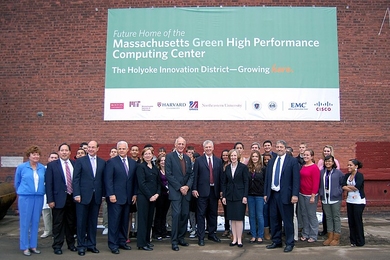
President Hockfield joins Gov. Patrick and others at groundbreaking ceremony.

Materials science, EECS graduate students among 27 honored

The grants are designed to promote risky, innovative research with the potential to transform a field of study.
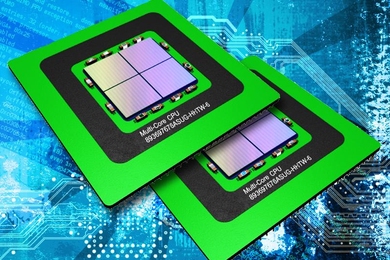
Research suggests that the free operating system Linux will keep up with the addition of more ‘cores,’ or processing units, to computer chips.
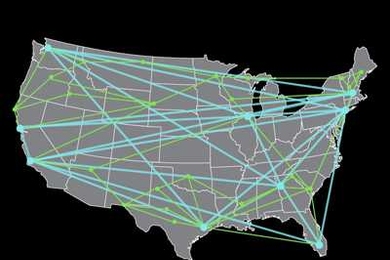
The max-flow problem, which is ubiquitous in network analysis, scheduling, and logistics, can now be solved more efficiently than ever.

A new algorithm optimizes the dissemination of information about traffic and road conditions through networks of wirelessly connected cars.
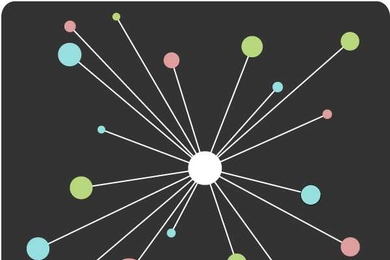
Many scientific disciplines use computers to infer patterns in data. But how much data is enough to ensure that the inferences are right?

Among 150 students nationwide awarded fellowships in program's first year
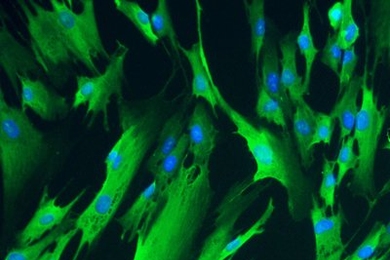
New technique holds promise to revert cells to an immature state that can develop into any cell type.